Status epilepticus is one of the most serious neurological emergencies. It happens when a seizure lasts too long or when seizures occur one after another without the person regaining consciousness in between. Unlike a normal seizure, which usually stops on its own within a few minutes, status epilepticus does not stop without urgent medical treatment.
This condition is dangerous because continuous seizure activity can deprive the brain of oxygen, damage brain cells, and lead to permanent neurological problems or even death if not treated quickly. The longer the seizure continues, the higher the risk of brain damage and complications. That is why status epilepticus is treated as a medical emergency that requires immediate hospital care.
Many people are not aware that a seizure lasting more than five minutes, or repeated seizures without recovery in between, should never be ignored. Family members, caregivers, teachers, and co-workers should know that this is not a situation to wait and watch. Immediate medical help can save lives and protect the brain from lasting damage.
What is Status Epilepticus?
Status epilepticus is a prolonged or repeated seizure state that does not stop on its own. In simple terms, it is a seizure emergency. Normally, a seizure lasts from a few seconds to a couple of minutes and then stops. In status epilepticus, the seizure continues for five minutes or more, or the person has multiple seizures without fully waking up between them.
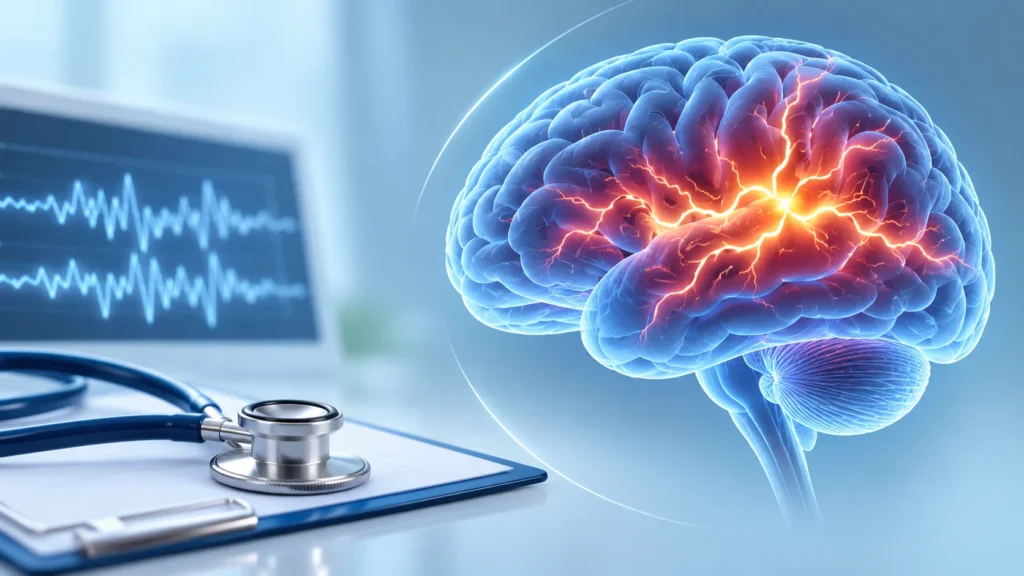
The brain normally controls electrical activity through a balance of signals. During a seizure, this balance is disturbed and abnormal electrical activity spreads through the brain. In status epilepticus, this abnormal activity keeps going, which can cause damage to brain cells due to lack of oxygen and excessive electrical stimulation.
Status epilepticus can happen in people with known epilepsy, but it can also happen in someone who has never had a seizure before. It may be triggered by infection, stroke, brain injury, drug withdrawal, low blood sugar, or other medical problems. Because it can happen to anyone, awareness of the warning signs is important for everyone.
Types of Status Epilepticus
Status epilepticus can be classified in different ways based on the type of seizure, the part of the brain involved, and the duration of symptoms.
Based on seizure type
- Convulsive status epilepticus, which involves visible body shaking, muscle stiffness, or jerking movements.
- Non-convulsive status epilepticus, which may not show obvious body movements but involves ongoing abnormal brain activity.
- Focal status epilepticus, which starts in one part of the brain and may cause localized symptoms.
- Generalized status epilepticus, which involves both sides of the brain and often causes full-body convulsions.
Based on duration
- Early status epilepticus, which lasts between five and ten minutes.
- Established status epilepticus, which lasts longer than ten to thirty minutes.
- Refractory status epilepticus, which does not respond to first-line medicines and needs intensive care.
- Super-refractory status epilepticus, which continues even after advanced treatment in the ICU.
Based on cause
- Acute symptomatic status epilepticus, which happens due to an immediate trigger such as infection, stroke, or low blood sugar.
- Remote symptomatic status epilepticus, which happens in people with an old brain injury or known epilepsy.
- Progressive or unknown cause status epilepticus, which may need further investigation.
Causes of Status Epilepticus
Status epilepticus can have many causes. In some cases, it happens in people with epilepsy who miss medicines or have a sudden change in their condition. In others, it may be the first sign of a serious brain or body illness.
Common causes include:
- Low or missed anti-seizure medicines in people with epilepsy.
- Sudden withdrawal of seizure medicines.
- Brain infection such as meningitis or encephalitis.
- Stroke or reduced blood flow to the brain.
- Head injury or trauma.
- Brain tumor or other structural brain problem.
- Low blood sugar, especially in people with diabetes.
- Electrolyte imbalance such as low sodium or low calcium.
- Drug or alcohol withdrawal.
- Drug overdose or poisoning.
- High fever in children in some cases.
- Metabolic problems affecting the brain.
- Lack of oxygen to the brain.
- Autoimmune brain inflammation in some patients.
Why causes matter
Identifying the cause is important because treatment is not only about stopping the seizure but also about fixing the underlying problem. For example, low blood sugar needs glucose, infection needs antibiotics, and drug withdrawal needs specific supportive care.
Risk Factors for Status Epilepticus
Some people are more likely to experience status epilepticus than others.
Higher-risk groups
- People with epilepsy who miss doses or stop medicines suddenly.
- Children with fever or infection.
- People with brain injury or previous stroke.
- Patients with brain tumors.
- People with alcohol or drug dependence.
- Individuals with metabolic disorders.
- People with infections affecting the brain.
- Patients with low blood sugar or electrolyte imbalance.
- People with a history of seizures that are difficult to control.
Why risk increases in these groups
- Irregular medicine use can trigger breakthrough seizures.
- Infections can lower the seizure threshold.
- Brain injury or stroke can create abnormal electrical activity.
- Metabolic problems affect brain function.
- Alcohol and drug withdrawal can cause severe seizures.
- Untreated epilepsy increases the chance of prolonged seizures.
Symptoms of Status Epilepticus
Symptoms depend on the type of seizure and how long it lasts. Some signs are obvious, while others may be subtle and easily missed.
Symptoms of convulsive status epilepticus
- Continuous shaking or jerking of the body.
- Muscle stiffness or rigidity.
- Loss of consciousness.
- Eyes rolling back.
- Foaming at the mouth.
- Tongue biting.
- Loss of bladder or bowel control.
- Difficulty breathing.
- Confusion after the seizure.
Symptoms of non-convulsive status epilepticus
- Confusion or unusual behavior.
- Staring spells.
- Unresponsiveness.
- Repetitive movements such as lip smacking or blinking.
- Sudden changes in mood or awareness.
- Difficulty speaking.
- Memory gaps.
- Subtle twitching of the face or hands.
Warning signs that need emergency care
- Seizure lasting more than five minutes.
- Multiple seizures without full recovery in between.
- Difficulty breathing.
- Blue lips or face.
- Severe confusion after seizure.
- First-time seizure in an adult.
- Seizure during pregnancy.
- Seizure with high fever in a child.
- Seizure with head injury or stroke symptoms.
Status Epilepticus in Children
Children can experience status epilepticus due to fever, infection, or epilepsy. Because their brains are still developing, quick treatment is very important.
Common signs in children
- Prolonged shaking or stiffening of the body.
- Unresponsiveness.
- Eyes rolling back.
- Difficulty breathing.
- High fever with seizure.
- Confusion or sleepiness after seizure.
- Repeated seizures without recovery.
Why it can be serious in children
Children may become dehydrated or develop breathing problems quickly. Prolonged seizures can affect brain development and may lead to long-term neurological issues if not treated on time. Parents and caregivers should never wait if a seizure lasts more than five minutes.
Status Epilepticus in Adults
Adults may experience status epilepticus due to epilepsy, stroke, infection, or substance withdrawal. It can happen at any age but is more common in people with existing neurological conditions.
Adults may experience:
- Sudden collapse with shaking.
- Loss of awareness.
- Repetitive movements.
- Confusion.
- Difficulty speaking.
- Weakness after seizure.
- Memory problems.
- Breathing difficulty.
Higher-risk adult groups
- People with uncontrolled epilepsy.
- Patients with stroke or brain injury.
- People with alcohol dependence.
- Individuals with drug withdrawal.
- Patients with brain tumors.
- People with severe infections.
How is Status Epilepticus Diagnosed?
Diagnosis is based on clinical observation, seizure history, and emergency tests. Because this is a time-sensitive emergency, doctors act quickly to stop the seizure and identify the cause.
Diagnostic steps
- Immediate assessment of airway, breathing, and circulation.
- Checking how long the seizure has lasted.
- Review of medical history and epilepsy medicines.
- Checking blood sugar and electrolytes.
- Neurological examination after seizure control.
- Imaging and lab tests to find the cause.
Common tests that may be done
- Blood sugar test.
- Electrolyte panel.
- Complete blood count.
- Kidney and liver function tests.
- Toxicology screen for drugs or alcohol.
- CT scan of the brain.
- MRI of the brain.
- EEG to record brain electrical activity.
- Lumbar puncture if infection is suspected.
Why diagnosis matters
Status epilepticus can be caused by many different problems. Identifying the cause helps guide treatment and prevents recurrence. For example, low blood sugar needs glucose, infection needs antibiotics, and drug withdrawal needs specific supportive care.
Emergency Treatment for Status Epilepticus
Status epilepticus is treated as a medical emergency. The goal is to stop the seizure as quickly as possible, protect the brain, and treat the underlying cause.
1. Immediate stabilization
The first step is to make sure the patient can breathe and has a stable heartbeat.
- Position the patient safely on their side.
- Clear the airway if needed.
- Give oxygen if breathing is affected.
- Check pulse, blood pressure, and oxygen levels.
- Start IV access for medicines and fluids.
2. First-line medicines
Fast-acting medicines are given to stop the seizure.
- Benzodiazepines such as lorazepam, diazepam, or midazolam are commonly used.
- These medicines act quickly to calm brain activity.
- They may be given through IV, injection, or nasal route depending on the setting.
- If the seizure does not stop, a second dose may be needed.
3. Second-line medicines
If the first medicines do not work, stronger medicines are used.
- Anti-seizure medicines such as levetiracetam, valproate, or phenytoin may be given.
- These help prevent the seizure from returning.
- Dosage and choice depend on the patient’s condition and cause.
4. Intensive care treatment
For refractory status epilepticus that does not respond to standard medicines, ICU care is needed.
- Continuous EEG monitoring to track brain activity.
- Anesthesia medicines to induce a controlled coma in severe cases.
- Ventilator support if breathing is affected.
- Close monitoring of vital signs and brain function.
- Treatment of complications such as brain swelling or infection.
5. Treat the underlying cause
Stopping the seizure is only part of treatment. The cause must also be addressed.
- Glucose for low blood sugar.
- Antibiotics for infection.
- Correction of electrolyte imbalance.
- Treatment of stroke or brain injury.
- Management of drug or alcohol withdrawal.
- Adjustment of epilepsy medicines if needed.
Recovery After Status Epilepticus
Recovery depends on how long the seizure lasted, the cause, and whether there was brain damage.
Recovery in mild cases
- Many patients recover fully if treatment is quick.
- Hospital stay may be short.
- Follow-up with neurology is important.
- Adjustment of epilepsy medicines may be needed.
Recovery in severe cases
- Longer hospital stay, often in ICU.
- Rehabilitation for weakness, speech, or memory issues.
- Ongoing seizure medicines.
- Monitoring for complications.
- Support for emotional and cognitive recovery.
Rehabilitation support
- Physical therapy for strength and mobility.
- Occupational therapy for daily activities.
- Speech therapy if speech or swallowing is affected.
- Psychological support for anxiety, depression, or memory issues.
- Family education and support.
Possible Complications
Status epilepticus can lead to serious complications, especially if treatment is delayed.
Complications may include:
- Brain damage due to lack of oxygen.
- Memory problems.
- Cognitive decline.
- Weakness or paralysis.
- Speech difficulties.
- Breathing problems.
- Aspiration pneumonia.
- Injuries from falls or convulsions.
- Increased pressure in the brain.
- Death in severe cases.
Why complications happen
During a prolonged seizure, brain cells are exposed to abnormal electrical activity and reduced oxygen. This can damage neurons and affect brain function. The longer the seizure continues, the higher the risk of permanent damage.
When to Seek Emergency Care
Status epilepticus is always a medical emergency. Immediate action can save lives.
Call emergency services or go to the hospital if:
- A seizure lasts more than five minutes.
- Multiple seizures occur without recovery in between.
- The person does not wake up after a seizure.
- Breathing is difficult or lips turn blue.
- The person is injured during the seizure.
- It is the first seizure in an adult.
- The seizure happens during pregnancy.
- A child has a seizure with high fever.
- The person has a known seizure disorder but the seizure is longer or different than usual.
What to do while waiting for help
- Stay calm and keep the person safe.
- Place them on their side if possible.
- Do not put anything in their mouth.
- Do not try to hold them down.
- Note the time the seizure started.
- Clear the area of sharp or dangerous objects.
- Stay with the person until help arrives.
Prevention of Status Epilepticus
Prevention is possible in many cases, especially for people with epilepsy.
Prevention pointers
- Take anti-seizure medicines exactly as prescribed.
- Do not stop medicines suddenly without medical advice.
- Keep regular follow-up with a neurologist.
- Manage triggers such as lack of sleep, stress, or alcohol.
- Treat infections and fevers early.
- Control blood sugar and other medical conditions.
- Avoid alcohol and drug misuse.
- Wear medical identification if you have epilepsy.
For caregivers and family
- Learn how to respond during a seizure.
- Know when to call emergency services.
- Keep a seizure diary to track patterns.
- Ensure medicines are taken on time.
- Be aware of warning signs and triggers.
Why Choose Rama Hospital for Status Epilepticus Treatment?
Status epilepticus requires rapid, expert care. A hospital with experienced neurologists, neurosurgeons, and critical care teams can make a major difference in outcomes.
Why hospital care matters
- Emergency response with rapid seizure control.
- Advanced ICU and EEG monitoring.
- Expert neurology and neurosurgery teams.
- Treatment of underlying causes.
- Rehabilitation and long-term follow-up.
- Support for families and caregivers.
Trust and authority points
- Experienced neurology and critical care teams.
- Modern technology for diagnosis and monitoring.
- Emergency care available for seizure emergencies.
- Patient education and family support.
- Comprehensive care from emergency treatment to recovery.
Frequently Asked Questions (FAQs)
1. What is status epilepticus?
Status epilepticus is a seizure that lasts more than five minutes or repeated seizures without recovery in between. It is a medical emergency that needs immediate treatment to prevent brain damage.
2. Is status epilepticus the same as a normal seizure?
No. A normal seizure usually stops on its own within a few minutes. Status epilepticus does not stop without medical treatment and can cause serious brain damage if delayed.
3. Can status epilepticus happen to someone without epilepsy?
Yes, it can happen to anyone. It may be triggered by infection, stroke, head injury, low blood sugar, or drug withdrawal, even in people who have never had a seizure before.
4. What should I do if someone is having a prolonged seizure?
Call emergency services immediately. Place the person on their side, keep them safe, and do not put anything in their mouth. Note the time the seizure started and stay with them until help arrives.
5. How is status epilepticus treated?
Treatment includes fast-acting medicines to stop the seizure, oxygen and airway support, and treatment of the underlying cause. In severe cases, ICU care and continuous brain monitoring may be needed.
6. Can status epilepticus cause permanent damage?
Yes, if it lasts too long, it can cause brain damage, memory problems, weakness, or other neurological issues. Quick treatment greatly reduces this risk.
7. Can status epilepticus be prevented?
Yes, in many cases. Taking epilepsy medicines regularly, managing triggers, treating infections early, and controlling blood sugar can reduce the risk. Regular follow-up with a neurologist is important.
8. Is status epilepticus life-threatening?
Yes, it can be life-threatening if not treated quickly. The longer the seizure continues, the higher the risk of brain damage, breathing problems, and death. Emergency care is essential.
Conclusion
Status epilepticus is a serious neurological emergency that requires immediate medical attention. It happens when a seizure lasts too long or when seizures occur one after another without recovery. The longer it continues, the higher the risk of brain damage and complications.
The most important steps are early recognition, quick emergency response, and proper treatment of both the seizure and its cause. For patients with epilepsy, caregivers, and families, knowing the warning signs and acting fast can save lives. With the right care, many people recover well, especially when treatment is started early.
Rama Hospital can provide emergency evaluation, advanced monitoring, and expert treatment for status epilepticus, along with long-term follow-up and support for patients and families.