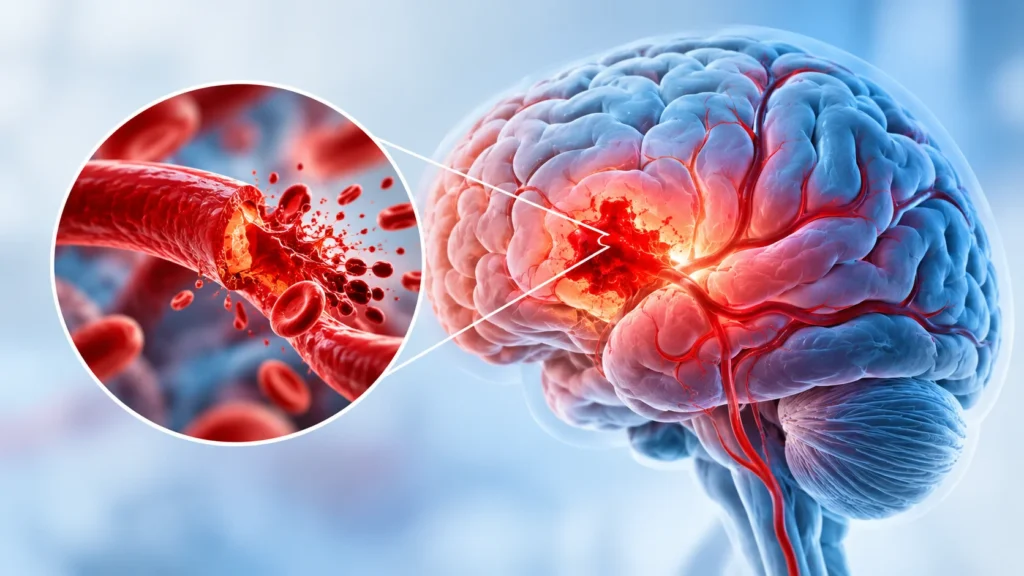
A brain hemorrhage is a serious medical emergency that happens when bleeding occurs inside or around the brain. It is also called a brain bleed, cerebral hemorrhage, or intracranial hemorrhage. When blood leaks into brain tissue or the spaces around the brain, it increases pressure inside the skull and can damage brain cells. This can lead to weakness, speech problems, vision changes, seizures, unconsciousness, or even death if treatment is delayed.
Brain hemorrhage is different from an ischemic stroke, which happens when blood flow to the brain is blocked. In a hemorrhagic stroke, the problem is bleeding rather than blockage. Both are emergencies, but the treatment approach is different. That is why early recognition and urgent hospital evaluation are extremely important.
Many people ignore early warning signs such as sudden severe headache, weakness on one side of the body, slurred speech, or dizziness. They may think it is migraine, stress, low blood sugar, or tiredness. But when these symptoms appear suddenly, they may be signs of bleeding in the brain. Every minute matters because brain cells begin to suffer damage when bleeding and pressure rise.
What is Brain Hemorrhage?
A brain hemorrhage is bleeding inside or around the brain. It happens when a blood vessel in the brain bursts or leaks. The leaked blood can collect inside the brain tissue or in the spaces surrounding the brain. As blood builds up, it increases pressure inside the skull and can compress or damage nearby brain tissue.
The brain is enclosed in a fixed space inside the skull. Unlike other parts of the body, there is very little room for swelling or extra blood. When bleeding occurs, pressure rises quickly. This pressure can reduce blood flow to healthy parts of the brain and cause brain cells to die. The effects depend on the location and amount of bleeding.
A brain hemorrhage can be mild in some cases, especially if it is small and detected early. But in many cases, it is severe and life-threatening. The outcome depends on how quickly the patient reaches the hospital, the size of the bleed, the area of the brain affected, and the patient’s overall health.
Types of Brain Hemorrhage
Brain hemorrhage can happen in different areas of the brain. The type depends on where the bleeding occurs.
Types based on location
- Intracerebral hemorrhage, which is bleeding directly inside the brain tissue.
- Subarachnoid hemorrhage, which is bleeding in the space between the brain and the thin tissues covering it.
- Subdural hemorrhage, which is bleeding between the brain and the outer covering of the brain.
- Epidural hemorrhage, which is bleeding between the skull and the outer covering of the brain.
- Intraventricular hemorrhage, which is bleeding into the fluid-filled spaces inside the brain.
Types based on cause
- Hypertensive brain hemorrhage, caused by long-term high blood pressure.
- Aneurysm-related hemorrhage, caused by rupture of a weakened blood vessel.
- Traumatic brain hemorrhage, caused by head injury.
- Hemorrhage due to blood-thinning medicines.
- Hemorrhage related to blood vessel malformations.
- Hemorrhage due to bleeding disorders or liver disease.
Types based on severity
- Small hemorrhage, which may cause mild or moderate symptoms.
- Moderate hemorrhage, which causes noticeable neurological problems.
- Large hemorrhage, which can cause severe brain damage, coma, or death.
Causes of Brain Hemorrhage
Brain hemorrhage can happen for many reasons. The most common cause is long-term high blood pressure, but there are several other factors that can lead to bleeding in the brain.
Common causes include:
- High blood pressure over many years.
- Rupture of a brain aneurysm.
- Head injury or trauma.
- Blood vessel malformations in the brain.
- Use of blood-thinning medicines.
- Bleeding disorders.
- Liver disease affecting clotting.
- Brain tumors.
- Drug abuse, especially cocaine or amphetamines.
- Cerebral amyloid angiopathy, a condition seen more often in older adults.
- Infections that weaken blood vessels.
- Severe hypertension during pregnancy in some cases.
Why high blood pressure is the biggest risk
High blood pressure puts constant force on the walls of blood vessels. Over time, this can weaken the vessel walls, especially in small arteries deep inside the brain. When the wall becomes too weak, it can burst and cause bleeding. This is why controlling blood pressure is one of the most important ways to prevent brain hemorrhage.
Risk Factors for Brain Hemorrhage
Some people are more likely to develop brain hemorrhage than others.
Higher-risk groups
- People with uncontrolled high blood pressure.
- Older adults.
- People with a history of stroke or aneurysm.
- Smokers.
- Heavy alcohol users.
- People taking blood thinners.
- Patients with liver disease.
- People with bleeding disorders.
- Those with brain tumors or vascular malformations.
- People who abuse drugs such as cocaine or methamphetamine.
- Individuals with a family history of brain hemorrhage or aneurysm.
Why risk increases in these groups
- High blood pressure weakens vessel walls.
- Smoking damages blood vessels.
- Alcohol increases bleeding risk and blood pressure.
- Blood thinners reduce clotting ability.
- Liver disease affects clotting factors.
- Age-related changes make vessels more fragile.
- Trauma can directly damage blood vessels.
Symptoms of Brain Hemorrhage
Symptoms depend on the location and size of the bleed. They often appear suddenly and can worsen quickly.
Common symptoms
- Sudden severe headache.
- Nausea and vomiting.
- Weakness or numbness on one side of the body.
- Difficulty speaking or slurred speech.
- Vision problems.
- Dizziness or loss of balance.
- Confusion.
- Seizures.
- Loss of consciousness.
- Stiff neck.
- Sensitivity to light.
Symptoms based on location
- Bleeding in the front part of the brain may cause weakness, speech problems, or personality changes.
- Bleeding in the back part of the brain may cause vision problems or balance issues.
- Bleeding in the brainstem can affect breathing, consciousness, and vital functions.
- Bleeding near the surface may cause headache, neck stiffness, or sensitivity to light.
Emergency warning signs
- Sudden severe headache unlike any before.
- Fainting or loss of consciousness.
- Seizure.
- Sudden weakness on one side of the body.
- Trouble speaking or understanding speech.
- Sudden vision loss or double vision.
- Severe vomiting.
- Stiff neck with severe headache.
Brain Hemorrhage in Different Age Groups
Brain hemorrhage can affect people of different ages, but the cause and pattern may vary.
In young adults
- May be related to trauma, drug use, or vascular malformations.
- Aneurysm rupture can happen even in younger people.
- Symptoms may be mistaken for migraine or stress.
In middle-aged adults
- More likely to be linked to high blood pressure and lifestyle factors.
- May be discovered during tests for other conditions.
- Rupture risk increases with uncontrolled hypertension.
In older adults
- Higher risk due to vessel fragility and long-standing hypertension.
- May be related to cerebral amyloid angiopathy.
- Recovery may be slower due to other health conditions.
How is Brain Hemorrhage Diagnosed?
Diagnosis is based on symptoms, neurological examination, and imaging tests. Since brain hemorrhage is an emergency, tests are done quickly.
Diagnostic steps
- Detailed history of symptoms and onset.
- Neurological examination to check consciousness, strength, reflexes, and coordination.
- Blood pressure and vital sign assessment.
- Imaging tests to locate and measure the bleed.
- Blood tests to check clotting and overall health.
Common tests that may be done
- CT scan of the head, which is the fastest and most common test.
- MRI of the brain for detailed imaging.
- CT angiography to look for aneurysm or vascular malformation.
- MR angiography to evaluate blood vessels.
- Cerebral angiography for detailed vessel mapping.
- Blood tests for clotting and platelet count.
- Lumbar puncture in selected cases if subarachnoid hemorrhage is suspected.
Why diagnosis matters
Early diagnosis helps doctors decide the right treatment. It also helps identify the cause, such as aneurysm, hypertension, trauma, or bleeding disorder. Quick diagnosis can save brain tissue and improve outcomes.
Emergency Treatment for Brain Hemorrhage
Brain hemorrhage is a medical emergency. Treatment begins as soon as the patient reaches the hospital.
Initial emergency care
- Stabilization of airway, breathing, and circulation.
- Control of blood pressure.
- Monitoring of consciousness and neurological status.
- Prevention of further bleeding.
- Management of brain swelling.
- Treatment of seizures if present.
- Correction of clotting problems if needed.
1. Blood pressure control
High blood pressure can worsen bleeding. Doctors use medicines to bring it down safely.
- Medicines are given through IV in emergency settings.
- Blood pressure is monitored closely.
- The goal is to reduce pressure without reducing blood flow to the brain.
2. Management of brain swelling
Bleeding can cause swelling and increased pressure inside the skull.
- Medicines may be given to reduce swelling.
- In severe cases, surgery may be needed to relieve pressure.
- Monitoring in intensive care is often required.
3. Surgery
Surgery may be needed depending on the size and location of the bleed.
- Craniotomy, where part of the skull is opened to remove the blood clot.
- Minimally invasive procedures to drain the bleed.
- Aneurysm clipping or coiling if an aneurysm is the cause.
- Decompressive surgery to relieve pressure in severe cases.
4. Supportive care
For patients with severe hemorrhage, intensive care is often needed.
- Ventilator support if breathing is affected.
- Fluid and electrolyte management.
- Prevention of infections.
- Nutrition support.
- Monitoring for complications such as hydrocephalus or seizures.
Recovery After Brain Hemorrhage
Recovery depends on the size and location of the bleed, the patient’s age, and the speed of treatment.
Recovery in the hospital
- Intensive care monitoring in the first days.
- Gradual improvement in consciousness and neurological function.
- Monitoring for complications.
- Rehabilitation planning once stable.
Recovery after discharge
- Ongoing rehabilitation for weakness, speech, or balance issues.
- Physical therapy for mobility and strength.
- Occupational therapy for daily activities.
- Speech therapy if speech or swallowing is affected.
- Psychological support for mood and memory changes.
- Regular follow-up with neurology or neurosurgery.
Factors that affect recovery
- Size and location of the hemorrhage.
- Age and overall health.
- Speed of treatment.
- Presence of complications.
- Quality of rehabilitation.
Possible Complications
Brain hemorrhage can lead to serious complications, especially if it is large or treatment is delayed.
Complications may include:
- Brain damage.
- Increased pressure inside the skull.
- Hydrocephalus, which is fluid buildup in the brain.
- Seizures.
- Stroke.
- Infection.
- Blood vessel spasm reducing blood flow.
- Long-term disability.
- Cognitive or memory problems.
- Emotional or mood changes.
- Death in severe cases.
Why complications happen
When bleeding occurs, blood collects and increases pressure. This can damage brain tissue and reduce oxygen supply. The brain is very sensitive to pressure changes, which is why complications can be severe.
When to See a Doctor
Medical evaluation is important for people with risk factors or symptoms that suggest brain hemorrhage.
- Persistent headache with no clear cause.
- Vision changes or double vision.
- Weakness or numbness on one side of the body.
- Difficulty speaking.
- Seizures.
- Family history of aneurysm or hemorrhage.
- High blood pressure with new neurological symptoms.
Prevention of Brain Hemorrhage
Not all brain hemorrhages can be prevented, but risk can be reduced.
Prevention pointers
- Control blood pressure regularly.
- Stop smoking completely.
- Limit alcohol intake.
- Avoid drug abuse, especially stimulants.
- Maintain a healthy weight.
- Follow a balanced diet low in salt and saturated fat.
- Exercise regularly.
- Manage stress.
- Get regular health check-ups.
- Seek evaluation if there is a strong family history.
For people with high blood pressure
- Take medicines exactly as prescribed.
- Monitor blood pressure at home.
- Avoid skipping doses.
- Follow up regularly with a doctor.
For people with aneurysm or vascular malformation
- Follow medical advice for monitoring or treatment.
- Be extra careful about blood pressure and lifestyle.
- Discuss screening options with a doctor if there is family history.
Why Choose Rama Hospital for Brain Hemorrhage Treatment?
Brain hemorrhage is a complex condition that requires expert neurology and neurosurgery care, advanced imaging, and intensive support. A hospital with experienced specialists and modern technology can make a major difference in outcomes.
- Expert evaluation by neurology and neurosurgery specialists.
- Advanced imaging for accurate diagnosis.
- Emergency and intensive care support.
- Minimally invasive and open surgical options.
- Rehabilitation and long-term follow-up.
- Coordinated care for complications and recovery.
Frequently Asked Questions (FAQs)
Is brain hemorrhage the same as stroke?
A brain hemorrhage is a type of stroke called hemorrhagic stroke. It is different from ischemic stroke, which is caused by a blockage. Both are emergencies but need different treatments.
What are the warning signs of brain hemorrhage?
Warning signs include sudden severe headache, weakness on one side, slurred speech, vision changes, vomiting, or loss of consciousness. These symptoms often appear suddenly and worsen quickly.
How is brain hemorrhage diagnosed?
Diagnosis is done using CT scan, MRI, CT angiography, or cerebral angiography. These tests help locate the bleed and identify the cause.
What is the treatment for brain hemorrhage?
Treatment includes blood pressure control, management of brain swelling, and sometimes surgery. The goal is to stop bleeding, reduce pressure, and prevent further brain damage.
Can a person recover from brain hemorrhage?
Yes, many people recover, especially if the bleed is small and treatment is quick. Recovery depends on the size, location, and severity of the hemorrhage.
What are the long-term effects of brain hemorrhage?
Long-term effects may include weakness, speech problems, memory issues, or seizures. Rehabilitation can help improve function and quality of life.
Can brain hemorrhage be prevented?
Not all cases can be prevented, but risk can be reduced. Controlling blood pressure, avoiding smoking, limiting alcohol, and managing health conditions are key steps.
Conclusion
Brain hemorrhage is a serious and life-threatening condition that requires immediate medical attention. It happens when bleeding occurs inside or around the brain, causing pressure and damage to brain tissue. The outcome depends on how quickly the patient reaches the hospital, the size of the bleed, and the area of the brain affected.
The most important steps are early recognition, urgent hospital evaluation, and prompt treatment. For patients with sudden severe headache, weakness, speech problems, or loss of consciousness, emergency care should not be delayed. With the right treatment and rehabilitation, many patients can recover and return to a better quality of life.
Rama Hospital can provide expert evaluation, emergency treatment, and rehabilitation support for brain hemorrhage, along with guidance on prevention and long-term care.