A child suddenly feels warmer than usual, refuses to eat, becomes unusually quiet or starts crying more often than normal. For most parents, these changes immediately raise one concern: Is it just a common fever, or could something more serious be happening?
Fever is one of the most common reasons parents seek medical advice for their children. It can develop during a common viral infection, a throat infection, an ear infection or several other childhood illnesses. In many cases, the temperature settles as the child’s body fights the infection. However, certain symptoms and age-related warning signs should never be ignored.
Understanding fever in children is important because the temperature reading is only one part of the picture. A child’s age, behaviour, breathing, feeding habits, hydration and overall appearance also help determine whether medical attention is needed.
What Is Considered a Fever in Children?
A fever is a temporary rise in body temperature, usually occurring as the body’s natural response to an infection or illness. In general, a temperature of 38°C (100.4°F) or above is considered a fever when measured using an appropriate method.
The body’s temperature is regulated by the hypothalamus, a part of the brain that acts like an internal thermostat. When the immune system responds to an infection, chemical signals can cause the hypothalamus to raise the body’s temperature.
This is why a child may feel unusually warm, develop chills or become uncomfortable during an illness.
However, fever in children does not always indicate a serious infection. A child with a moderate temperature who is drinking fluids, responding normally and showing interest in playing may be less concerning than a child with a lower temperature who is unusually sleepy, breathing abnormally or refusing feeds.
How to check your child’s temperature
A digital thermometer is a practical option for checking body temperature at home.
Parents should:
- Use a reliable digital thermometer and follow its instructions.
- Record the temperature and the time it was measured.
- Use the same measurement method when monitoring changes, where possible.
- Avoid relying only on touching the forehead to judge whether a child has a fever.
For young children, an underarm measurement is commonly used in India. However, temperature readings can vary depending on the measurement site, so inform the doctor how the temperature was taken.
What Causes Fever in Children?
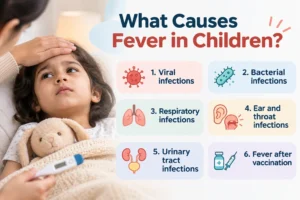
There are several possible child fever causes, ranging from common viral infections to bacterial illnesses. Fever is a symptom rather than a disease itself, which means identifying the underlying reason is important.
Some causes settle with supportive care, while others may require medical evaluation and specific treatment.
1. Viral infections
Viral infections are among the most common reasons for childhood fever.
These infections may affect the respiratory system, digestive system or other parts of the body. Children may develop a runny nose, cough, sore throat, tiredness or reduced appetite along with a raised temperature.
Common examples include:
- Common cold.
- Influenza (flu).
- Viral throat infections.
- Respiratory syncytial virus (RSV).
- Other seasonal viral infections.
In many cases, viral fever improves gradually with rest, adequate fluids and appropriate symptom management.
2. Bacterial infections
Some bacterial infections can also cause fever and may require medical treatment.
Examples include:
- Ear infections.
- Urinary tract infections (UTIs).
- Bacterial throat infections.
- Pneumonia.
- Certain skin and soft-tissue infections.
The symptoms may differ depending on the affected body part. For example, a child with a urinary tract infection may experience painful urination, frequent urination, abdominal discomfort or unexplained fever.
A doctor may recommend urine tests, blood investigations or other assessments depending on the child’s symptoms.
3. Respiratory infections
Respiratory infections can cause fever along with coughing, sneezing, a blocked nose and throat discomfort.
Parents often notice child cough and cold symptoms appearing together, particularly during seasonal changes.
Most uncomplicated respiratory infections are viral. However, persistent cough, breathing difficulty, chest discomfort or worsening symptoms should be evaluated by a doctor.
4. Ear and throat infections
Children may develop fever because of infections involving the middle ear, tonsils or throat.
Some associated symptoms include:
- Ear pain or pulling at the ear.
- Difficulty swallowing.
- Sore throat.
- Swollen tonsils.
- Irritability, particularly in younger children.
A physical examination helps identify whether an infection is present and whether further treatment is required.
5. Urinary tract infections
A UTI may sometimes cause fever without obvious cold or respiratory symptoms.
Younger children may not be able to explain what they are experiencing. Parents may instead notice poor feeding, vomiting, irritability or unusual crying.
Unexplained fever, especially in infants and young children, should be assessed rather than automatically attributed to a seasonal viral infection.
6. Fever after vaccination
Some children develop a mild, temporary rise in temperature after receiving certain vaccinations.
This is generally a normal immune response and often settles without complications. However, parents should follow the vaccination advice provided by their healthcare professional and seek medical guidance if the child develops concerning symptoms.
Understanding the possible child fever causes helps parents avoid unnecessary medication and ensures that an infection requiring treatment is not overlooked.
When Should You Worry About Fever in Children?
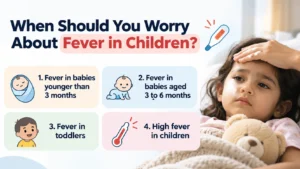
Not every temperature rise requires an emergency hospital visit. However, certain situations require prompt medical attention, particularly in infants and children with additional symptoms.
The most important factors are the child’s age, general condition and associated symptoms.
1. Fever in babies younger than 3 months
A temperature of 38°C (100.4°F) or above in a baby younger than three months requires urgent medical assessment, even if the baby appears relatively comfortable.
Very young infants have developing immune systems and may not show obvious signs of serious infection.
Parents should not wait for the temperature to increase further or for additional symptoms to appear before seeking medical advice.
2. Fever in babies aged 3 to 6 months
A temperature of 39°C (102.2°F) or above in a baby aged three to six months requires prompt medical evaluation.
Even with a lower temperature, seek advice if the baby:
- Is feeding less than usual.
- Has fewer wet nappies.
- Appears unusually sleepy.
- Cries continuously or cannot be comforted.
- Develops a rash or breathing difficulty.
3. Fever in toddlers
Fever in toddlers is common because young children are frequently exposed to new infections as they grow and interact with other children.
However, parents should pay attention to changes in behaviour rather than focusing only on the thermometer reading.
For example, a toddler who is drinking fluids, responding normally and becoming more active between fever episodes may be less concerning than one who remains unusually drowsy or refuses to drink.
Consult a doctor if the fever persists, repeatedly returns, is accompanied by worsening symptoms or causes concern.
4. High fever in children
High fever in children can occur during both viral and bacterial infections. A high reading does not automatically mean that the illness is dangerous, but it should be interpreted alongside the child’s age and overall condition.
Seek medical advice if the temperature repeatedly reaches 40°C (104°F), if the child appears very unwell or if the fever is accompanied by other concerning symptoms.
For children aged six months and older, the height of the temperature alone cannot reliably distinguish a mild infection from a serious one.
5. Fever lasting five days or longer
A fever that continues for five days or more needs medical assessment.
Persistent fever may require further investigation to identify the underlying cause. Doctors may also consider conditions such as Kawasaki disease, particularly when fever is accompanied by red eyes, changes to the lips or tongue, a rash or swelling of the hands and feet.
Do not keep treating a prolonged fever at home without understanding why it is continuing.
Warning Signs That Should Never Be Ignored
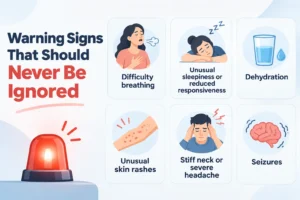
Parents should look beyond the temperature reading and observe how their child is behaving.
Certain symptoms may indicate a serious infection or another condition requiring urgent medical attention.
Difficulty breathing
Breathing difficulty is an important warning sign.
Watch for:
- Very fast or laboured breathing.
- Chest or skin pulling inward between the ribs.
- Grunting sounds while breathing.
- Bluish or grey lips.
- Unusual pauses in breathing.
If these symptoms occur, seek emergency medical care immediately.
Unusual sleepiness or reduced responsiveness
Children may become tired during an illness, but extreme drowsiness is different from ordinary tiredness.
Seek urgent help if your child:
- Is difficult to wake.
- Does not respond normally.
- Appears confused or unusually unresponsive.
- Has become extremely weak or floppy.
Dehydration
Fever increases fluid requirements, and children may become dehydrated if they are drinking less, sweating or experiencing vomiting and diarrhoea.
Look for signs such as:
- Dry mouth and tongue.
- Reduced urine output.
- Fewer wet nappies.
- Sunken eyes.
- Crying without tears.
- Unusual tiredness.
If your child cannot keep fluids down or shows significant dehydration, seek medical assessment.
Unusual skin rashes
Some rashes occur during common viral infections. However, a rash that does not fade when pressed may indicate a serious condition.
A non-blanching rash, especially when accompanied by fever or an unwell appearance, requires immediate medical attention.
Do not delay seeking help to observe whether the rash spreads.
Stiff neck or severe headache
A stiff neck, severe headache, sensitivity to light or repeated vomiting alongside fever can indicate a serious infection involving the nervous system.
These symptoms require emergency evaluation.
Seizures
Some children experience febrile seizures during an illness involving fever.
A seizure may involve stiffening, jerking movements, loss of awareness or unusual eye movements.
If a child has a seizure:
- Place the child on a safe surface.
- Gently turn them onto their side when possible.
- Move nearby objects away to prevent injury.
- Do not put anything inside the child’s mouth.
- Do not restrain their movements.
- Note how long the seizure lasts.
Seek emergency medical assistance, particularly if this is the child’s first seizure, the seizure lasts more than five minutes, breathing is affected or the child does not recover normally.
How Is Fever in Children Different at Different Ages?
A child’s age plays an important role in deciding how quickly medical attention is needed.
The immune system, ability to communicate symptoms and risk of complications can differ significantly between infants, toddlers and older children.
| Age group | What parents should know |
| Below 3 months | A temperature of 38°C or above requires urgent medical assessment. |
| 3–6 months | A temperature of 39°C or above needs prompt evaluation. |
| 6–12 months | Observe feeding, wet nappies, breathing and responsiveness. Seek advice for concerning symptoms. |
| 1–3 years | Monitor activity, fluid intake, urine output and changes in behaviour. |
| Above 3 years | Pay attention to persistent fever, worsening symptoms and the child’s overall condition. |
These are general guidance points, not a substitute for individual medical assessment. A child can be seriously unwell even without reaching a particular temperature threshold.
What Should You Do When Your Child Has a Fever?
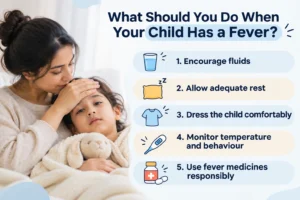
When a child develops fever in children-related symptoms, parents often become anxious and start trying different home remedies or medicines.
The better approach is to keep the child comfortable, maintain hydration and monitor symptoms carefully.
1. Encourage fluids
Give your child frequent opportunities to drink fluids.
Depending on the child’s age, this may include:
- Breast milk or formula for infants.
- Water for older babies and children.
- Oral rehydration solution (ORS) when advised or appropriate, particularly if vomiting or diarrhoea is present.
- Regular fluids throughout the day.
If your baby is breastfeeding, continue offering breastfeeds regularly.
2. Allow adequate rest
Rest helps children recover from illness.
Let your child sleep when tired and avoid forcing them to participate in strenuous activities.
There is no need to keep a child in bed if they feel comfortable enough to play quietly.
3. Dress the child comfortably
Avoid wrapping your child in multiple layers of clothing or heavy blankets.
Choose comfortable clothing and maintain a pleasant room temperature.
Do not use ice baths, cold-water baths or alcohol rubs to bring down the temperature.
4. Monitor temperature and behaviour
Keep a simple record of:
- Temperature readings.
- Time of each reading.
- Medicines given, including the dose and time.
- Fluid intake and urine output.
- Any new or worsening symptoms.
This information can help the doctor understand how the illness has progressed.
5. Use fever medicines responsibly
Paracetamol or ibuprofen may be recommended to relieve discomfort, depending on the child’s age, weight and medical condition.
However, these medicines should be used according to appropriate paediatric dosing instructions.
Parents should remember:
- Never give aspirin to children unless specifically directed by a specialist.
- Do not give adult medicines or adult doses to children.
- Avoid combining medicines containing the same active ingredient.
- Do not alternate paracetamol and ibuprofen unless advised by a healthcare professional.
- Ibuprofen may not be suitable for certain children, including those who are dehydrated or have particular medical conditions.
- Do not give fever medicine to a baby younger than two months without medical advice.
The goal of fever medicine is to make the child more comfortable, not necessarily to bring the thermometer reading back to normal.
Does Fever With Cough and Cold Require a Doctor?
A child with a runny nose, mild cough and fever may have a common viral respiratory infection.
However, parents should not assume that every combination of child cough and cold symptoms is harmless.
The pattern, duration and severity of symptoms matter. Continue monitoring for changes and seek medical advice if the condition worsens.
A doctor can examine the child’s throat, ears and chest and determine whether further tests or treatment are required.
How Do Doctors Diagnose the Cause of Fever?
The treatment of fever depends on what is causing it. A doctor does not usually need to perform every possible test for every child.
Instead, the assessment begins with the child’s medical history, symptoms and physical examination.
Medical history
The doctor may ask:
- When did the fever begin?
- What was the highest recorded temperature?
- Is the fever continuous or intermittent?
- Is there a cough, cold, vomiting or diarrhoea?
- Is the child eating and drinking normally?
- Has the child received any recent vaccinations?
- Has any medicine already been given?
Physical examination
The examination may include checking:
- Temperature and other vital signs.
- Heart rate and breathing pattern.
- Hydration.
- Ears, nose and throat.
- Chest and lungs.
- Skin and any unusual rashes.
- Abdomen and other relevant areas.
Diagnostic tests
Depending on the findings, the doctor may recommend:
- Blood tests.
- Urine examination and culture.
- Throat swab.
- Chest X-ray, if clinically indicated.
- Other investigations based on suspected infection.
Not every child with a fever requires blood tests or imaging. The decision depends on age, symptoms, examination findings and clinical risk.
Why You Should Avoid Self-Medicating Your Child
One of the common mistakes parents make is giving antibiotics or multiple fever medicines without medical advice.
Antibiotics do not treat viral infections. Using them unnecessarily can contribute to antibiotic resistance and expose children to avoidable side effects.
Similarly, cough and cold combinations may not be appropriate for young children.
If you are unsure about the correct medicine, dose or duration, consult a qualified paediatrician.
A proper assessment is particularly important when the fever is persistent, the child is very young or new symptoms appear.
When Should You Visit a Paediatrician?
Knowing when to seek professional advice can help parents avoid unnecessary panic while ensuring that important symptoms are not overlooked.
For babies below three months with a temperature of 38°C or above, do not wait for a routine appointment. Seek urgent medical assessment.
Go to the nearest emergency department if your child has:
- Severe breathing difficulty.
- Blue, grey or unusually pale lips or skin.
- A seizure, particularly a first seizure.
- Unresponsiveness or difficulty waking.
- A stiff neck with fever.
- A rash that does not fade when pressed.
- Severe dehydration.
- Sudden deterioration in their overall condition.
When these warning signs appear, immediate medical care is more important than waiting for the fever to settle.
How Can Parents Reduce the Risk of Common Childhood Infections?
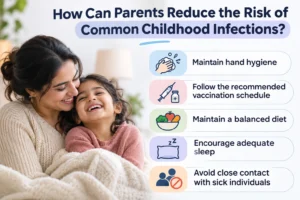
Not all childhood infections can be prevented, but everyday precautions can reduce exposure to several common infections.
Parents can encourage the following habits:
Maintain hand hygiene
Teach children to wash their hands with soap and water, particularly before meals and after using the toilet.
Follow the recommended vaccination schedule
Vaccination protects children against several serious infectious diseases. Follow the immunisation schedule recommended by your child’s healthcare professional.
Maintain a balanced diet
Offer age-appropriate meals containing fruits, vegetables, proteins and other essential nutrients.
A balanced diet supports normal growth and overall health, although it cannot guarantee that a child will not develop infections.
Encourage adequate sleep
Children need sufficient sleep for healthy growth and development.
Maintain consistent sleeping routines according to your child’s age.
Avoid close contact with sick individuals
When possible, limit close contact with people who have contagious respiratory illnesses. Teach children to cover their mouth and nose when coughing or sneezing.
Frequently Asked Questions (FAQs)
1. What temperature is considered a fever in children?
A temperature of 38°C (100.4°F) or above is generally considered a fever. However, readings can vary depending on the measurement method. Always consider your child’s age, behaviour and other symptoms alongside the temperature.
2. When should I worry about fever in children?
Seek urgent medical attention if a baby younger than three months has a temperature of 38°C or above. For older children, difficulty breathing, unusual sleepiness, dehydration, a non-fading rash, stiff neck or seizures are important warning signs requiring urgent evaluation.
3. What are the common child fever causes?
Common child fever causes include viral respiratory infections, influenza, ear infections, throat infections, urinary tract infections and certain bacterial illnesses. Recent vaccinations can also cause temporary fever.
4. Is fever in toddlers dangerous?
Fever in toddlers is often associated with common infections and is not always dangerous. However, persistent fever, poor fluid intake, breathing difficulty, unusual drowsiness or other warning signs require medical assessment.
5. What should I do if my child has high fever at night?
Check the temperature using a digital thermometer, offer appropriate fluids and observe your child’s behaviour and breathing. If your child shows emergency warning signs, seek immediate medical care rather than waiting until morning.
6. Can child cough and cold cause fever?
Yes. Viral respiratory infections can cause both symptoms together. However, worsening cough, difficulty breathing, persistent fever or reduced fluid intake should be evaluated by a doctor.
7. Should I give antibiotics for fever in children?
No. Antibiotics should only be used when prescribed for an appropriate bacterial infection. They do not treat viral illnesses, which are a common cause of childhood fever.
8. How long does fever usually last in children?
Many common viral fevers improve within a few days. However, fever lasting five days or longer needs medical assessment. The duration alone does not establish whether an infection is serious, so associated symptoms must also be considered.
9. Can a child sleep when they have a fever?
Yes. A child can generally sleep when unwell, provided there are no emergency warning signs. Check on them regularly, including during the night, and ensure that they are breathing comfortably and can be roused normally.
10. When should I take my child to a paediatrician?
Consult a paediatrician if the fever persists, repeatedly returns, is accompanied by concerning symptoms or if your child is not recovering as expected. Babies under three months with a temperature of 38°C or above need urgent medical assessment.
Conclusion
Fever is a common part of childhood, but knowing when it requires medical attention can make a significant difference.
Most importantly, parents should look at the complete picture rather than focusing only on the temperature reading. A child’s age, feeding habits, breathing, activity level and hydration provide important clues about their health.
While many episodes of fever in children improve with appropriate supportive care, persistent symptoms and warning signs should never be ignored. Timely medical evaluation helps identify the underlying cause and ensures that children receive the right treatment when needed.
At Rama Hospital, Noida, parents can consult a paediatrician in Noida for the evaluation and management of childhood illnesses, including fever, respiratory infections and other common paediatric concerns.
If your child has a persistent fever or you notice unusual symptoms, seek medical advice instead of relying on self-medication.
Because when it comes to your child’s health, recognising the warning signs early matters.