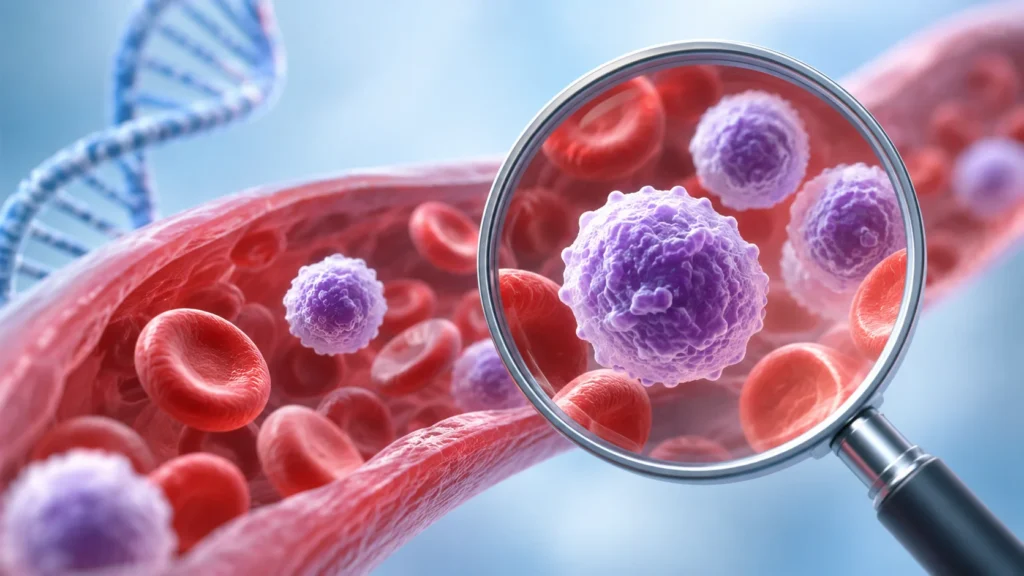
Leukemia is a type of cancer that affects the blood and bone marrow. It happens when the body produces abnormal white blood cells that do not function properly. These abnormal cells grow faster than normal cells and crowd out healthy blood cells, making it harder for the body to fight infection, carry oxygen, and control bleeding.
Leukemia can affect people of any age, from children to older adults. Some types grow slowly and may not cause symptoms for years. Others grow quickly and need urgent treatment. Because the symptoms can be vague at first, such as tiredness, frequent infections, or easy bruising, many people do not realize something is wrong until the disease has progressed.
What is Leukemia?
Leukemia is a cancer of the blood-forming cells in the bone marrow. The bone marrow is the soft tissue inside bones that makes red blood cells, white blood cells, and platelets. In this, the marrow starts producing abnormal white blood cells that do not mature properly.
These abnormal cells, called leukemia cells or blasts, build up in the bone marrow and blood. As they multiply, they crowd out healthy cells. This leads to anemia, infection risk, and bleeding problems. In some cases, cells can spread to other organs such as the lymph nodes, liver, spleen, or brain.
This is not a single disease. It is a group of related cancers with different types, behaviors, and treatments. Some types are acute and progress quickly, while others are chronic and develop slowly over time.
Types of Leukemia
This is classified based on how fast it grows and which type of white blood cell is affected.
Based on speed of growth
- Acute leukemia, which grows quickly and needs urgent treatment.
- Chronic leukemia, which develops slowly and may not cause symptoms for a long time.
Based on the type of white blood cell affected
- Lymphocytic leukemia, which affects lymphocytes, a type of white blood cell involved in immunity.
- Myeloid leukemia, which affects myeloid cells, which normally develop into red blood cells, platelets, or certain white blood cells.
Common types of leukemia
- Acute lymphoblastic leukemia, or ALL, which is the most common type in children.
- Acute myeloid leukemia, or AML, which is more common in adults.
- Chronic lymphocytic leukemia, or CLL, which usually affects older adults and grows slowly.
- Chronic myeloid leukemia, or CML, which is linked to a specific genetic change called the Philadelphia chromosome.
- Hairy cell leukemia, which is a rare, slow-growing type.
- Other rare forms such as juvenile myelomonocytic leukemia or mixed lineage leukemia.
Why the type matters
Each type of condition behaves differently and responds to different treatments. Knowing the exact type helps doctors choose the right therapy and predict how the disease may progress.
Causes of Leukemia
The exact cause ofthis condition is not always known. In many cases, it happens because of changes in the DNA of blood-forming cells. These changes can be inherited or acquired over time.
Common causes and contributing factors
- Genetic mutations in bone marrow cells.
- Inherited genetic conditions that increase risk.
- Exposure to high levels of radiation.
- Exposure to certain chemicals such as benzene.
- Previous chemotherapy or radiation therapy for other cancers.
- Certain viral infections.
- Smoking.
- Family history of leukemia.
- Immune system disorders.
- Age-related changes in blood cell production.
How genetic changes happen
Some people are born with genetic changes that make this condition more likely. Others develop changes later in life due to environmental exposure, infections, or random errors in cell division. These changes can cause cells to grow uncontrollably and avoid normal cell death.
Risk Factors for Leukemia
Some people are more likely to develop this condition than others.
Higher-risk groups
- People with a family history of leukemia.
- Those with certain genetic disorders such as Down syndrome.
- People exposed to radiation or harmful chemicals.
- Patients who received chemotherapy or radiation in the past.
- Smokers.
- People with weakened immune systems.
- Those with certain viral infections.
- Older adults, especially for chronic types.
- Children with certain inherited conditions.
Why risk increases in these groups
- Genetic changes can make blood cells more vulnerable.
- Radiation and chemicals can damage DNA.
- Previous cancer treatment can increase risk years later.
- Immune problems can reduce the body’s ability to control abnormal cells.
- Age-related changes in the marrow can lead to abnormal cell growth.
Symptoms of Leukemia
Symptoms depend on the type of this condition, how fast it is growing, and how much it has affected blood counts and organs.
Common symptoms
- Fatigue and weakness.
- Frequent or severe infections.
- Fever or chills.
- Easy bruising.
- Bleeding gums or nosebleeds.
- Tiny red spots on the skin, called petechiae.
- Pale skin.
- Shortness of breath.
- Weight loss.
- Loss of appetite.
- Swollen lymph nodes.
- Pain or fullness in the belly due to enlarged spleen or liver.
- Bone or joint pain.
- Night sweats.
- Headaches or confusion in some cases.
Symptoms of acute leukemia
- Sudden onset of symptoms.
- High fever.
- Severe fatigue.
- Frequent infections.
- Easy bleeding or bruising.
- Rapid weight loss.
- Bone pain.
- Severe anemia.
Symptoms of chronic leukemia
- May have no symptoms for years.
- Slow onset of fatigue.
- Mild weight loss.
- Enlarged lymph nodes.
- Recurrent infections.
- Mild anemia.
- Fullness in the belly.
Leukemia in Children
This condition is the most common cancer in children, especially acute lymphoblastic leukemia.
Common signs in children
- Persistent fever.
- Fatigue and weakness.
- Pale skin.
- Easy bruising.
- Frequent nosebleeds.
- Bone or joint pain.
- Swollen lymph nodes.
- Loss of appetite.
- Weight loss.
- Recurrent infections.
Why early detection matters
Children often respond well to treatment, especially when this condition is caught early. Early diagnosis improves the chance of remission and long-term survival. Parents should not ignore persistent fever, bruising, or fatigue in a child.
Leukemia in Adults
Adults are more likely to develop chronic types of this condition, but acute types can also occur.
Common signs in adults
- Fatigue.
- Weight loss.
- Night sweats.
- Frequent infections.
- Easy bruising.
- Swollen lymph nodes.
- Bone pain.
- Shortness of breath.
- Pale skin.
Why adults may be diagnosed later
Adults may mistake early symptoms for stress, aging, or other common conditions. Chronic leukemia may grow slowly for years before causing noticeable problems. Regular health check-ups can help detect abnormal blood counts early.
How is Leukemia Diagnosed?
Diagnosis is based on symptoms, physical examination, blood tests, and bone marrow studies. Since this condition affects blood cells, lab tests are essential for confirmation.
Diagnostic steps
- Detailed medical history.
- Physical examination for swollen lymph nodes, spleen, or liver.
- Blood tests to check blood counts.
- Bone marrow biopsy to examine cells directly.
- Genetic and molecular testing to identify specific mutations.
- Imaging tests if organs are enlarged or other complications are suspected.
Common tests that may be done
- Complete blood count, or CBC, to check red cells, white cells, and platelets.
- Peripheral blood smear to look at cell shape and maturity.
- Bone marrow aspiration and biopsy.
- Flow cytometry to identify cell types.
- Cytogenetic testing to look for chromosomal changes.
- Molecular testing for specific gene mutations.
- Imaging such as CT scan or ultrasound if needed.
Why diagnosis matters
Accurate diagnosis is essential to determine the type of leukemia, its stage, and the best treatment plan. Different types respond to different therapies, so getting the right diagnosis is the first step toward effective care.
Treatment for Leukemia
Treatment depends on the type of this condition, the patient’s age, overall health, and how far the disease has progressed.
1. Chemotherapy
Chemotherapy uses medicines to kill the cells or stop them from growing. It is the main treatment for many types of leukemia.
- May be given orally or intravenously.
- Often given in cycles with rest periods.
- Used to achieve remission and prevent relapse.
- Side effects may include nausea, hair loss, fatigue, and infection risk.
2. Targeted therapy
Targeted therapy uses medicines that attack specific genetic changes or proteins in leukemia cells.
- More precise than chemotherapy.
- Often has fewer side effects.
- Used in certain types such as CML or some forms of ALL.
- May be combined with other treatments.
3. Immunotherapy
Immunotherapy helps the immune system recognize and attack leukemia cells.
- Includes monoclonal antibodies.
- May be used in certain types of leukemia.
- Can be combined with chemotherapy or targeted therapy.
- Helps the body fight cancer more effectively.
4. Radiation therapy
Radiation uses high-energy beams to kill leukemia cells or shrink enlarged organs.
- May be used if leukemia cells have spread to the brain or other areas.
- Sometimes used before bone marrow transplant.
- Can help relieve symptoms caused by enlarged organs.
5. Stem cell or bone marrow transplant
This is a procedure to replace damaged bone marrow with healthy stem cells.
- May be used for high-risk or relapsed this condition.
- Can be autologous, using the patient’s own cells, or allogeneic, using donor cells.
- Requires careful matching and preparation.
- Offers a chance of long-term remission in selected patients.
6. Supportive care
Supportive care helps manage symptoms and side effects during treatment.
- Blood transfusions for anemia or low platelets.
- Antibiotics or antifungal medicines for infections.
- Medicines to control nausea or pain.
- Nutritional support.
- Psychological and emotional support.
Recovery After Treatment
Recovery depends on the type of this condition, the treatment used, and the patient’s overall health.
Recovery after chemotherapy
- Gradual return of energy and appetite.
- Regular blood tests to monitor counts.
- Follow-up visits to check for relapse.
- Management of long-term side effects.
Recovery after transplant
- Longer recovery period.
- Close monitoring for infection and graft-versus-host disease.
- Rehabilitation for strength and mobility.
- Emotional and psychological support.
Rehabilitation support
- Physical therapy for strength and endurance.
- Nutritional counseling for recovery.
- Psychological support for anxiety or depression.
- Family education and support.
- Regular follow-up to detect any signs of relapse.
Possible Complications
The condition and its treatment can lead to serious complications.
Complications of leukemia itself
- Severe anemia.
- Frequent or severe infections.
- Bleeding problems.
- Organ damage from this condition cell buildup.
- Spread to brain or other organs.
- Bone pain or fractures.
Complications of treatment
- Infection due to low immunity.
- Bleeding due to low platelets.
- Nausea, vomiting, or hair loss.
- Organ damage from chemotherapy or radiation.
- Graft-versus-host disease after transplant.
- Long-term effects on fertility or growth in children.
Why complications happen
The condition cells crowd out healthy blood cells, leading to anemia, infection, and bleeding. Treatment can also damage healthy cells, causing side effects. Careful monitoring and supportive care help reduce these risks.
When to See a Doctor
Medical evaluation is important for people with symptoms that suggest the condition.
See a doctor if you have:
- Persistent fatigue or weakness.
- Frequent infections.
- Easy bruising or bleeding.
- Pale skin.
- Swollen lymph nodes.
- Bone or joint pain.
- Unexplained weight loss.
- Night sweats.
- Shortness of breath.
Seek urgent care if you have:
- High fever with chills.
- Severe bleeding.
- Severe shortness of breath.
- Confusion or severe headache.
- Rapid worsening of symptoms.
Prevention of Leukemia
Not all the condition can be prevented, but risk can be reduced.
Prevention pointers
- Avoid exposure to radiation and harmful chemicals.
- Do not smoke.
- Limit alcohol intake.
- Maintain a healthy lifestyle.
- Get regular health check-ups.
- Seek early treatment for infections or immune problems.
- Discuss family history with a doctor.
For people with family history
- Discuss screening options with a doctor.
- Be aware of early symptoms.
- Seek medical advice for any unusual or persistent symptoms.
Why Choose Rama Hospital for Leukemia Treatment?
Leukemia is a complex condition that requires expert hematology and oncology care, advanced diagnostics, and comprehensive treatment planning. A hospital with experienced specialists can make a major difference in outcomes.
Why hospital care matters
- Expert evaluation by hematology and oncology specialists.
- Advanced diagnostics including genetic and molecular testing.
- Access to chemotherapy, targeted therapy, immunotherapy, and transplant services.
- Supportive care for side effects and complications.
- Rehabilitation and long-term follow-up.
- Coordinated care for children and adults.
Trust and authority points
- Experienced hematology and oncology team.
- Modern technology for diagnosis and treatment.
- Comprehensive care from diagnosis to recovery.
- Patient education and family support.
- Multidisciplinary approach for best outcomes.
Frequently Asked Questions (FAQs)
1. What is leukemia?
Leukemia is a cancer of the blood and bone marrow where abnormal white blood cells grow uncontrollably. This crowds out healthy cells and affects immunity, oxygen transport, and clotting.
2. Is leukemia curable?
Some types of the condition, especially in children, can be cured with treatment. Others may be managed long-term. The outlook depends on the type, stage, and response to therapy.
3. What are the early signs of leukemia?
Early signs may include fatigue, frequent infections, easy bruising, pale skin, or swollen lymph nodes. These symptoms can be vague, so blood tests are important for diagnosis.
4. How is leukemia diagnosed?
Diagnosis involves blood tests, bone marrow biopsy, and genetic testing. These tests confirm the type of the condition and guide treatment planning.
5. What are the treatment options for leukemia?
Treatment may include chemotherapy, targeted therapy, immunotherapy, radiation, or stem cell transplant. The choice depends on the type and stage of the condition.
6. Can leukemia run in families?
Some types have a genetic link, but most cases are not inherited. Family history may increase risk, so genetic counseling may be helpful in some cases.
7. What is a bone marrow transplant?
A bone marrow transplant replaces damaged marrow with healthy stem cells. It can be used for high-risk or relapsed leukemia and offers a chance of long-term remission.
8. Can adults get leukemia?
Yes, adults can develop leukemia, especially chronic types like CLL or CML. Acute types can also occur in adults and may need urgent treatment.
Conclusion
Leukemia is a serious blood cancer that affects the bone marrow and blood cells. It can develop quickly or slowly depending on the type, and symptoms may be vague at first. Early diagnosis and the right treatment plan are key to improving outcomes.
The most important steps are proper diagnosis, targeted treatment, and supportive care to manage side effects. For patients with persistent fatigue, frequent infections, easy bruising, or other unusual symptoms, a medical evaluation can make a major difference. With modern therapies and expert care, many patients achieve remission and live full lives.
Rama Hospital can help evaluate leukemia symptoms, identify the type and stage, and provide a clear treatment plan that supports recovery and long-term health.