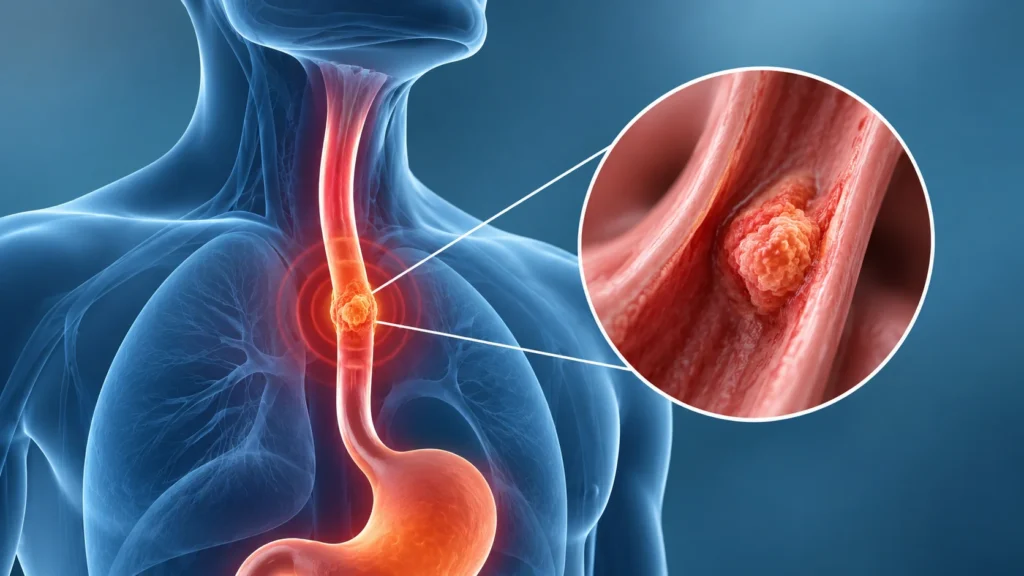
Esophageal cancer is a serious condition that affects the esophagus, the tube that carries food and liquids from the mouth to the stomach. It usually develops when cells in the lining of the esophagus begin to grow abnormally and form a tumor. Over time, this tumor can grow, block the passage of food, and spread to nearby tissues or other parts of the body.
Many people ignore early signs because they may seem minor at first. Difficulty swallowing, chest discomfort, weight loss, or frequent indigestion may be dismissed as acidity, reflux, or stress. But when these symptoms continue or worsen, they should not be ignored. Early detection can make a major difference in treatment options and outcomes.
What is Esophageal Cancer?
Esophageal cancer is a type of cancer that begins in the esophagus, the muscular tube that connects the throat to the stomach. The esophagus helps move food and liquids down into the stomach through coordinated muscle contractions. When cancer develops in this tube, it can interfere with swallowing, digestion, and nutrition.
The cancer usually starts in the inner lining of the esophagus. Over time, it may grow deeper into the wall of the esophagus and spread to nearby lymph nodes or other organs. Because the esophagus is a narrow tube, even a small tumor can cause noticeable symptoms such as difficulty swallowing or food getting stuck.
Types of Esophageal Cancer
Esophageal cancer can be classified based on the type of cells involved and the location within the esophagus.
Based on cell type
- Adenocarcinoma, which usually starts in the lower part of the esophagus and is often linked to acid reflux and Barrett’s esophagus.
- Squamous cell carcinoma, which usually starts in the upper or middle part of the esophagus and is often linked to smoking, alcohol, and hot beverages.
- Small cell carcinoma, which is rare and tends to be aggressive.
- Sarcoma or other rare tumors, which are uncommon but may occur in some patients.
Based on location
- Upper esophageal cancer, which occurs near the throat.
- Middle esophageal cancer, which occurs in the central part of the tube.
- Lower esophageal cancer, which occurs near the stomach and is more commonly linked to reflux.
Based on stage
- Early-stage cancer, where the tumor is limited to the inner lining.
- Locally advanced cancer, where the tumor has grown deeper or spread to nearby lymph nodes.
- Metastatic cancer, where the cancer has spread to distant organs such as liver, lungs, or bones.
Causes of Esophageal Cancer
The exact cause of esophageal cancer is not always clear, but it usually develops due to long-term irritation and damage to the lining of the esophagus.
Common causes and contributing factors
- Chronic acid reflux or GERD.
- Barrett’s esophagus, which is a precancerous change in the esophageal lining.
- Smoking.
- Heavy alcohol use.
- Obesity.
- Poor diet low in fruits and vegetables.
- Long-term exposure to hot beverages or very hot food.
- Certain genetic or inherited conditions.
- Chronic irritation from injury or scarring.
- HPV infection in some cases.
- Long-term use of certain medicines that irritate the esophagus.
Why the esophagus becomes damaged
Repeated exposure to acid, smoke, alcohol, or hot substances can damage the cells lining the esophagus. Over time, the body tries to repair this damage, but in some people, the repair process goes wrong and abnormal cells begin to grow. This can eventually lead to cancer.
Risk Factors for Esophageal Cancer
Some people are more likely to develop esophageal cancer than others.
Higher-risk groups
- People with long-standing acid reflux.
- People with Barrett’s esophagus.
- Smokers.
- Heavy alcohol users.
- People who are obese.
- Men, who are more commonly affected than women.
- People over the age of fifty.
- Those with a family history of esophageal cancer.
- People with poor nutrition or low fruit and vegetable intake.
- Individuals with a history of other head and neck cancers.
Why risk increases in these groups
- Acid reflux damages the lining over time.
- Smoking and alcohol weaken and irritate the esophagus.
- Obesity increases reflux and inflammation.
- Age-related changes make cells more vulnerable.
- Family history may indicate inherited risk.
Symptoms of Esophageal Cancer
Symptoms often appear gradually. In early stages, there may be no symptoms at all, which is why regular screening is important for high-risk patients.
Early symptoms
- Difficulty swallowing solid food.
- Feeling that food is stuck in the chest or throat.
- Mild chest discomfort or burning.
- Frequent indigestion or heartburn.
- Unexplained weight loss.
- Loss of appetite.
- Mild pain or discomfort when swallowing.
Later symptoms
- Difficulty swallowing liquids as well as solids.
- Severe weight loss.
- Vomiting or regurgitation of food.
- Chest pain.
- Chronic cough.
- Hoarseness or voice change.
- Coughing or choking while eating.
- Fatigue and weakness.
- Anemia or low blood count.
- Swelling in the neck or upper body in advanced cases.
Emergency warning signs
- Complete inability to swallow.
- Severe chest pain.
- Vomiting blood.
- Black or tarry stools.
- Severe dehydration.
- Sudden weight loss with weakness.
- Difficulty breathing.
Esophageal Cancer in Different Age Groups
Esophageal cancer can affect people of different ages, but the pattern and risk may vary.
In younger adults
- Rare but possible, especially with genetic risk or severe reflux.
- Symptoms may be mistaken for common acidity or stress.
- Early evaluation is important if symptoms persist.
In middle-aged adults
- More common, especially with smoking, alcohol, or obesity.
- May be discovered during evaluation for reflux or swallowing problems.
- Risk increases with long-standing reflux and Barrett’s esophagus.
In older adults
- Higher risk due to age-related changes and long-term exposure to risk factors.
- Symptoms may be more pronounced.
- Treatment planning may need to consider other health conditions.
How is Esophageal Cancer Diagnosed?
Diagnosis is based on symptoms, physical examination, and specialized tests. Since early symptoms can be subtle, doctors use a combination of tools to confirm the diagnosis.
Diagnostic steps
- Detailed history of symptoms.
- Assessment of swallowing difficulty.
- Review of reflux, smoking, alcohol, and diet history.
- Physical examination.
- Endoscopy to visualize the esophagus.
- Biopsy to confirm cancer.
- Imaging tests to check spread.
Common tests that may be done
- Upper GI endoscopy to view the esophagus directly.
- Biopsy during endoscopy to confirm cancer.
- CT scan of chest and abdomen to check tumor size and spread.
- PET scan to detect cancer in other parts of the body.
- Endoscopic ultrasound to assess depth of tumor.
- Blood tests to check overall health and organ function.
- Barium swallow X-ray in some cases.
Why diagnosis matters
Early diagnosis allows more treatment options and better outcomes. Delayed diagnosis may limit options and make treatment more complex. That is why persistent swallowing problems or unexplained weight loss should never be ignored.
Treatment for Esophageal Cancer
Treatment depends on the stage of cancer, location, type, and the patient’s overall health. A team of oncologists, gastroenterologists, surgeons, and radiation specialists usually plans the treatment together.
Treatment for early-stage cancer
- Endoscopic resection to remove the tumor through the endoscope.
- Surgery to remove part of the esophagus in selected cases.
- Close follow-up to monitor for recurrence.
Treatment for locally advanced cancer
- Combination of chemotherapy and radiation before surgery.
- Surgery to remove the tumor and part of the esophagus.
- Additional chemotherapy or targeted therapy after surgery.
- Radiation therapy in some cases.
Treatment for advanced or metastatic cancer
- Chemotherapy to slow cancer growth.
- Targeted therapy for specific cancer types.
- Immunotherapy in selected patients.
- Radiation to control symptoms.
- Supportive care to improve quality of life.
1. Surgery
Surgery is often used when the cancer is localized and has not spread widely.
- Esophagectomy, which is removal of part or all of the esophagus.
- Reconstruction using part of the stomach or intestine.
- Lymph node removal if needed.
- Requires specialized surgical expertise.
2. Chemotherapy
Chemotherapy uses medicines to kill cancer cells or stop their growth.
- May be given before surgery to shrink the tumor.
- May be given after surgery to reduce recurrence risk.
- Used in advanced cancer to control disease.
- Can be combined with radiation in some cases.
3. Radiation therapy
Radiation uses high-energy beams to destroy cancer cells.
- Often combined with chemotherapy.
- Used before surgery to shrink tumors.
- Used after surgery to reduce recurrence.
- Used for symptom control in advanced cancer.
4. Targeted therapy
Targeted therapy uses medicines that attack specific features of cancer cells.
- May be used in certain types of esophageal cancer.
- Often combined with chemotherapy.
- Requires testing of the tumor to identify targets.
5. Immunotherapy
Immunotherapy helps the body’s immune system fight cancer.
- Used in selected patients with advanced disease.
- May be combined with chemotherapy.
- Can improve outcomes in some cases.
6. Supportive and palliative care
For patients with advanced cancer, supportive care is very important.
- Nutritional support to maintain strength.
- Pain management.
- Treatment of swallowing difficulty.
- Emotional and psychological support.
- Palliative care to improve quality of life.
Recovery After Treatment
Recovery depends on the stage of cancer, type of treatment, and overall health of the patient.
Recovery after surgery
- Hospital stay may be longer due to the nature of surgery.
- Gradual return to eating and drinking.
- Nutritional support may be needed initially.
- Regular follow-up to monitor healing and detect recurrence.
Recovery after chemotherapy or radiation
- Fatigue and weakness are common.
- Appetite may be affected.
- Regular monitoring of blood counts and organ function.
- Supportive medicines to manage side effects.
Rehabilitation support
- Nutritional counseling.
- Speech and swallowing therapy if needed.
- Physical therapy to regain strength.
- Psychological support for emotional well-being.
- Family education and support.
Possible Complications
Esophageal cancer and its treatment can lead to complications, especially in advanced stages.
Complications of the disease
- Complete blockage of the esophagus.
- Severe malnutrition.
- Bleeding from the tumor.
- Fistula formation between esophagus and airway.
- Spread to other organs.
- Severe weight loss and weakness.
Complications of treatment
- Infection after surgery.
- Leakage at the surgical connection.
- Difficulty swallowing after treatment.
- Nutritional deficiencies.
- Side effects of chemotherapy or radiation.
- Long-term changes in digestion.
Why complications happen
The esophagus is a delicate tube, and treatment often involves removing or damaging part of it. This can affect swallowing, nutrition, and digestion. Careful surgical planning and follow-up help reduce these risks.
When to See a Doctor
Medical evaluation is important for people with risk factors or symptoms that suggest esophageal cancer.
See a doctor if you have:
- Difficulty swallowing that is getting worse.
- Food getting stuck in the chest or throat.
- Unexplained weight loss.
- Persistent heartburn or acid reflux.
- Chest pain or discomfort.
- Chronic cough or hoarseness.
- Vomiting or regurgitation of food.
- Family history of esophageal cancer.
Seek urgent care immediately if you have:
- Complete inability to swallow.
- Vomiting blood.
- Black or tarry stools.
- Severe chest pain.
- Difficulty breathing.
- Severe dehydration or weakness.
Prevention of Esophageal Cancer
Not all cases can be prevented, but risk can be reduced.
Prevention pointers
- Avoid smoking completely.
- Limit or avoid alcohol.
- Maintain a healthy weight.
- Eat a diet rich in fruits and vegetables.
- Avoid very hot beverages and food.
- Manage acid reflux and GERD properly.
- Get screened if you have Barrett’s esophagus.
- Follow up regularly if you have chronic reflux.
- Avoid long-term use of medicines that irritate the esophagus without medical advice.
For people with Barrett’s esophagus
- Regular endoscopic screening is important.
- Follow doctor’s advice for surveillance.
- Treat reflux aggressively to prevent progression.
- Report any new swallowing symptoms immediately.
Why Choose Rama Hospital for Esophageal Cancer Treatment?
Esophageal cancer requires a multidisciplinary approach involving oncology, gastroenterology, surgery, radiation, nutrition, and supportive care. A hospital with experienced specialists and advanced technology can make a major difference in outcomes.
Why hospital care matters
- Expert evaluation by oncologists and gastroenterologists.
- Advanced endoscopy and imaging for accurate diagnosis.
- Multidisciplinary tumor board for treatment planning.
- Surgical expertise for complex esophageal procedures.
- Chemotherapy, radiation, and targeted therapy under one roof.
- Nutritional and supportive care throughout treatment.
- Rehabilitation and long-term follow-up.
Trust and authority points
- Experienced cancer care team.
- Modern technology for diagnosis and treatment.
- Comprehensive care from diagnosis to recovery.
- Patient education and family support.
- Focus on both treatment and quality of life.
Frequently Asked Questions (FAQs)
1. What is esophageal cancer?
Esophageal cancer is cancer that starts in the esophagus, the tube that carries food from the mouth to the stomach. It usually develops from long-term irritation of the lining and can cause difficulty swallowing and weight loss.
2. What are the early signs of esophageal cancer?
Early signs may include difficulty swallowing solid food, feeling that food is stuck, mild chest discomfort, or frequent indigestion. These symptoms are often mild at first and may be ignored, so persistent symptoms should be checked.
3. Is esophageal cancer curable?
Esophageal cancer can be curable if detected early and treated properly. Treatment may involve surgery, chemotherapy, radiation, or a combination. Outcomes are better in early-stage disease.
4. Can acid reflux cause esophageal cancer?
Long-term acid reflux can damage the esophageal lining and lead to Barrett’s esophagus, which increases cancer risk. Managing reflux and getting regular screening can reduce this risk.
5. How is esophageal cancer diagnosed?
Diagnosis is usually done with endoscopy and biopsy. Imaging tests like CT, PET, and endoscopic ultrasound help assess the size and spread of the tumor.
6. What is the treatment for esophageal cancer?
Treatment depends on the stage and may include surgery, chemotherapy, radiation, targeted therapy, or immunotherapy. Early-stage cancer may be treated with endoscopic removal or surgery, while advanced cancer may need combined treatment.
7. Can esophageal cancer be prevented?
Risk can be reduced by avoiding smoking and alcohol, maintaining healthy weight, eating a balanced diet, and managing acid reflux. People with Barrett’s esophagus should have regular screening.
8. What is the recovery like after esophageal cancer surgery?
Recovery after surgery can take several weeks to months. Patients may need nutritional support and gradual return to normal eating. Regular follow-up is important to monitor healing and detect recurrence.
Conclusion
Esophageal cancer is a serious condition that affects the tube carrying food from the mouth to the stomach. It often develops slowly and may not cause symptoms until it is advanced. Early signs such as difficulty swallowing, chest discomfort, or unexplained weight loss should never be ignored.
The most important steps are early detection, accurate diagnosis, and timely treatment. With the right combination of surgery, chemotherapy, radiation, and supportive care, many patients can achieve good outcomes. For people with chronic reflux, Barrett’s esophagus, or persistent swallowing problems, regular medical evaluation is essential.
Rama Hospital can help evaluate esophageal cancer symptoms, provide advanced diagnostic testing, and offer comprehensive treatment and supportive care to improve outcomes and quality of life.