Trigeminal neuralgia is one of the most painful conditions that can affect the face. It causes sudden, severe, electric shock-like pain in the face, usually on one side. The pain can come without warning and may be triggered by simple daily actions such as brushing teeth, chewing food, speaking, washing the face, or even feeling a light breeze on the cheek.
Many people mistake trigeminal neuralgia for a dental problem because the pain often feels like it is coming from the teeth, jaw, or gums. As a result, some patients undergo unnecessary dental procedures before the real cause is identified. This delay can be frustrating and painful. Understanding the condition early can help patients get the right treatment and avoid unnecessary procedures.
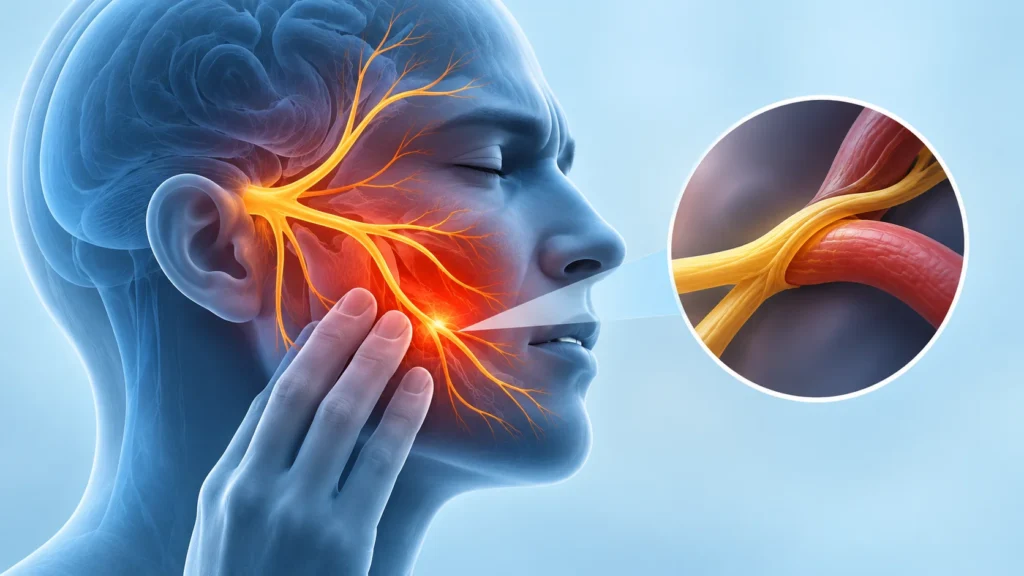
Trigeminal neuralgia affects the trigeminal nerve, which carries sensation from the face to the brain. When this nerve becomes irritated or compressed, it can send sudden, intense pain signals. The condition can affect daily life, sleep, eating, speaking, and emotional well-being. The good news is that with proper diagnosis and treatment, many patients get significant relief.
What is Trigeminal Neuralgia?
Trigeminal neuralgia is a chronic pain condition that affects the trigeminal nerve, which is the fifth cranial nerve. This nerve carries sensation from the face, scalp, forehead, eyes, nose, lips, teeth, gums, and jaw to the brain. It has three main branches that supply different areas of the face.
When the trigeminal nerve becomes irritated or compressed, it can send abnormal pain signals to the brain. This leads to sudden, sharp, stabbing, or electric shock-like pain on one side of the face. The pain may last a few seconds to a couple of minutes and can occur many times a day.
Trigeminal neuralgia is more common in older adults but can affect younger people as well. It is slightly more common in women than men. The pain is usually one-sided, though in rare cases it can affect both sides of the face.
Types of Trigeminal Neuralgia
Trigeminal neuralgia can be classified in different ways based on the cause and pattern of pain.
Based on cause
- Classic trigeminal neuralgia, which is usually caused by compression of the nerve by a blood vessel.
- Secondary trigeminal neuralgia, which is caused by another condition such as a tumor, multiple sclerosis, or nerve damage.
- Idiopathic trigeminal neuralgia, where the exact cause is not clearly identified.
Based on pain pattern
- Type 1 or classic trigeminal neuralgia, which causes sudden, sharp, electric shock-like pain.
- Type 2 or atypical trigeminal neuralgia, which causes more constant, burning, or aching pain along with sharp episodes.
Based on duration
- Episodic trigeminal neuralgia, where pain comes in short bursts.
- Chronic trigeminal neuralgia, where pain episodes become frequent and long-lasting over time.
Causes of Trigeminal Neuralgia
The exact cause of trigeminal neuralgia is not always clear, but in many cases it is related to compression or irritation of the trigeminal nerve.
Common causes include:
- Compression of the trigeminal nerve by a blood vessel.
- Aging-related changes in blood vessels.
- Multiple sclerosis, which can damage the nerve covering.
- Tumors pressing on the trigeminal nerve.
- Injury or trauma to the face or jaw.
- Dental procedures that irritate the nerve.
- Infections affecting the nerve.
- Genetic factors in some cases.
- Unknown causes in some patients.
Why the nerve becomes painful
The trigeminal nerve has a protective covering called myelin. When this covering is damaged or compressed, the nerve becomes more sensitive. Small triggers such as touch, chewing, or temperature changes can then cause sudden, intense pain signals. This is why even mild daily actions can trigger severe pain.
Risk Factors for Trigeminal Neuralgia
Some people are more likely to develop trigeminal neuralgia than others.
Higher-risk groups
- People over the age of fifty.
- Women, who are slightly more likely to develop the condition.
- People with multiple sclerosis.
- People with high blood pressure.
- Those with a family history of neuralgia.
- People who have had facial or dental trauma.
- Patients with certain vascular conditions.
- Individuals with chronic stress or poor sleep, which may worsen pain perception.
Why risk increases in these groups
- Aging can cause blood vessels to lengthen and press on nerves.
- Multiple sclerosis damages the protective nerve covering.
- High blood pressure may contribute to vessel changes.
- Trauma or dental procedures can irritate the nerve.
- Hormonal and genetic factors may play a role in some patients.
Symptoms of Trigeminal Neuralgia
Symptoms of trigeminal neuralgia are usually very specific and recognizable.
Common symptoms
- Sudden, severe, electric shock-like pain on one side of the face.
- Pain that lasts a few seconds to a couple of minutes.
- Pain that comes in bursts or attacks.
- Pain triggered by touch, chewing, speaking, or brushing teeth.
- Pain in the cheek, jaw, teeth, gums, lips, or forehead.
- Pain that may feel like it is coming from a tooth.
- Periods of no pain between attacks.
- Worsening of pain over time if untreated.
Trigger points
Many patients notice that certain actions or touches trigger pain.
- Brushing teeth.
- Washing the face.
- Shaving.
- Applying makeup.
- Chewing food.
- Speaking.
- Smiling.
- Feeling wind on the face.
- Touching certain spots on the face.
- Drinking hot or cold liquids.
Pain characteristics
- Sudden and severe.
- Sharp, stabbing, or electric-like.
- One-sided in most cases.
- Short-lasting but frequent.
- Can be triggered by light touch or movement.
- May cause facial twitching during an attack.
Trigeminal Neuralgia vs Dental Pain
Many patients first think they have a dental problem because the pain feels like it is in the teeth or jaw.
How to tell the difference
- Trigeminal neuralgia pain is sudden and electric-like, while dental pain is usually constant or throbbing.
- Neuralgia pain is triggered by touch or movement, while dental pain may worsen with chewing or temperature.
- Dental problems usually show up on X-ray or examination, while neuralgia may not.
- Neuralgia pain may affect the cheek, forehead, or eye area, which is less common in dental issues.
- If dental treatment does not relieve the pain, neuralgia should be considered.
Why this matters
Many patients undergo unnecessary root canals, extractions, or other dental procedures before the correct diagnosis is made. Recognizing the pattern of neuralgia pain can help avoid this delay and get the right treatment sooner.
How is Trigeminal Neuralgia Diagnosed?
Diagnosis is mainly based on symptoms and clinical examination, but imaging may be needed to rule out other causes.
Diagnostic steps
- Detailed history of pain, triggers, and duration.
- Neurological examination of the face and cranial nerves.
- Dental examination to rule out tooth or gum problems.
- Imaging tests to look for nerve compression or other causes.
Common tests that may be done
- MRI of the brain to check for nerve compression, tumors, or multiple sclerosis.
- MR angiography to visualize blood vessels near the nerve.
- CT scan in some cases.
- Dental X-rays to rule out dental causes.
- Blood tests if infection or inflammation is suspected.
Why diagnosis matters
Accurate diagnosis is important because trigeminal neuralgia can be mistaken for dental problems, sinus issues, migraine, or other facial pain conditions. Correct diagnosis ensures the patient gets the right treatment instead of unnecessary procedures.
Treatment for Trigeminal Neuralgia
Treatment depends on the severity of symptoms, the cause, and the patient’s overall health. The goal is to reduce pain, improve quality of life, and prevent recurrence.
1. Medicines
Medicines are usually the first line of treatment.
- Anticonvulsant medicines such as carbamazepine are commonly used and often very effective.
- Other medicines such as oxcarbazepine, gabapentin, or pregabalin may be used.
- Muscle relaxants may help in some cases.
- Antidepressants may be added for chronic pain support.
- Medicines are adjusted based on response and side effects.
2. Nerve blocks
In some cases, injections may help reduce pain.
- Local anesthetic injections near the nerve.
- Steroid injections to reduce inflammation.
- Botox injections in selected patients.
- Nerve blocks may provide temporary relief and help confirm diagnosis.
3. Interventional procedures
For patients who do not respond well to medicines, procedures may be considered.
- Radiofrequency ablation to heat and disable part of the nerve.
- Glycerol injection into the nerve.
- Balloon compression of the nerve.
- Stereotactic radiosurgery, which uses focused radiation to target the nerve.
4. Surgery
Surgery is considered when medicines and procedures do not provide enough relief.
- Microvascular decompression, which involves moving a blood vessel away from the nerve.
- This is often the most effective long-term treatment for classic trigeminal neuralgia.
- Requires general anesthesia and hospital stay.
- Suitable for selected patients based on imaging and health status.
5. Supportive care
Supportive treatments can help improve quality of life.
- Pain management counseling.
- Stress reduction techniques.
- Sleep support.
- Avoiding known triggers where possible.
- Regular follow-up to adjust treatment.
Home Care and Lifestyle Tips
While medical treatment is important, daily habits can help reduce triggers and improve comfort.
Helpful lifestyle measures
- Avoid known triggers such as extreme heat or cold on the face.
- Use a soft toothbrush and gentle brushing technique.
- Eat soft foods if chewing triggers pain.
- Avoid very hot or cold drinks if they trigger symptoms.
- Manage stress through relaxation techniques.
- Get adequate sleep.
- Keep a pain diary to identify triggers.
- Take medicines exactly as prescribed.
Practical advice
- Do not skip doses of prescribed medicines.
- Inform the doctor about any side effects.
- Do not stop medicines suddenly without advice.
- Attend follow-up visits regularly.
- Seek help early if pain worsens or new symptoms appear.
Possible Complications
Trigeminal neuralgia can affect daily life and emotional well-being if not treated properly.
Possible complications
- Severe pain affecting eating and drinking.
- Weight loss due to difficulty chewing.
- Sleep disturbance.
- Anxiety or depression due to chronic pain.
- Social withdrawal.
- Reduced quality of life.
- Side effects from long-term medicines.
- Recurrence after treatment in some cases.
Why complications happen
Chronic pain can affect mood, sleep, and daily function. Some patients avoid eating or speaking to prevent pain, which can lead to weight loss or nutritional issues. Long-term medicine use may also cause side effects if not monitored.
When to See a Doctor
Medical evaluation is important for anyone with facial pain that fits the pattern of trigeminal neuralgia.
See a doctor if you have:
- Sudden, severe, electric shock-like facial pain.
- Pain triggered by touch, chewing, or speaking.
- Pain that does not improve with dental treatment.
- Pain that is getting worse over time.
- Pain affecting eating, sleeping, or daily activities.
- New neurological symptoms such as weakness or numbness.
Seek urgent care if you have:
- Sudden severe headache with facial pain.
- Weakness or numbness on one side of the body.
- Difficulty speaking or swallowing.
- Vision changes.
- Loss of consciousness.
- Seizure.
Prevention of Trigeminal Neuralgia
Not all cases can be prevented, but some steps may reduce risk or prevent worsening.
Prevention pointers
- Control blood pressure.
- Manage stress.
- Get adequate sleep.
- Avoid facial trauma where possible.
- Seek early treatment for dental or facial infections.
- Follow up regularly if you have multiple sclerosis or other risk conditions.
- Do not ignore persistent facial pain.
For people with risk factors
- Regular check-ups if you have multiple sclerosis.
- Blood pressure control.
- Healthy lifestyle to support nerve health.
- Early evaluation of any new facial pain.
Why Choose Rama Hospital for Trigeminal Neuralgia Treatment?
Trigeminal neuralgia requires expert evaluation to distinguish it from dental, sinus, or other facial pain conditions. A hospital with experienced neurologists, neurosurgeons, and pain specialists can provide accurate diagnosis and effective treatment.
Why hospital care matters
- Expert evaluation by neurology and neurosurgery specialists.
- Advanced imaging for accurate diagnosis.
- Range of treatment options from medicines to surgery.
- Pain management support.
- Coordinated care for related conditions.
- Long-term follow-up to adjust treatment.
Trust and authority points
- Experienced specialists in facial pain and neuralgia.
- Modern imaging and diagnostic tools.
- Personalized treatment plans.
- Patient education and support.
- Comprehensive care from diagnosis to recovery.
Frequently Asked Questions (FAQs)
1. What is trigeminal neuralgia?
Trigeminal neuralgia is a chronic pain condition affecting the trigeminal nerve, which carries sensation from the face to the brain. It causes sudden, severe, electric shock-like pain, usually on one side of the face.
2. Is trigeminal neuralgia the same as a toothache?
No. While the pain may feel like it is coming from the teeth, trigeminal neuralgia is a nerve problem, not a dental issue. Dental treatment usually does not relieve neuralgia pain.
3. What triggers trigeminal neuralgia pain?
Common triggers include brushing teeth, chewing, speaking, washing the face, shaving, or feeling wind on the face. Even light touch can trigger pain in some patients.
4. Can trigeminal neuralgia be cured?
Many patients get significant relief with medicines, procedures, or surgery. Some cases may recur over time, but long-term control is possible with the right treatment plan.
5. What is the most common treatment?
Anticonvulsant medicines such as carbamazepine are usually the first treatment. If medicines do not work, procedures or surgery may be considered.
6. Is surgery needed for trigeminal neuralgia?
Surgery is not needed for everyone. It is considered when medicines and other treatments do not provide enough relief. Microvascular decompression is a common surgical option.
7. Can trigeminal neuralgia affect both sides of the face?
It usually affects one side, but in rare cases both sides can be involved. Bilateral pain may suggest an underlying condition such as multiple sclerosis.
8. When should I see a doctor for facial pain?
See a doctor if you have sudden, severe, electric-like facial pain that is triggered by touch or movement, or if dental treatment does not relieve the pain. Early diagnosis helps avoid unnecessary procedures.
Conclusion
Trigeminal neuralgia is a severe and often misunderstood condition that causes sudden, intense facial pain. Because the pain can feel like it is coming from the teeth or jaw, many patients are misdiagnosed and undergo unnecessary dental procedures. Recognizing the pattern of pain and seeking the right specialist early can make a major difference.
The most important steps are proper diagnosis, appropriate medicines, and consideration of procedures or surgery when needed. With the right care, most patients can achieve significant pain relief and return to normal daily activities.
Rama Hospital can help evaluate trigeminal neuralgia, identify the cause, and provide a clear treatment plan that supports pain relief and improved quality of life.