A headache that starts during a busy workday may seem like something you can manage with rest or a painkiller. But what if the pain keeps returning, becomes difficult to tolerate, or comes with nausea and sensitivity to light? These experiences may indicate more than an ordinary headache.
Migraine symptoms can affect much more than the head. They may interfere with concentration, disturb sleep, affect daily activities and make even routine tasks difficult. Some people experience intense, throbbing pain on one side of the head, while others notice visual disturbances, dizziness or unusual tiredness before the headache begins.
One of the reasons migraine often goes unrecognised is that its symptoms are not identical for everyone. Some people experience warning signs before an attack, while others develop a headache without any noticeable warning. Understanding these differences can help you identify patterns, recognise possible triggers and seek appropriate medical advice.
What Is a Migraine?
Migraine is a neurological condition characterised by recurring episodes of moderate to severe headache, often accompanied by other sensory and physical symptoms. It is more than an ordinary headache because it can affect how the brain processes pain and sensory information.
The pain is commonly described as throbbing or pulsating and may occur on one side of the head, although both sides can be affected. An attack may last for several hours or even a few days.
Unlike occasional headaches, migraine can interfere with everyday activities such as working, reading, driving or spending time in bright or noisy environments.
People may experience different migraine symptoms depending on the type of migraine, the intensity of the attack and their individual health history.
What Are the Common Symptoms of Migraine?

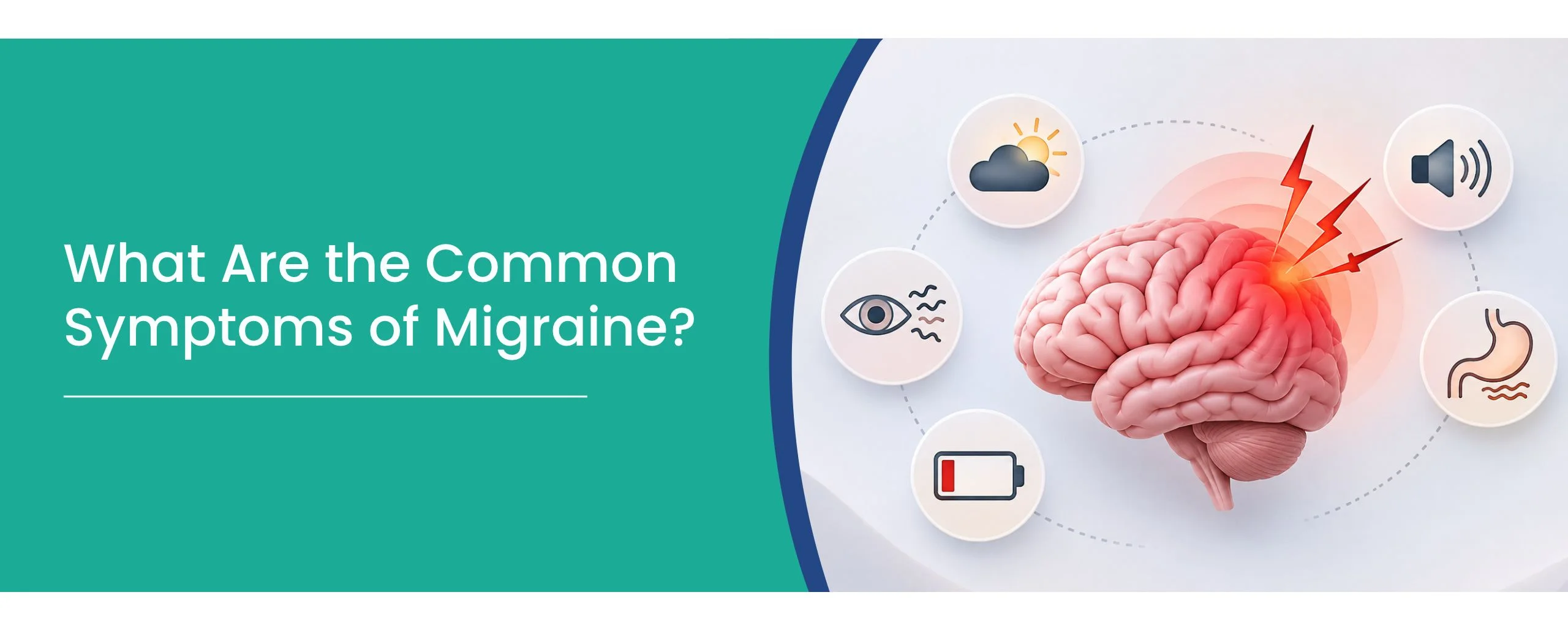
The most noticeable sign is usually a recurring headache that may become moderate or severe. However, the condition can also produce symptoms involving vision, digestion, balance and sensory sensitivity.
Here are some of the common signs to recognise.
1. Throbbing or Pulsating Headache
One of the most recognised migraine symptoms is a throbbing or pulsating headache.
The pain may feel like repeated pounding or pressure inside the head. It commonly affects one side, particularly around the forehead, temples or area behind the eyes. However, some people experience pain on both sides.
The intensity may increase with routine physical activities such as walking, climbing stairs or bending down.
Unlike a mild tension headache, this pain can become severe enough to interrupt work, studies and other daily responsibilities.
2. Sensitivity to Light (Photophobia)
Have you ever felt uncomfortable looking at a bright screen or sitting under strong lights during a headache?
Photophobia refers to increased sensitivity to light. It is a common feature of migraine and can make ordinary lighting feel unusually uncomfortable.
People experiencing this symptom may:
- Prefer staying in a dark room.
- Feel discomfort while using mobile phones or computers.
- Avoid direct sunlight.
- Experience worsening pain under bright indoor lighting.
This sensitivity can make it difficult to continue working or spend time outdoors during an attack.
3. Sensitivity to Sound (Phonophobia)
Loud noises that normally seem harmless may become difficult to tolerate during a migraine attack.
This is known as phonophobia, or increased sensitivity to sound.
Everyday sounds such as traffic, television, conversations, music or office noise may feel irritating or painful.
Some individuals prefer complete silence because even moderate background noise can increase their discomfort.
4. Nausea and Vomiting
Digestive disturbances are another important feature of migraine.
Some people experience nausea along with the headache, while others may vomit during a severe attack.
These symptoms can make it difficult to eat, drink water or take oral medication. In some cases, nausea may begin before the headache becomes intense.
If vomiting is repeated, dehydration can become an additional concern. Medical advice is important when symptoms are severe or fluids cannot be kept down.
5. Blurred Vision and Visual Disturbances
Visual changes can occur before or during a migraine attack, particularly in people who experience migraine with aura.
These changes may include:
- Blurred or distorted vision.
- Flashing lights.
- Zigzag patterns.
- Bright spots.
- Temporary blind spots.
Some people describe seeing shimmering lines or unusual patterns that gradually move across their field of vision.
Although visual disturbances can occur with migraine, sudden vision loss or a new visual problem should never automatically be attributed to it. Such symptoms require urgent medical assessment to rule out other causes.
6. Dizziness and Balance Problems
Migraine can sometimes affect the body’s balance system.
People may experience dizziness, a spinning sensation (vertigo), unsteadiness or difficulty maintaining balance.
In some individuals, these symptoms occur alongside a headache. In others, dizziness may be the more prominent feature.
Vestibular migraine is a recognised form of migraine in which episodes of dizziness or vertigo are a major part of the condition.
7. Neck Pain and Stiffness
Neck discomfort can occur before or during a migraine attack.
Some people experience stiffness around the neck, shoulders or upper back. This discomfort may appear alongside other warning signs or continue during the headache.
Because neck pain can also result from posture-related problems, muscle strain and other medical conditions, it is important to consider the complete pattern rather than assuming that every neck-related headache is a migraine.
8. Difficulty Concentrating and Mental Fatigue
Migraine does not affect everyone physically in the same way. Some people also experience changes in concentration and mental clarity.
You may find it difficult to:
- Focus on a conversation.
- Complete routine work.
- Remember information.
- Read for extended periods.
- Make decisions.
Mental fatigue can occur before, during or after an attack. Some people continue feeling tired or mentally exhausted even after the headache has improved.
9. Increased Sensitivity to Smells
Strong smells may become particularly uncomfortable during a migraine attack.
Perfumes, cleaning products, cigarette smoke, cooking odours and other strong scents may trigger discomfort or worsen existing nausea.
This increased sensitivity is known as osmophobia and is reported by some people living with migraine.
10. Excessive Tiredness and Frequent Yawning
Unusual tiredness, repeated yawning and reduced energy can sometimes appear before the headache begins.
These changes may seem unrelated to a headache, which is why people often overlook them.
However, recognising these early changes can help individuals understand their personal attack pattern.
What Are the Four Stages of a Migraine Attack?
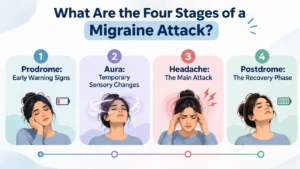
A migraine attack may develop through four stages: prodrome, aura, headache and postdrome.
Not everyone experiences all four stages. Some people move directly into the headache phase, while others experience warning signs hours or even days beforehand.
Understanding these stages can make migraine symptoms easier to recognise.
1. Prodrome: Early Warning Signs
The prodrome stage may begin several hours to one or two days before the headache.
During this stage, you may notice subtle changes in your body or mood.
Common warning signs include:
- Frequent yawning.
- Unusual tiredness.
- Food cravings.
- Mood changes.
- Neck stiffness.
- Increased thirst.
- Difficulty concentrating.
These signs may help you recognise that an attack is approaching, although they are not experienced by everyone.
2. Aura: Temporary Sensory Changes
Aura refers to temporary neurological symptoms that may occur before or during a migraine attack.
Visual disturbances are the most common, but sensory and speech-related changes can also occur.
Examples include:
- Seeing flashing lights or zigzag patterns.
- Experiencing temporary blind spots.
- Feeling tingling in the hands or face.
- Having difficulty finding words.
- Experiencing temporary changes in sensation.
Aura symptoms usually develop gradually and generally last between 5 and 60 minutes.
3. Headache: The Main Attack
This is the stage most people associate with migraine.
The headache may begin gradually and become more intense over time. It can be throbbing, pulsating or severe, and may affect one or both sides of the head.
Other symptoms may include nausea, vomiting, light sensitivity and sound sensitivity. An untreated migraine attack in adults typically lasts between 4 and 72 hours.
4. Postdrome: The Recovery Phase
The headache may disappear, but the effects of an attack can continue.
This recovery stage is commonly called the migraine hangover.
You may experience:
- Extreme tiredness.
- Difficulty concentrating.
- Dizziness.
- Low energy.
- Neck discomfort.
- Changes in mood.
Some people feel completely drained, while others experience temporary improvement in energy. The recovery phase may last several hours and, in some cases, up to a day or longer.
What Are the Common Migraine Causes?

The exact biological mechanism behind migraine is complex and is still being studied. Current understanding involves changes in brain activity, sensory processing and pain-related pathways.
Genetic factors may also influence a person’s susceptibility. Some of the recognised migraine causes and contributing factors include:
1. Family History
Migraine often runs in families. If one or both parents experience migraine, their children may have a higher likelihood of developing the condition.
However, family history does not mean that everyone in the family will experience migraine.
2. Hormonal Changes
Hormonal fluctuations, particularly changes in oestrogen levels, can influence migraine in some individuals.
Some women experience attacks around menstruation, during pregnancy or around menopause.
Menstrual migraine may be more prolonged or severe in some people.
3. Changes in Sleep Patterns
Irregular sleep schedules, insufficient sleep and excessive changes in sleeping habits may contribute to attacks.
Maintaining a consistent sleep routine can be helpful for people who notice a connection between sleep and their headaches.
4. Stress and Nervous System Changes
Emotional stress and prolonged mental pressure are frequently reported contributing factors.
Some people experience an attack during a stressful period, while others notice headaches when the stress begins to reduce. Identifying personal patterns can help with better management.
What Are the Common Migraine Triggers?
While underlying susceptibility plays a role, certain environmental and lifestyle factors may trigger an attack.
It is important to understand that triggers differ from person to person. Something that causes an attack in one individual may have no effect on another.
Common migraine triggers include:
| Trigger | How it may affect you |
| Stress | May contribute to changes in the frequency of attacks |
| Skipping meals | Irregular eating patterns may trigger headaches |
| Dehydration | Inadequate fluid intake may contribute to headache |
| Poor sleep | Irregular or insufficient sleep may increase susceptibility |
| Bright lights | May worsen sensory discomfort |
| Strong smells | Perfumes and smoke may cause discomfort |
| Hormonal changes | Fluctuations may trigger menstrual migraine |
| Excessive caffeine | High intake or sudden withdrawal may contribute |
| Weather changes | Some people report sensitivity to environmental changes |
Keeping a headache diary can help identify personal migraine triggers.
Record when the headache begins, how long it lasts, what you ate, your sleep pattern, stress levels and any associated symptoms.
What Are the Different Types of Migraine?

Migraine does not present in the same way for everyone. Doctors identify different types based on symptoms, frequency and associated neurological features.
Migraine Without Aura
This is a common form in which the person experiences recurring headache attacks without the typical neurological warning signs associated with aura.
The pain may be throbbing, moderate to severe and accompanied by nausea or sensitivity to light and sound.
Migraine With Aura
This type involves temporary neurological symptoms before or during the headache. Visual changes, tingling sensations and temporary speech difficulties may occur.
Chronic Migraine
Chronic migraine is generally defined as headache occurring on 15 or more days per month for over three months, with migraine features on at least eight days per month.
Frequent headaches can significantly affect work, sleep and quality of life.
Vestibular Migraine
This type is associated with episodes of dizziness, vertigo or balance disturbances.
Some people experience these symptoms with a headache, while others may have little or no head pain during an episode.
Menstrual Migraine
These attacks occur in relation to the menstrual cycle and are associated with hormonal fluctuations.
They may occur just before or during menstruation.
Severe Headache Causes: When Is It More Than a Migraine?
Not every severe headache is a migraine. Several other conditions can cause significant head pain, and some require immediate medical attention.
Understanding different severe headache causes is important because the symptoms may overlap.
Some possibilities include:
- Tension-type headache: Often causes pressure or tightness around the forehead, temples or back of the head.
- Cluster headache: Causes extremely severe pain, commonly around one eye, and may occur in repeated episodes.
- Sinus-related headache: May occur with nasal congestion, facial pressure and other symptoms of sinus inflammation.
- Medication-overuse headache: Can develop when headache medicines are used too frequently.
- Secondary headache: May result from an underlying infection, vascular problem, injury or another medical condition.
How Is Migraine Diagnosed?

There is no single blood test or scan that confirms every case of migraine.
Diagnosis is usually based on the person’s medical history, headache pattern, associated symptoms and neurological examination.
A neurologist may recommend additional investigations if the symptoms are unusual, the headache pattern changes or another neurological condition needs to be ruled out.
Depending on the clinical findings, tests may include:
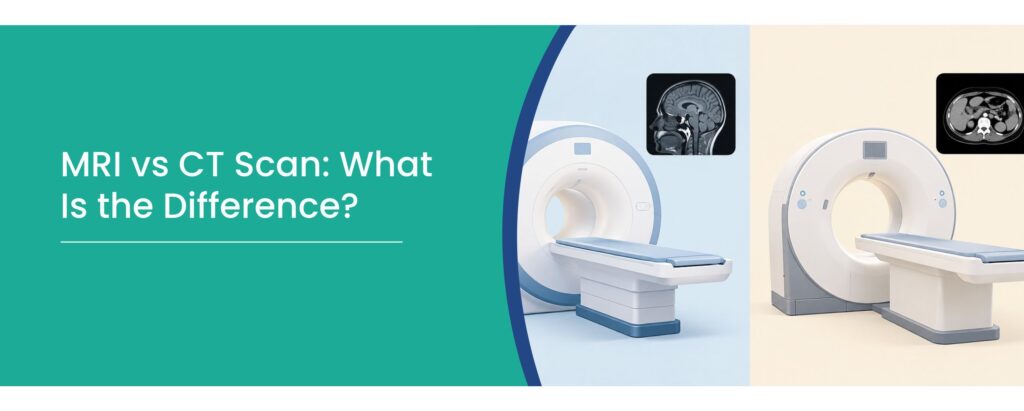
- MRI of the brain: Helps examine brain structures and investigate certain causes of persistent or unusual headaches.
- CT scan: May be recommended in emergency situations or when a doctor needs to investigate specific causes of sudden headache.
- Neurological examination: Assesses functions such as reflexes, coordination, balance, strength and sensation.
What Are the Available Migraine Treatment Options?
Although migraine is a long-term neurological condition, appropriate migraine treatment can help reduce the intensity, frequency and impact of attacks.
The treatment plan depends on how often headaches occur, their severity, associated symptoms and the person’s overall health.
1. Medicines for Acute Attacks
These medicines are used to manage an attack after it begins.
Depending on the patient’s medical history and symptoms, a doctor may recommend:
- Suitable pain-relieving medicines.
- Triptans.
- Gepants.
- Medicines to control nausea and vomiting.
The choice of medication should be based on medical advice rather than repeated self-medication.
2. Preventive Treatment
People experiencing frequent, prolonged or disabling attacks may benefit from preventive medicines.
These may include certain blood pressure medicines, antidepressants, anti-seizure medicines or CGRP-targeted therapies.
The doctor selects the appropriate option according to the patient’s condition and treatment response.
3. Lifestyle Management
Lifestyle changes can support medical management and may help reduce the frequency of attacks.
Consider:
- Maintaining regular sleeping hours.
- Drinking sufficient water.
- Eating meals at consistent times.
- Exercising regularly.
- Managing stress.
- Limiting excessive caffeine.
- Identifying and avoiding personal triggers.
4. Avoiding Medication Overuse
Frequent use of pain-relieving medicines can sometimes contribute to medication-overuse headache.
If you find yourself taking headache medication repeatedly during the week, discuss this with your doctor.
Do not increase the dose or frequency of medication without medical guidance.
When Should You Consult a Neurologist?
Occasional headaches may not always indicate a serious medical problem. However, recurring, severe or changing headaches deserve proper evaluation.
If you are looking for a neurologist in Noida, choose a specialist who can assess your headache pattern, medical history and associated neurological symptoms.
A consultation at a neurology hospital in Noida can help determine whether your symptoms are consistent with migraine or require further investigation.
Patients searching for a brain specialist in Noida should not ignore persistent or unusual headaches, particularly when they are accompanied by changes in vision, balance, speech or sensation.
Frequently Asked Questions (FAQs)
1. What are the first warning signs of a migraine?
Early warning signs may include unusual tiredness, frequent yawning, mood changes, food cravings, neck stiffness and difficulty concentrating. These symptoms may appear several hours or even one or two days before the headache begins.
2. How do I know if my headache is a migraine?
Migraine commonly involves moderate to severe throbbing pain, often on one side of the head, along with nausea or sensitivity to light and sound. However, not all headaches are migraines. A doctor can assess your symptoms and headache history to establish the diagnosis.
3. How long does a migraine attack usually last?
An untreated migraine headache in adults generally lasts between 4 and 72 hours. Some associated symptoms may continue after the headache improves, particularly tiredness and difficulty concentrating.
4. Can migraine occur without a headache?
Yes. Some people experience migraine-related neurological symptoms, such as visual disturbances or other aura symptoms, without developing the typical headache. New neurological symptoms should always be assessed to rule out other conditions.
5. What foods can trigger migraine?
Potential food-related triggers vary between individuals. Some people report sensitivity to certain processed foods, irregular meals, excessive caffeine or specific food ingredients. Keeping a food and headache diary may help identify personal patterns.
6. Is migraine a serious neurological condition?
Migraine is a recognised neurological disorder that can significantly affect daily life. Although most attacks are not life-threatening, certain headache symptoms may indicate another serious condition. Sudden severe pain or new neurological problems require urgent evaluation.
7. When should I visit a neurologist for recurring headaches?
Consult a neurologist if headaches are frequent, worsening, affecting daily activities or not responding to your current treatment. Sudden severe headaches, weakness, speech difficulties, seizures or vision loss require emergency medical attention rather than a routine appointment.
Conclusion
Migraine is more than a recurring headache. It can affect your vision, digestion, concentration, balance and ability to carry out everyday activities. Recognising the pattern of symptoms, understanding possible triggers and seeking timely medical advice can make a meaningful difference in managing the condition.
Remember that not everyone experiences the same warning signs, and a severe headache should not automatically be considered a migraine. If your headaches keep returning, become more intense or interfere with your daily routine, a proper medical evaluation is important.
At Rama Hospital, patients looking for a neurologist in Noida can seek specialist evaluation for recurring headaches and other neurological concerns. A timely consultation can help identify the cause of your symptoms and guide an appropriate care plan.
Don’t ignore recurring headaches. Understand what your body is telling you and seek medical advice when you need it.