A cough is one of the most common health complaints, especially during seasonal changes, respiratory infections and periods of increased air pollution. Most people experience coughing occasionally, and it usually settles within a few days or weeks. However, what happens when the cough refuses to go away?
You may have recovered from a cold, but the coughing continues. Perhaps you experience a dry, irritating cough throughout the day, or you start coughing repeatedly as soon as you lie down at night. In some cases, the cough may be accompanied by mucus, chest discomfort, wheezing or difficulty breathing.
These symptoms can make everyday activities uncomfortable, disturb your sleep and affect your ability to work.
Understanding the persistent cough causes is important because a cough that lasts for several weeks may sometimes indicate an underlying respiratory condition rather than an ordinary seasonal infection.
Several conditions, including asthma, allergies, acid reflux, postnasal drip, bronchitis and certain lung infections, can contribute to prolonged coughing. Identifying the actual cause is the first step towards appropriate treatment.
How Long Should a Normal Cough Last?
A cough is a natural protective reflex that helps your body clear mucus, dust, irritants and other unwanted particles from the respiratory tract.
When something irritates the throat or airways, the body responds by producing a cough to remove the irritant. This is why coughing commonly occurs during respiratory infections.
However, the duration of a cough can provide important clues about its possible cause.
Doctors generally classify coughs according to how long they last.
|
Type of cough |
Duration |
Common associations |
| Acute cough | Less than 3 weeks | Common cold, flu, viral infections |
| Subacute cough | 3–8 weeks | Post-infectious cough, lingering airway irritation |
| Chronic cough | More than 8 weeks in adults | Asthma, acid reflux, allergies, chronic respiratory conditions |
In children, a cough lasting more than four weeks is generally considered chronic and requires appropriate evaluation.
A cough can sometimes continue for several weeks after a respiratory infection because the airways remain sensitive even after the infection has cleared.
However, if the coughing continues, becomes more severe or is accompanied by other symptoms, it is important to investigate the underlying cause.
Why Does a Cough Last for a Long Time?
There is no single explanation for every prolonged cough. The persistent cough causes can range from temporary airway irritation to conditions that require specific medical treatment.
For example, someone recovering from a viral infection may continue coughing because their airways remain sensitive. Another person may have an underlying condition such as asthma, where inflammation and narrowing of the airways trigger repeated coughing.
Environmental factors can also contribute. Dust, smoke, pollution, strong fragrances and workplace irritants may repeatedly expose the respiratory system to substances that trigger coughing.
Some of the most common explanations include:
- Respiratory infections that leave lingering airway irritation.
- Asthma and other conditions involving airway inflammation.
- Allergies and postnasal drip.
- Acid reflux that irritates the throat.
- Smoking and exposure to air pollution.
- Chronic respiratory conditions such as COPD or bronchiectasis.
- Certain medicines that cause coughing as a side effect.
In some patients, more than one condition may be responsible. For example, a person may have asthma along with acid reflux, making the cough more difficult to control.
This is why identifying the specific persistent cough causes is more useful than simply trying different cough syrups without understanding the problem.
Common Causes of a Persistent Cough
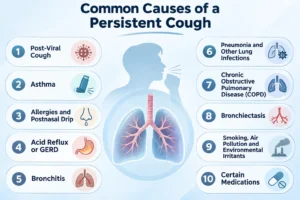
Let’s look at the conditions that can make coughing continue for several weeks.
1. Post-Viral Cough
One of the common reasons for a prolonged cough is irritation that remains after a respiratory infection.
You may have experienced a cold, flu or another viral infection. Although the fever, sore throat and runny nose have improved, the cough continues.
This happens because the respiratory tract can remain sensitive even after the infection has resolved.
You may notice:
- A dry or mildly productive cough.
- Repeated coughing when talking or laughing.
- Throat irritation or a tickling sensation.
- Coughing that gradually becomes less frequent.
A post-infectious cough can last for several weeks. However, if symptoms worsen, return after improving or continue beyond the expected recovery period, medical evaluation may be necessary.
2. Asthma
Asthma is a chronic respiratory condition in which the airways become inflamed and sensitive to certain triggers.
When exposed to allergens, dust, smoke, exercise or cold air, the airways may narrow, making breathing difficult.
Although wheezing and breathlessness are commonly associated with asthma, some people experience coughing as their main symptom. This is sometimes called cough-variant asthma.
Common asthma symptoms include:
- Repeated coughing, particularly at night.
- Wheezing or a whistling sound while breathing.
- Chest tightness.
- Shortness of breath.
- Coughing after physical activity or exposure to dust.
In some individuals, coughing may be the only noticeable symptom.
Understanding the persistent cough causes becomes particularly important when coughing occurs repeatedly without an obvious infection.
An appropriate assessment can help determine whether asthma is responsible and whether inhaled medication or other treatment is required.
3. Allergies and Postnasal Drip
Allergies can irritate the upper respiratory tract and trigger repeated coughing.
When the nose or sinuses produce excess mucus, it may travel down the back of the throat. This is known as postnasal drip or upper airway cough syndrome.
The mucus can irritate the throat and stimulate the cough reflex.
People experiencing this condition may notice:
- Frequent throat clearing.
- A sensation of mucus at the back of the throat.
- Sneezing and nasal congestion.
- A tickling sensation in the throat.
- Coughing that becomes noticeable when lying down.
Common triggers include dust mites, pollen, pet dander, mould and air pollution.
The treatment depends on the underlying allergy or nasal condition. Simply suppressing the cough may not provide lasting relief if the irritation continues.
4. Acid Reflux or GERD
A prolonged cough is not always caused by a respiratory infection or lung condition.
Gastroesophageal reflux disease (GERD) occurs when stomach contents repeatedly flow back into the oesophagus. This can irritate the throat and sometimes contribute to coughing.
Some people experience typical symptoms such as heartburn and a sour taste in the mouth. Others may develop a cough without obvious digestive complaints.
You may notice:
- Coughing after meals.
- Increased coughing when lying down.
- Frequent throat clearing.
- Hoarseness or throat irritation.
- A sour or acidic taste in the mouth.
If reflux is suspected, a doctor may recommend dietary changes, lifestyle modifications or medication depending on the diagnosis.
5. Bronchitis
Bronchitis refers to inflammation of the bronchial tubes, which carry air into and out of the lungs.
Acute bronchitis commonly develops after a viral respiratory infection. It can cause coughing that continues even after other symptoms improve.
Some people experience a cough with mucus, while others develop a dry, irritating cough.
Chronic bronchitis, on the other hand, is a form of chronic obstructive pulmonary disease (COPD) and is associated with long-term airway inflammation and mucus production.
Smoking is an important risk factor.
If you experience repeated episodes of coughing, excessive mucus production or breathing discomfort, an appropriate respiratory evaluation is important.
6. Pneumonia and Other Lung Infections
Pneumonia is an infection that causes inflammation in the air sacs of the lungs. It can result in coughing, fever, chest discomfort and difficulty breathing.
Depending on the infection, the cough may be dry or accompanied by mucus.
Some people may also experience:
- Fever and chills.
- Weakness and fatigue.
- Pain while taking a deep breath.
- Increased breathing rate.
- Shortness of breath.
Other infections, including tuberculosis (TB), can also cause a prolonged cough.
In India, a cough lasting two weeks or more should prompt evaluation for TB, particularly when accompanied by fever, night sweats, unexplained weight loss, chest pain or blood in the sputum.
A prolonged cough does not automatically mean TB, but appropriate testing is important when it is suspected.
7. Chronic Obstructive Pulmonary Disease (COPD)
COPD is a group of progressive lung conditions that obstruct airflow and make breathing increasingly difficult.
Chronic bronchitis and emphysema are commonly associated with COPD.
The condition is frequently linked to smoking, although long-term exposure to air pollution, occupational dust and other harmful substances may also contribute.
Common symptoms include:
- Persistent coughing.
- Regular mucus production.
- Wheezing.
- Breathlessness during physical activity.
- Repeated respiratory infections.
People with COPD may initially dismiss these symptoms as a normal part of ageing or the effects of smoking.
However, early evaluation can help identify the condition and guide appropriate treatment.
8. Bronchiectasis
Bronchiectasis is a long-term lung condition in which the airways become abnormally widened and damaged.
This can make it difficult for the lungs to clear mucus effectively, increasing the likelihood of repeated infections.
People with bronchiectasis may experience a cough with phlegm, sometimes producing large amounts of mucus.
Other symptoms may include breathlessness, wheezing, recurrent chest infections and fatigue.
The condition requires proper diagnosis because repeated infections and ongoing airway damage can affect lung health over time.
9. Smoking, Air Pollution and Environmental Irritants
The respiratory system is constantly exposed to substances in the surrounding environment.
Cigarette smoke, second-hand smoke, vehicle emissions, industrial pollution and workplace dust can irritate the airways.
Repeated exposure may cause inflammation and increase mucus production, resulting in ongoing coughing.
This is particularly relevant in areas with high levels of particulate air pollution.
If your cough becomes worse outdoors, near traffic, in dusty environments or after exposure to smoke, environmental irritation may be contributing to the problem.
Reducing exposure to these triggers is an important part of respiratory care.
10. Certain Medications
Some medicines can cause coughing as a side effect.
A well-known example is a group of blood pressure medicines called ACE inhibitors.
People taking these medicines may develop a persistent, usually dry cough.
If you notice coughing after starting a new medication, discuss it with your doctor. Do not stop prescribed medication on your own. Your doctor can review your treatment and decide whether an alternative is appropriate.
Dry Cough vs Cough With Phlegm: What Is the Difference?
Not every cough sounds or feels the same. Understanding whether your cough is dry or productive can help a doctor narrow down the possible explanation.
What Are Dry Cough Causes?
A dry cough does not produce mucus or phlegm. It often feels irritating and may create a tickling sensation in the throat.
Some common dry cough causes include:
- Viral infections and post-viral airway irritation.
- Asthma and cough-variant asthma.
- Allergies and environmental irritants.
- Acid reflux.
- Certain medications.
- Exposure to smoke and pollution.
A dry cough may become particularly uncomfortable during conversations, while laughing or when trying to sleep.
If it continues for several weeks, it is important to investigate the possible dry cough causes rather than assuming that the throat simply needs more time to recover.
What Does a Cough With Phlegm Indicate?
A productive cough brings up mucus from the respiratory tract.
Phlegm is produced by the airways to trap irritants and help remove unwanted substances from the lungs.
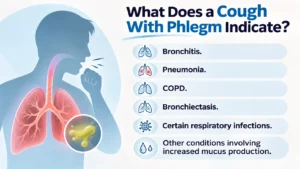
A cough with phlegm may occur due to:
- Bronchitis.
- Pneumonia.
- COPD.
- Bronchiectasis.
- Certain respiratory infections.
- Other conditions involving increased mucus production.
The colour of phlegm alone cannot reliably determine whether an infection is bacterial or whether antibiotics are required.
If you notice blood in your sputum, repeated episodes of excessive mucus production or worsening breathing symptoms, seek medical evaluation.
Why Does Coughing Become Worse at Night?
Have you noticed that your cough seems manageable during the day but becomes irritating as soon as you lie down?
A cough at night can have several explanations.
The change in body position, increased awareness of throat irritation and certain underlying conditions can make coughing more noticeable during sleep.

Some common reasons include:
- Postnasal Drip: When you lie down, mucus from the nose and sinuses may accumulate towards the back of the throat, triggering coughing.
- Asthma: Airway sensitivity can vary throughout the day. Some people with asthma experience increased coughing and breathing symptoms during the night or early morning.
- Acid Reflux: Lying down after eating may make reflux symptoms more noticeable in some people. Stomach contents can irritate the oesophagus and throat, contributing to coughing.
- Dry Air and Irritants: Air conditioning, dust, smoke and other environmental irritants may aggravate throat and airway sensitivity.
If you regularly experience a cough at night, especially when accompanied by wheezing, breathlessness or disturbed sleep, an underlying respiratory condition should be considered.
Could a Persistent Cough Be a Sign of Asthma?
Yes. Asthma is an important condition to consider when coughing continues without an obvious infection. In some patients, coughing is the primary symptom rather than wheezing or noticeable breathlessness.
This is why recognising asthma symptoms is important, particularly when coughing follows exercise, exposure to allergens, cold air or dust.
A person with cough-variant asthma may experience:
- Repeated dry coughing.
- Coughing during the night.
- Symptoms after physical activity.
- Coughing when exposed to smoke or dust.
- Occasional chest tightness.
However, these symptoms are not exclusive to asthma. Other conditions can produce similar complaints.
A doctor may recommend spirometry, a lung function test that measures how much air you can breathe out and how quickly you can do it. Depending on the findings, additional tests may be needed to confirm or rule out asthma.
When Is a Long-Lasting Cough a Warning Sign?
Most coughs are not caused by serious conditions. However, certain symptoms should never be ignored.
Some persistent cough causes require timely medical investigation, particularly when the cough is accompanied by other changes in your health.
Watch for the following warning signs:
|
Warning sign |
Why it matters |
| Cough lasting more than 2 weeks | In India, TB evaluation may be needed |
| Blood in sputum | May indicate bleeding in the respiratory tract |
| Unexplained weight loss | Can occur with infections and other serious conditions |
| Persistent fever or night sweats | May indicate an underlying infection |
| Chest pain | May be associated with lung or other medical conditions |
| Breathing difficulty | May indicate airway narrowing or another respiratory problem |
| Repeated chest infections | May suggest an underlying lung condition |
Seek emergency medical attention if you experience severe breathing difficulty, blue or grey lips, confusion, fainting or significant chest pain. Do not wait for a cough to become chronic before seeking help if concerning symptoms are already present.
How Are the Causes of a Persistent Cough Diagnosed?
A prolonged cough needs more than a general examination of the throat. The doctor must understand what is triggering the cough and whether the lungs or other parts of the respiratory system are involved.
The diagnostic approach depends on your symptoms, medical history, age and risk factors.
1. Medical History and Physical Examination
The doctor may ask:
- How long have you been coughing?
- Is the cough dry or productive?
- Does it become worse at night?
- Do you experience wheezing or breathlessness?
- Have you recently had a respiratory infection?
- Do you smoke or work in a dusty environment?
- Are you taking any regular medications?
The doctor may also listen to your chest using a stethoscope to identify abnormal breathing sounds.
2. Chest X-Ray
A chest X-ray helps examine the lungs and surrounding structures.
It may help identify conditions such as pneumonia, certain lung infections, structural changes and other abnormalities.
3. Spirometry
Spirometry is a lung function test commonly used to evaluate conditions such as asthma and COPD.
It measures how much air you can exhale and how quickly you can breathe it out.
The results help doctors assess whether airflow is restricted.
4. Sputum Examination
If you are producing mucus, a doctor may recommend a sputum test.
Depending on the symptoms and suspected infection, laboratory testing can help identify certain microorganisms.
When tuberculosis is suspected, appropriate sputum testing, including rapid molecular tests where indicated, may be recommended.
5. Additional Investigations
Some patients may require further evaluation depending on the initial findings.
These investigations may include:
- CT scan of the chest.
- Allergy testing.
- Bronchoscopy.
- Further lung function testing.
- Reflux-related evaluation.
Not every patient requires all these tests. The doctor selects investigations according to the suspected diagnosis.
What Are the Treatment Options for a Persistent Cough?
The treatment depends on what is causing the cough.
There is no single medicine that works for every type of prolonged cough. The most effective approach is to identify the underlying condition and manage it appropriately.
Some common treatment approaches include:
1. Treatment for Post-Viral Cough
A post-infectious cough often improves gradually as airway irritation settles.
Depending on the symptoms, the doctor may recommend supportive care or specific medication if another condition is contributing.
Antibiotics are not routinely required for viral infections.
2. Asthma Management
If asthma is responsible, treatment may include prescribed inhaled corticosteroids, bronchodilators or other asthma medicines, depending on the severity and clinical assessment.
An appropriate treatment plan can help control airway inflammation and reduce symptoms.
3. Allergy Management
When allergies or postnasal drip are responsible, treatment may include appropriate allergy medication, nasal sprays or other measures based on the underlying cause.
Reducing exposure to known allergens is also important.
4. Acid Reflux Management
If GERD is contributing to coughing, treatment may involve dietary changes, avoiding meals close to bedtime, lifestyle modifications and prescribed medication when necessary.
5. Treatment for Respiratory Infections
Treatment depends on the type of infection.
Bacterial infections may require antibiotics, while viral infections generally require supportive management unless complications or other conditions develop.
Tuberculosis requires specific anti-TB treatment under appropriate medical supervision.
6. Management of Chronic Lung Conditions
Conditions such as COPD and bronchiectasis require individualised long-term management.
Depending on the patient’s condition, treatment may involve inhalers, pulmonary rehabilitation, airway clearance techniques, vaccinations and management of respiratory infections.
The goal is to improve breathing, reduce symptoms and help prevent complications.
How Can You Manage a Persistent Cough at Home?
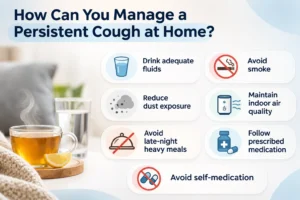
Along with medical treatment, certain everyday habits may help reduce throat irritation and improve comfort.
However, home care should not replace medical evaluation when a cough continues for several weeks.
Here are some practical measures:
- Drink adequate fluids: Water and warm beverages may help keep the throat comfortable.
- Avoid smoke: Stay away from cigarette smoke and other respiratory irritants.
- Reduce dust exposure: Keep indoor spaces clean and minimise exposure to known allergens.
- Maintain indoor air quality: Ensure proper ventilation and avoid unnecessary exposure to strong fragrances.
- Avoid late-night heavy meals: This may help people whose coughing is associated with acid reflux.
- Follow prescribed medication: Take medicines and inhalers according to your doctor’s instructions.
- Avoid self-medication: Do not start antibiotics or prescription inhalers without medical advice.
When Should You Consult a Pulmonologist?
A cough that continues for weeks deserves attention, particularly when it is accompanied by other respiratory symptoms.
A pulmonologist specialises in diagnosing and managing diseases affecting the lungs and respiratory system.
If you are looking for a pulmonologist in Noida, an appropriate consultation can help evaluate the symptoms, identify possible respiratory conditions and guide further testing.
A chest specialist in Noida can also assess prolonged coughing, recurrent respiratory infections, breathing problems and other chest-related complaints.
For patients experiencing recurring cough, wheezing or suspected asthma, timely assessment can help determine whether asthma treatment in Noida or another respiratory management approach is appropriate.
The important thing is to avoid treating every cough as an ordinary infection. The underlying cause should guide the treatment.
Frequently Asked Questions (FAQs)
1. Why has my cough lasted for more than three weeks?
A cough lasting more than three weeks may be associated with post-viral airway irritation, asthma, allergies, acid reflux, bronchitis or certain respiratory infections. In India, a cough lasting two weeks or longer should also prompt consideration of tuberculosis testing, especially if other symptoms are present. Medical evaluation can help identify the cause.
2. What are the most common persistent cough causes?
Some common persistent cough causes include asthma, postnasal drip, acid reflux, post-infectious airway irritation, COPD, bronchiectasis and respiratory infections. More than one condition may contribute to coughing in the same person.
3. What are the common dry cough causes?
Common dry cough causes include viral infections, asthma, allergies, acid reflux, environmental irritants and certain blood pressure medicines. If a dry cough continues for several weeks, a doctor may recommend an evaluation to identify the underlying problem.
4. Why do I cough more when I lie down?
Coughing after lying down may be related to postnasal drip, acid reflux or asthma. Mucus accumulation and changes in body position can make throat irritation more noticeable. Repeated nighttime coughing should be evaluated, especially when accompanied by wheezing or breathlessness.
5. Is coughing with phlegm a sign of a lung infection?
Not necessarily. A cough with phlegm can occur with bronchitis, COPD, bronchiectasis and respiratory infections. The colour of mucus alone cannot confirm the type of infection. A doctor may recommend an examination or sputum testing depending on the symptoms.
6. Can asthma cause a cough without wheezing?
Yes. Some people experience cough-variant asthma, in which coughing is the main or only noticeable symptom. It may become worse at night, during exercise or after exposure to allergens. Lung function testing may help with diagnosis.
7. When should I see a pulmonologist for a cough?
You should consult a pulmonologist if your cough continues for several weeks, repeatedly disturbs your sleep, produces excessive mucus or is accompanied by wheezing and breathlessness. Seek urgent medical attention for severe breathing difficulty, significant chest pain or coughing up blood.
Conclusion
A cough that refuses to go away can be more than just an uncomfortable symptom. It may be your body’s way of indicating that something is continuing to irritate or affect your respiratory system.
From post-viral irritation and allergies to asthma, acid reflux and chronic lung conditions, the persistent cough causes can vary significantly from one person to another.
The important thing is to recognise when a cough is no longer following the usual recovery pattern. If it continues for several weeks, becomes worse at night or is accompanied by mucus, fever, chest discomfort or breathing difficulty, do not ignore it.
An appropriate medical evaluation can help identify the underlying condition and guide the right treatment.
At Rama Hospital, Noida, patients can seek consultation for respiratory concerns and get appropriate medical guidance for persistent coughing, asthma-related symptoms and other lung conditions.
If your cough is affecting your sleep, breathing or everyday routine, consult a pulmonologist in Noida for timely evaluation.
Because better breathing begins with understanding what’s causing the problem.