-

-

IMRT (Intensity-Modulated Radiation Therapy)

IMRT (Intensity-Modulated Radiation Therapy)

IMRT

IMRT (Intensity-Modulated Radiation Therapy): Advanced Cancer Treatment Explained

IMRT, or Intensity-Modulated Radiation Therapy, is an advanced form of radiation therapy used to treat cancer with high precision. It allows doctors to deliver strong doses of radiation directly to a tumor while reducing exposure to nearby healthy tissues. This makes IMRT especially useful for cancers located close to important organs such as the brain, spinal cord, lungs, heart, liver, kidneys, bladder, or rectum.

Many patients hear the term IMRT during cancer treatment planning but may not fully understand what it means or how it works. This page explains IMRT in simple, detailed language. It covers what IMRT is, how it works, which cancers it treats, how treatment is planned, what happens during sessions, possible side effects, recovery, and how it compares with other radiation techniques.

What is IMRT?

IMRT stands for Intensity-Modulated Radiation Therapy. It is a type of external beam radiation therapy that uses advanced technology to shape and control radiation beams. Unlike older radiation methods that deliver a uniform dose, IMRT can vary the intensity of radiation across different parts of the tumor.

This means the radiation can be stronger in areas where the tumor is dense and weaker in areas close to healthy organs. The goal is to maximize the dose to the cancer while protecting normal tissue as much as possible.

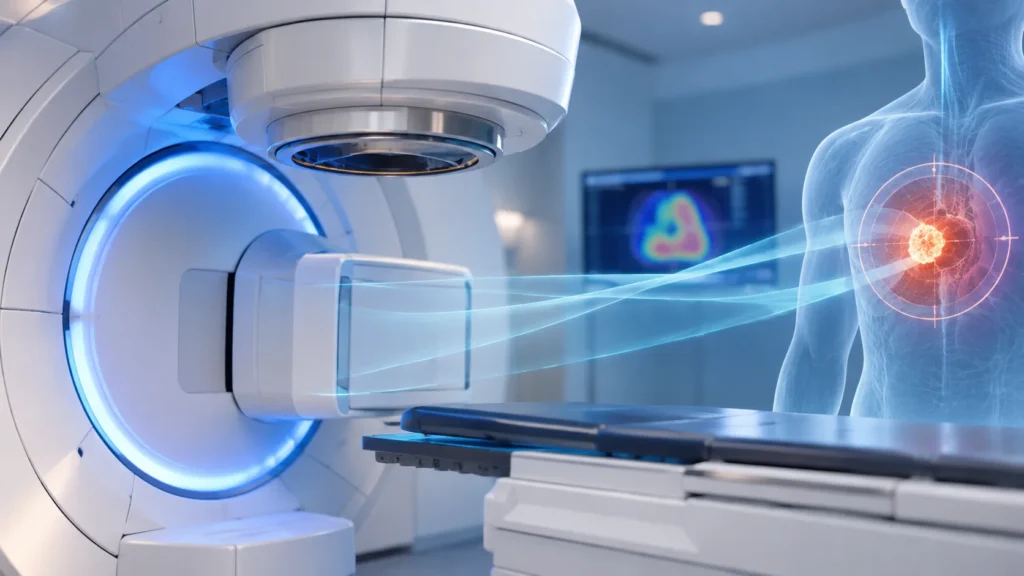
Intensity-Modulated Radiation Therapy uses a machine called a linear accelerator, or LINAC. This machine delivers radiation beams from different angles around the body. Special devices inside the machine, called multileaf collimators, shape the beams and adjust the intensity during treatment.

How IMRT Works?

Intensity-Modulated Radiation Therapy works by breaking the radiation dose into many small beams that can be adjusted individually. This allows the radiation to conform very closely to the shape of the tumor.

Steps in how IMRT works

  • The patient undergoes imaging such as CT scan to map the tumor.
  • The radiation oncologist outlines the tumor and nearby healthy organs.
  • A treatment plan is created using computer software.
  • The software calculates the best angles, beam shapes, and radiation intensity.
  • The linear accelerator delivers the radiation in multiple small beams.
  • The beams adjust intensity during each session.
  • The total dose is delivered over several sessions.

Why this matters

Because Intensity-Modulated Radiation Therapy can shape the radiation so precisely, it can treat tumors that are irregular in shape or located near sensitive structures. This reduces the risk of damage to healthy tissue and may lower side effects.

Which Cancers are Treated with Intensity-Modulated Radiation Therapy?

IMRT is used for many types of cancer, especially those located near critical organs.

Common cancers treated with IMRT

  • Brain tumors.
  • Head and neck cancers.
  • Nasopharyngeal cancer.
  • Lung cancer.
  • Breast cancer.
  • Prostate cancer.
  • Bladder cancer.
  • Cervical cancer.
  • Uterine cancer.
  • Rectal cancer.
  • Pancreatic cancer.
  • Liver cancer.
  • Spinal tumors.
  • Sarcomas.
  • Recurrent cancers where previous radiation was given.

Why IMRT is chosen for these cancers

  • Tumors are close to vital organs.
  • Tumors have irregular shapes.
  • High precision is needed to protect healthy tissue.
  • Higher radiation dose may be needed for better tumor control.
  • Re-irradiation may be required in some cases.

Benefits of IMRT

IMRT offers several advantages over conventional radiation therapy.

Key benefits

  • Higher precision in targeting the tumor.
  • Better protection of nearby healthy organs.
  • Ability to treat irregular or complex tumor shapes.
  • Potential for higher radiation dose to the tumor.
  • Reduced risk of long-term side effects.
  • Improved quality of life during and after treatment.
  • Useful for re-treatment in some patients.
  • Better outcomes in many cancer types.

Why precision matters

In areas like the brain, head and neck, pelvis, or abdomen, there are many important organs close together. IMRT allows doctors to treat the tumor while sparing organs such as the spinal cord, salivary glands, heart, lungs, kidneys, bladder, or bowel.

Intensity-Modulated Radiation Therapy Treatment Planning

Before IMRT begins, a detailed planning process is done to ensure accuracy and safety.

Steps in planning

  • Initial consultation with radiation oncologist.
  • Review of medical history and previous treatments.
  • Imaging such as CT, MRI, or PET scan.
  • Simulation session to position the patient.
  • Use of immobilization devices to keep the patient still.
  • Marking of the treatment area.
  • Creation of a digital treatment plan.
  • Quality checks before the first session.

Simulation session

During simulation, the patient is positioned exactly as they will be during treatment. Immobilization devices such as masks, cushions, or molds may be used. This ensures the same position is maintained in every session.

Imaging for planning

CT scan is usually the main imaging test used for planning. MRI or PET scans may also be used to get more detail about the tumor and surrounding tissues.

Treatment plan creation

The radiation oncologist works with a medical physicist and dosimetrist to create the plan. The plan outlines the dose to the tumor and the dose limits for nearby organs.

What Happens During an IMRT Session?

Each Intensity-Modulated Radiation Therapy session is usually short and painless.

During the session

  • Patient is positioned on the treatment table.
  • Immobilization devices are used.
  • The linear accelerator rotates around the patient.
  • Radiation beams are delivered from different angles.
  • The machine may make clicking or humming sounds.
  • Patient does not feel the radiation.
  • Session usually lasts 10 to 30 minutes.
  • Patient can go home the same day.

What the patient feels

Most patients do not feel anything during the session. The radiation is invisible and painless. Some patients may feel anxious or uncomfortable lying still, but the team helps make the process as comfortable as possible.

Number of sessions

The number of sessions depends on the type and stage of cancer. It may range from a few sessions to daily sessions over several weeks.

Side Effects of IMRT

Side effects depend on the part of the body being treated, the dose, and the patient’s overall health.

Common side effects

  • Fatigue.
  • Skin redness or irritation in the treatment area.
  • Hair loss in the treated area.
  • Nausea or vomiting if abdomen is treated.
  • Diarrhea or bowel changes if pelvis or abdomen is treated.
  • Urinary symptoms if prostate or bladder is treated.
  • Dry mouth or throat if head and neck is treated.
  • Difficulty swallowing in some cases.
  • Low blood counts in some patients.

Side effects by treatment area

  • Brain: fatigue, hair loss, scalp irritation.
  • Head and neck: dry mouth, sore throat, taste changes.
  • Chest: cough, shortness of breath, skin irritation.
  • Abdomen: nausea, diarrhea, appetite loss.
  • Pelvis: urinary frequency, bowel changes, sexual side effects.

Managing side effects

  • Medicines for nausea, pain, or other symptoms.
  • Skin care advice.
  • Diet support.
  • Adequate rest.
  • Regular follow-up with the radiation oncology team.

Long-term side effects

Most side effects improve after treatment ends. Some patients may have long-term effects depending on the area treated and the dose received. These may include dry mouth, bowel changes, urinary issues, or fatigue.

IMRT vs Other Radiation Techniques

IMRT is one of several advanced radiation techniques. Understanding how it compares helps patients make informed decisions.

IMRT vs 3D conformal radiation therapy

  • 3D conformal therapy shapes the beam but uses uniform intensity.
  • IMRT adjusts intensity across the beam.
  • IMRT offers better protection of nearby organs.
  • IMRT is more complex and requires advanced planning.

IMRT vs IGRT

  • IGRT stands for image-guided radiation therapy.
  • IGRT uses imaging during treatment to verify position.
  • IMRT and IGRT are often used together.
  • IGRT improves accuracy of IMRT delivery.

IMRT vs SBRT

  • SBRT delivers very high doses in fewer sessions.
  • IMRT usually delivers lower doses over more sessions.
  • SBRT is used for small, well-defined tumors.
  • IMRT is used for a wider range of cancers.

IMRT vs proton therapy

  • Proton therapy uses charged particles instead of X-rays.
  • Proton therapy may reduce dose to tissues beyond the tumor.
  • IMRT is more widely available and less expensive.
  • Choice depends on cancer type, location, and availability.

Recovery After Intensity-Modulated Radiation Therapy

Recovery depends on the area treated, the dose, and the patient’s overall health.

Recovery tips

  • Get adequate rest.
  • Eat a balanced diet.
  • Stay hydrated.
  • Follow skin care advice.
  • Take medicines as prescribed.
  • Attend all follow-up appointments.
  • Report new or worsening symptoms.

Follow-up care

Regular follow-up is important to monitor recovery and check for recurrence. Follow-up may include physical exams, imaging, and blood tests.

Emotional support

Cancer treatment can be emotionally challenging. Support from family, counselors, or support groups can help patients cope with stress, anxiety, or depression.

Who is a Good Candidate for Intensity-Modulated Radiation Therapy?

IMRT is suitable for many patients, but the decision depends on several factors.

Good candidates include:

  • Patients with tumors near critical organs.
  • Patients with irregular tumor shapes.
  • Patients needing high precision.
  • Patients who had previous radiation.
  • Patients with complex anatomy.
  • Patients where organ sparing is important.

Factors considered before Intensity-Modulated Radiation Therapy

  • Type and stage of cancer.
  • Location and size of tumor.
  • Proximity to vital organs.
  • Previous treatments.
  • Overall health and fitness.
  • Patient preference and goals.

Preparation for Intensity-Modulated Radiation Therapy

Preparation helps ensure the treatment is safe and effective.

Preparation steps

  • Initial consultation and evaluation.
  • Imaging and simulation.
  • Discussion of medicines and allergies.
  • Instructions on diet or fasting if needed.
  • Skin care advice.
  • Mental preparation and support.

What patients should know

  • Treatment is painless.
  • Sessions are short.
  • Immobilization devices may be used.
  • Regular attendance is important.
  • Side effects are managed by the team.

Why Choose Rama Hospital for Intensity-Modulated Radiation Therapy?

IMRT requires advanced technology, experienced specialists, and careful planning. A hospital with a dedicated radiation oncology team can make a major difference in outcomes.

Why hospital care matters

  • Experienced radiation oncologists.
  • Advanced linear accelerator and planning systems.
  • Multidisciplinary tumor board.
  • Personalized treatment plans.
  • Supportive care during and after treatment.
  • Follow-up and survivorship care.

Trust and authority points

  • Modern radiation oncology department.
  • Skilled medical physicists and dosimetrists.
  • Patient education and support.
  • Comprehensive cancer care.
  • Focus on safety, precision, and quality of life.

Frequently Asked Questions (FAQs)

1. What is IMRT?

IMRT stands for Intensity-Modulated Radiation Therapy. It is an advanced form of radiation therapy that shapes and adjusts radiation beams to target tumors precisely while protecting healthy tissue.

2. Is Intensity-Modulated Radiation Therapy painful?

No, Intensity-Modulated Radiation Therapy is painless. Patients do not feel the radiation during treatment. Some may feel discomfort from lying still or from side effects after treatment.

3. How long does each IMRT session take?

Each session usually lasts 10 to 30 minutes. The actual radiation delivery may take only a few minutes, but positioning and setup take additional time.

4. How many Intensity-Modulated Radiation Therapy sessions are needed?

The number of sessions depends on the type and stage of cancer. It may range from a few sessions to daily sessions over several weeks.

5. What are the side effects of Intensity-Modulated Radiation Therapy?

Side effects depend on the treatment area and may include fatigue, skin irritation, nausea, bowel changes, or urinary symptoms. Most side effects improve after treatment ends.

6. Is Intensity-Modulated Radiation Therapy better than regular radiation therapy?

Intensity-Modulated Radiation Therapy offers more precision and better protection of healthy tissue compared to conventional radiation. It is especially useful for tumors near critical organs.

7. Can IMRT be used for all cancers?

IMRT is used for many cancers but not all. The choice depends on tumor type, location, size, and proximity to vital organs.

8. Will I need hospitalization for Intensity-Modulated Radiation Therapy?

No, Intensity-Modulated Radiation Therapy is usually done as an outpatient procedure. Patients go home the same day after each session.

9. Can Intensity-Modulated Radiation Therapy be repeated if cancer comes back?

In some cases, Intensity-Modulated Radiation Therapy can be used again, but this depends on the previous dose, location, and health of nearby tissues. The radiation oncologist will assess the risks and benefits.

10. How soon can I return to normal activities after Intensity-Modulated Radiation Therapy?

Many patients can continue normal activities during treatment. Recovery after treatment depends on side effects and overall health. The care team will guide activity levels.

Conclusion

IMRT is an advanced radiation therapy technique that offers high precision in treating cancer while protecting healthy tissue. It is used for many types of cancer, especially those located near critical organs. With careful planning and modern technology, Intensity-Modulated Radiation Therapy can improve tumor control and reduce side effects.

The most important steps are accurate diagnosis, detailed planning, and expert delivery of treatment. For patients with cancer near vital organs or complex tumor shapes, Intensity-Modulated Radiation Therapy can make a major difference in outcomes and quality of life. With the right care, patients can undergo treatment safely and recover well.

Rama Hospital can provide Intensity-Modulated Radiation Therapy treatment with advanced technology, experienced specialists, and comprehensive supportive care from diagnosis to recovery.

Table of Contents

Explore More

What to Know More About IMRT (Intensity-Modulated Radiation Therapy)

Find Ailments & Treatments

Search Ailments

Quickly find the information you need. Search our database to explore detailed information on various diseases and conditions, including symptoms, causes, and treatment options.

Search Treatments

Quickly find the information you need. Search our database to explore detailed information on various diseases and conditions, including symptoms, causes, and treatment options.

Recommended Reading

Video Playlist

No rows found.

Experience Healthcare the Rama Way

Emergency • OPD • Surgery • ICU Care

Need Help? Talk to our experts

Get a callback from our experts

Request a callback