Basic Life Support, commonly called BLS, refers to the immediate actions used to support a person whose breathing, heartbeat, or consciousness may have stopped or become dangerously impaired. It is not a treatment for one disease. Instead, it is an emergency response approach that helps preserve blood flow, breathing, and brain function until trained medical professionals can take over.
BLS is important because emergencies can happen anywhere: at home, on the road, in a workplace, at school, at a public place, or inside a hospital. A person may suddenly collapse because of cardiac arrest, choking, drowning, electric shock, severe trauma, stroke, drug overdose, a heart attack, or another medical emergency. In these situations, the first few minutes can make a major difference.
The main purpose of Basic Life Support is simple: recognise danger quickly, call for help, provide immediate support, use an Automated External Defibrillator when available, and continue care until emergency professionals arrive. Prompt recognition, early CPR, early defibrillation, and rapid transfer to a medical facility are key links in improving outcomes after cardiac arrest.
Basic Life Support is the immediate emergency care given to a person with life-threatening breathing or circulation problems before advanced medical treatment becomes available. It includes recognising an emergency, checking responsiveness and breathing, calling for help, starting CPR if required, using an AED if available, and helping a choking person.
BLS is mainly used when a person may be in cardiac arrest. Cardiac arrest means the heart has stopped pumping blood effectively. The person may suddenly collapse, become unresponsive, stop breathing, or make abnormal gasping sounds. This is different from a heart attack, although a heart attack can sometimes lead to cardiac arrest.
The goal of BLS is not to diagnose the exact medical cause in the moment. The priority is to support the person’s airway, breathing, and circulation while waiting for emergency medical professionals.
The brain and other vital organs need a continuous supply of oxygen-rich blood. When the heart stops or breathing stops, oxygen delivery falls very quickly. Without support, brain injury and death can occur within minutes.
BLS can help maintain some blood flow through chest compressions and can provide breathing support where appropriate. An AED can analyse the heart rhythm and, for certain life-threatening rhythms, deliver a shock intended to help restore a normal rhythm. Early CPR and early defibrillation are core parts of emergency resuscitation.
Basic Life Support is especially important because emergency situations often occur before doctors, ambulances, or hospital teams reach the patient. A family member, colleague, passer-by, security professional, caregiver, or staff member may be the first person available to respond.
In any emergency, the rescuer should first protect themselves. Do not enter an unsafe environment or put yourself at risk from traffic, fire, electricity, water, violence, fumes, or unstable structures.
A simple emergency response approach includes checking safety, assessing the person, calling for emergency help, and giving immediate support.
Before approaching, look for dangers such as:
If the area is unsafe, do not become another victim. Call emergency services and wait for trained personnel if necessary.
Approach the person carefully. Speak loudly and clearly. Ask if they are okay. Gently tap or shake the shoulder in an adult if it is safe to do so.
For infants and very small children, gently tap the foot or shoulder rather than shaking them.
If the person responds, keep them calm, assess what happened, and arrange medical help if needed. If they do not respond, treat the situation as an emergency.
Call local emergency services or ask someone nearby to do it. If others are present, give clear instructions such as:
Do not assume someone else has called. Clear delegation reduces delay.
Open the airway using a head tilt–chin lift if no neck or spinal injury is suspected; this is recommended for unresponsive adults when appropriate.
Look for normal chest movement, listen for normal breathing, and feel for airflow for no more than a few seconds. Occasional gasps, snoring-like sounds, or irregular breaths are not normal breathing and should be treated as a possible cardiac arrest.
If the person is unresponsive and not breathing normally, start CPR immediately. Place the person on a firm, flat surface and begin chest compressions. Indian guidance similarly emphasises placing a person with recognised cardiac arrest on a hard, flat surface and starting chest compressions immediately.
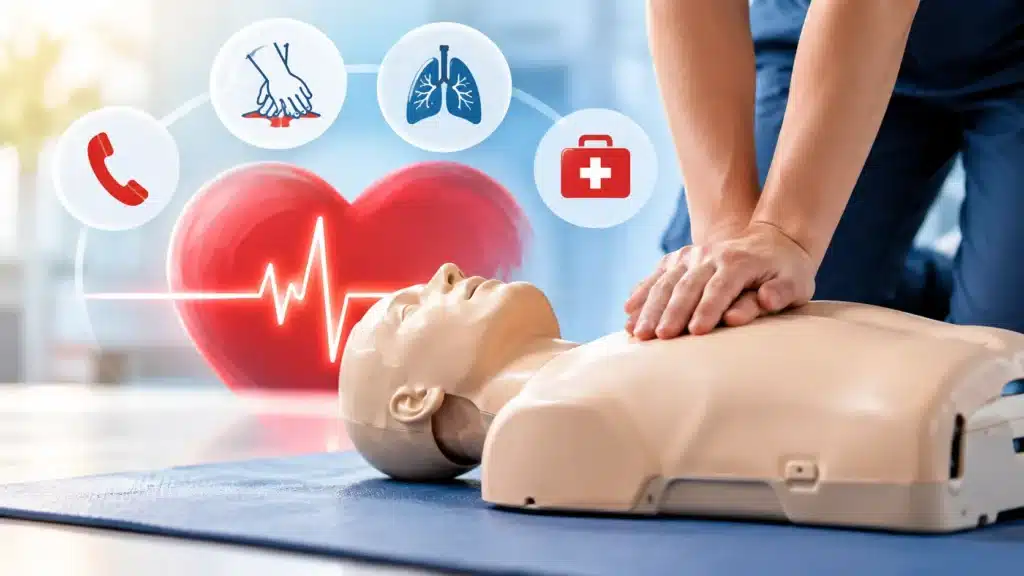
CPR stands for cardiopulmonary resuscitation. It combines chest compressions and, when appropriate and when the rescuer is trained and willing, rescue breaths. The purpose is to keep blood moving through the body until professional help arrives or the person shows signs of recovery.
For adult cardiac arrest, high-quality chest compressions are the priority. Indian resuscitation guidance uses cycles of 30 chest compressions followed by 2 breaths when rescue breaths are provided.
Begin CPR if the person:
Do not delay CPR while trying to decide on the exact cause of collapse.
If you are trained and able to provide rescue breaths, use 30 chest compressions followed by 2 breaths. If you are untrained or unwilling to give breaths, begin continuous hands-only chest compressions until help arrives or an AED is ready.
Chest compressions temporarily move blood to the brain, heart, and other organs. Compressions that are too shallow, too slow, interrupted too often, or performed on a soft surface are less effective.
Try to continue until:
Rescue breaths may be particularly important when cardiac arrest is caused by lack of oxygen, such as drowning, choking, smoke inhalation, drug overdose, or in many child and infant emergencies.
If you are trained, willing, and able to provide breaths:
If the chest does not rise, reposition the head and try again. Do not spend too long attempting breaths; chest compressions should remain the priority in a person who is not breathing normally.
Barrier devices may be used if available, but lack of a barrier should not stop a rescuer from providing chest compressions.
Hands-only CPR means giving continuous chest compressions without rescue breaths. It is particularly useful for adult sudden collapse when the rescuer is not trained in rescue breathing or does not feel able to provide breaths.
Hands-only CPR can be started immediately by a bystander. The rescuer should call for help, place the person on a firm surface, and push firmly and quickly in the centre of the chest until professional help or an AED arrives.
Hands-only CPR is not the same as doing nothing. Starting compressions quickly can be lifesaving.
An AED is a portable device designed to analyse the heart rhythm and, if appropriate, advise or deliver an electric shock. The device provides spoken and visual instructions, making it usable by many members of the public.
Use an AED as soon as it becomes available. Public resuscitation guidance consistently prioritises early AED use after emergency activation and CPR.
Children and infants can experience cardiac arrest for different reasons than adults. In adults, sudden cardiac problems are common causes. In children, breathing problems, drowning, choking, severe infection, trauma, or other oxygen-related causes are more common.
Because of this, rescue breaths can be especially important for children and infants when the rescuer is trained and able.
If a child or infant’s heart stops, immediate CPR with compressions and breaths should be given until professional help arrives, and an AED should be used as soon as it is available.
The recovery position is used for someone who is unconscious but breathing normally and has no immediate need for CPR. It helps keep the airway open and reduces the risk of choking on vomit or fluids.
Drowning can cause life-threatening oxygen deprivation even if the person appears to recover after being removed from water. Any person who has difficulty breathing, persistent coughing, confusion, chest pain, bluish lips, or altered consciousness after submersion should be assessed urgently.
Do not assume that a person is fine simply because they are awake after a drowning incident. Delayed breathing problems can occur and require medical evaluation.
Stroke needs urgent hospital treatment, but CPR is not usually required unless the person becomes unresponsive and stops breathing normally.
If stroke is suspected:
During a seizure, a person may fall, shake, lose awareness, or have unusual movements. Most seizures end on their own, but the person needs protection from injury.
Call emergency services if the seizure lasts longer than five minutes, repeats without recovery, happens in water, occurs during pregnancy, causes injury, is the person’s first seizure, or if the person has trouble breathing afterward.
A severe allergic reaction, also called anaphylaxis, may cause swelling of the throat, breathing difficulty, wheezing, widespread rash, dizziness, or collapse. It can worsen rapidly.
Even if symptoms improve after an auto-injector, urgent hospital observation is still necessary.
In an emergency, fear and confusion are normal. However, avoiding common mistakes can improve safety.
Once emergency medical teams arrive, they may provide advanced treatment that goes beyond Basic Life Support. This can include oxygen, advanced airway support, heart rhythm monitoring, defibrillation, IV medicines, treatment for shock, and rapid transfer to an emergency department or intensive care unit.
At the hospital, doctors may investigate the cause of collapse. Possible evaluations can include blood tests, ECG, cardiac monitoring, brain imaging, chest imaging, oxygen assessment, infection testing, and specialist consultation.
The next steps depend on the cause. A person may need cardiology, neurology, pulmonology, emergency medicine, intensive care, surgery, toxicology, paediatric care, or rehabilitation support.
A BLS emergency does not end when initial first aid begins. Patients need rapid evaluation, stabilisation, diagnosis, and treatment once they reach the hospital. Emergency care is particularly important after collapse, chest pain, suspected stroke, choking, seizure, drowning, severe allergic reaction, or loss of consciousness.
Call emergency services or go to the nearest emergency department immediately if someone has:
No. BLS can be needed during choking, drowning, severe allergic reactions, electric shock, overdose, trauma, and breathing emergencies. However, CPR is started specifically when a person is unresponsive and not breathing normally.
CPR is one important part of BLS. BLS is broader and includes emergency recognition, calling for help, airway support, choking management, AED use, and safe monitoring until medical teams arrive.
If an adult is unresponsive and not breathing normally, call emergency services and begin hands-only chest compressions. Emergency dispatchers may guide you by phone, and prompt action is usually better than waiting without helping.
Yes. AEDs are designed to guide users with clear voice and visual prompts. Turn it on, attach pads as shown, follow instructions, and ensure no one touches the patient while it analyses or gives a shock.
Encourage them to keep coughing, as an effective cough may clear the airway. Stay close and watch carefully; if coughing becomes weak, silent, or they cannot breathe or speak, begin a severe choking response and call emergency services.
Abdominal thrusts can injure an infant’s internal organs. For severe infant choking, use repeated cycles of five back blows and five chest thrusts, and begin infant CPR if the infant becomes unresponsive.
Use the recovery position when a person is unconscious but breathing normally. Continue watching their breathing and call emergency help; if normal breathing stops, place them on their back and begin CPR.

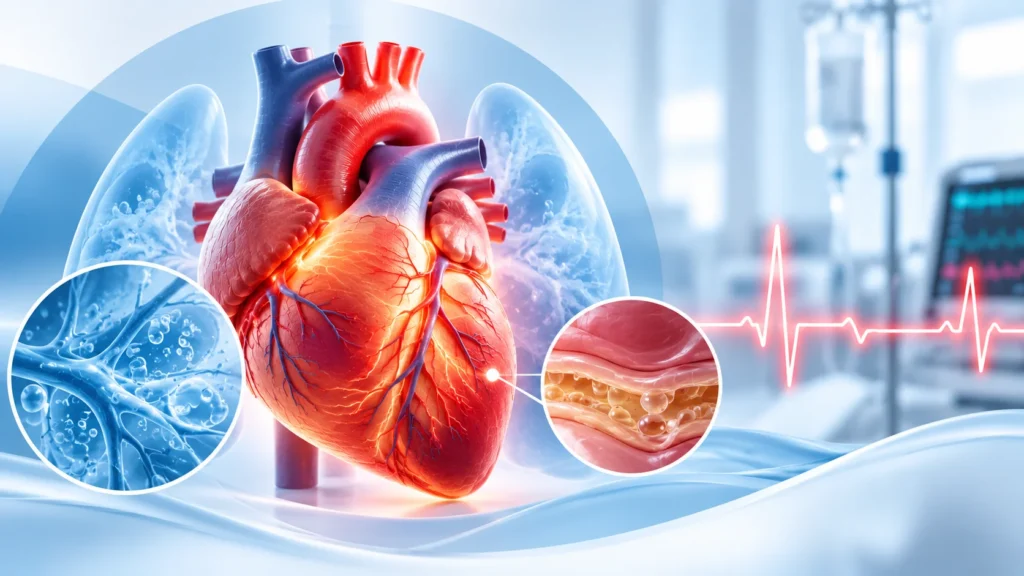
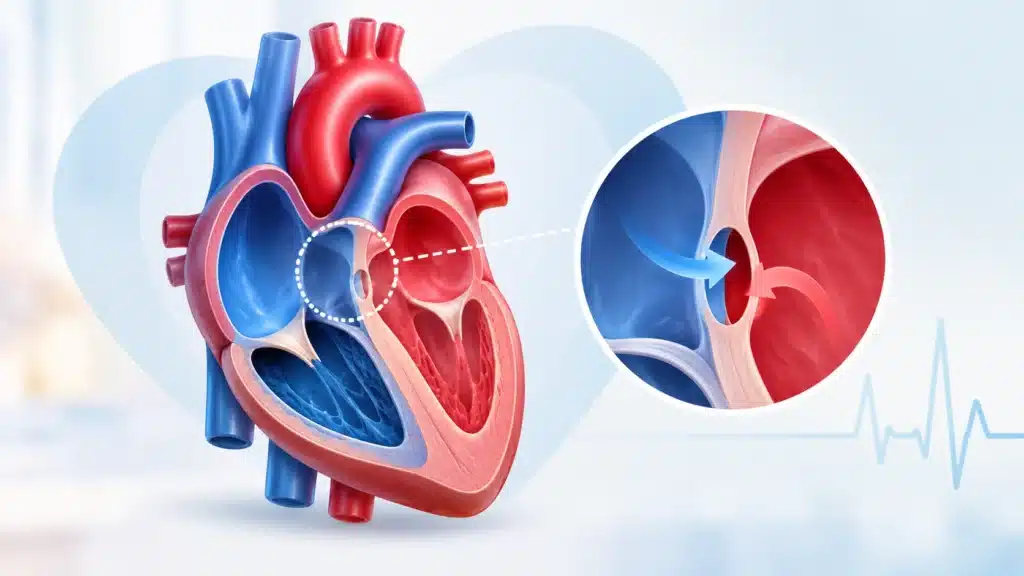
Basic life support (BLS) is a level of medical care which is used for patients with life-threatening condition of cardiac arrest until they can be given full medical care by advanced life support providers..
No rows found.