-

-

Nerve Conduction Studies (NCS)

Nerve Conduction Studies (NCS)

Nerve Conduction Studies (NCS)

Nerve Conduction Studies (NCS): Purpose, Procedure, Results, and Recovery

Nerve Conduction Studies, commonly called NCS, are diagnostic tests used to check how well the nerves outside the brain and spinal cord are working. These nerves are called peripheral nerves, and they carry signals between the brain, spinal cord, muscles, skin, and organs. When a nerve is compressed, injured, inflamed, or damaged by a disease, its ability to send electrical signals may slow down or weaken. An NCS helps doctors measure this function directly.

Many patients experience symptoms such as tingling, numbness, burning pain, weakness, muscle cramps, or loss of sensation in the hands, legs, feet, or arms. These symptoms can happen due to many different reasons, including diabetes, nerve compression, neck or back problems, vitamin deficiencies, thyroid disorders, autoimmune diseases, or muscle disorders. Because the symptoms can overlap, doctors often recommend NCS to find out whether the problem is in the nerve, the muscle, or the connection between them.

What is a Nerve Conduction Study?

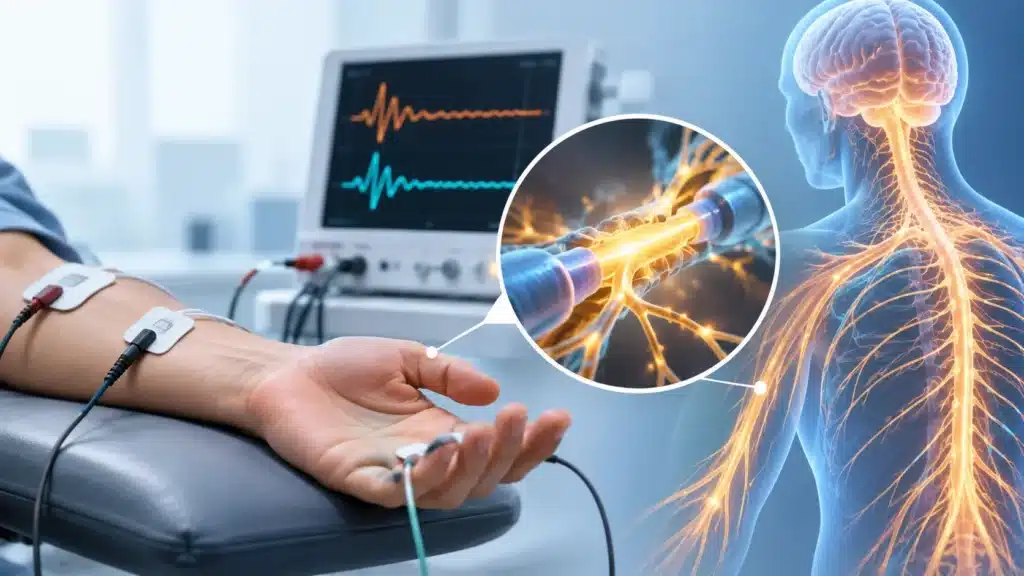
A Nerve Conduction Study is a test that measures how fast and how strongly electrical signals travel through your peripheral nerves. It is a non-surgical test done on the skin using small electrodes and mild electrical pulses.

During the test, a small electrical impulse is applied to a nerve at one point, and electrodes placed at another point record how quickly and how strongly the signal arrives. This helps the doctor assess nerve function, identify nerve damage, and locate where the problem may be occurring.

NCS is often done along with electromyography, or EMG. While NCS checks the nerves, EMG checks the electrical activity of muscles. Together, these tests give a more complete picture of nerve and muscle health. NCS is especially useful for evaluating conditions such as carpal tunnel syndrome, diabetic neuropathy, sciatica, nerve injuries, and muscle weakness.

Why is a Nerve Conduction Study Done?

Doctors recommend NCS when symptoms suggest a problem with peripheral nerves or the muscles they control.

Common reasons for recommending NCS

  • Tingling or numbness in hands, feet, arms, or legs.
  • Burning pain or abnormal sensations.
  • Muscle weakness or difficulty gripping objects.
  • Loss of balance or coordination.
  • Pain radiating from the neck or lower back into the arm or leg.
  • Suspected nerve compression such as carpal tunnel syndrome.
  • Evaluation of diabetic nerve damage or neuropathy.
  • Assessment after a nerve injury or accident.
  • Evaluation of muscle weakness or suspected muscle disease.
  • Follow-up of known nerve disorders to check progression or improvement.

What the test helps identify

  • Whether a nerve is functioning normally.
  • Whether nerve signals are slowed or blocked.
  • Whether the problem is in the nerve, muscle, or neuromuscular junction.
  • The location of nerve compression or injury.
  • The severity of nerve damage.
  • Whether the condition is improving or worsening over time.

Types of Nerve Conduction Studies

NCS can be done on different types of nerves depending on the suspected problem.

Motor nerve conduction study

This test checks the nerves that control muscle movement. A small electrical pulse stimulates the nerve, and the response is recorded from the muscle it supplies. It helps assess muscle strength, nerve signal speed, and the connection between nerve and muscle.

Sensory nerve conduction study

This test checks the nerves that carry sensations such as touch, temperature, pain, and vibration. It is useful in conditions like diabetic neuropathy, carpal tunnel syndrome, and nerve injuries.

Mixed nerve conduction study

This test evaluates nerves that contain both motor and sensory fibers. It may be used in certain nerve disorders where a combined assessment is helpful.

F-wave and H-reflex studies

These are specialized tests that assess specific nerve pathways, especially in conditions affecting the spinal nerve roots or reflex pathways. They may be recommended when radiculopathy or certain neurological conditions are suspected.

Conditions Diagnosed with NCS

NCS helps diagnose and evaluate a wide range of nerve and muscle conditions.

Common conditions evaluated with NCS

  • Carpal tunnel syndrome.
  • Ulnar nerve compression at the elbow.
  • Diabetic peripheral neuropathy.
  • Sciatica and lumbar radiculopathy.
  • Cervical radiculopathy or pinched nerve in the neck.
  • Nerve injury after trauma or surgery.
  • Guillain-Barre syndrome.
  • Chronic inflammatory neuropathy.
  • Peripheral neuropathy due to vitamin deficiency or thyroid disease.
  • Muscle disorders in combination with EMG.
  • Nerve damage due to chemotherapy or toxins.
  • Hereditary neuropathies.

Why early testing matters

Early NCS testing can help identify nerve damage before it becomes severe. This allows doctors to start the right treatment, prevent further damage, and improve recovery outcomes.

Symptoms That May Need NCS

Many symptoms can point to nerve or muscle problems. NCS helps clarify the cause.

Common symptoms that may need evaluation

  • Tingling or pins-and-needles sensation.
  • Numbness in fingers, toes, hands, or feet.
  • Burning pain in limbs.
  • Weak grip or dropping objects.
  • Muscle weakness or wasting.
  • Pain radiating down the arm or leg.
  • Loss of balance or frequent falls.
  • Difficulty walking or climbing stairs.
  • Cramps or twitching in muscles.
  • Reduced sensation to touch, heat, or cold.
  • Symptoms worse at night or with certain positions.

When symptoms are more urgent

  • Sudden weakness or paralysis.
  • Rapidly spreading numbness.
  • Difficulty breathing or swallowing.
  • Loss of bladder or bowel control.
  • Severe pain after injury.
  • Progressive weakness over days or weeks.

How to Prepare for NCS

Preparation for NCS is simple, but a few steps help ensure accurate results.

Before the test

  • Bathe or shower on the day of the test to remove oils from the skin.
  • Avoid applying lotions, creams, oils, or perfumes on the skin.
  • Wear loose, comfortable clothing that allows easy access to the arms or legs.
  • Inform the doctor about all medicines you are taking.
  • Tell the doctor if you have a pacemaker, defibrillator, or bleeding disorder.
  • Mention if you are pregnant or have any skin allergies.
  • Continue regular medicines unless the doctor advises otherwise.

What to bring

  • Previous reports or imaging if available.
  • List of current medicines.
  • Details of symptoms and when they started.
  • Any prior nerve test reports for comparison.

What Happens During the Test?

NCS is usually done in a neurology or diagnostic room and takes about 30 to 60 minutes depending on the number of nerves tested.

Step-by-step process

  • You will be asked to sit or lie down comfortably.
  • The skin area to be tested will be cleaned if needed.
  • Small surface electrodes will be placed on the skin over specific nerves and muscles.
  • A small electrical pulse will be applied to stimulate the nerve.
  • You may feel a quick tingling, tapping, or mild shock-like sensation.
  • The muscle may twitch briefly in response to the stimulation.
  • The machine records how fast and how strongly the signal travels.
  • Several nerves may be tested depending on the symptoms.
  • The test is repeated at different points to map nerve function.

What the test feels like

Most people describe the sensation as a quick static shock or mild tingling. It can be slightly uncomfortable, especially at higher stimulation levels, but it is usually not painful. The discomfort is brief and stops as soon as the pulse is given.

Duration of the test

  • Simple NCS may take 15 to 30 minutes.
  • Combined NCS and EMG may take 45 to 90 minutes.
  • Complex cases or multiple limbs may take longer.

Understanding NCS Results

The results of NCS are interpreted by a neurologist or specialist trained in nerve testing. The test measures several parameters that help identify nerve problems.

Key measurements in NCS

  • Nerve conduction velocity, which shows how fast the signal travels.
  • Amplitude, which shows the strength of the nerve response.
  • Latency, which shows the time taken for the signal to arrive.
  • Reflex and F-wave studies, which assess specific nerve pathways.

What abnormal results may indicate

  • Slowed conduction velocity may suggest demyelination or nerve damage.
  • Reduced amplitude may suggest axonal damage or loss of nerve fibers.
  • Prolonged latency may suggest compression or conduction block.
  • Localized slowing may point to entrapment such as carpal tunnel syndrome.
  • Diffuse abnormalities may suggest neuropathy affecting many nerves.

What normal results mean

Normal results suggest that the tested nerves are conducting signals normally. However, if symptoms persist, the doctor may recommend further testing or evaluation of other possible causes.

Recovery After NCS

Recovery after NCS is usually quick and uncomplicated.

After the test

  • You can usually return to normal activities immediately.
  • Mild skin irritation or redness at electrode sites may occur.
  • Slight muscle soreness may be felt if EMG was also done.
  • Drink water and rest if you feel tired.
  • Follow any specific instructions given by the doctor.

When to contact the doctor after the test

  • Severe pain or swelling at the test site.
  • Signs of infection such as redness, warmth, or pus.
  • Worsening weakness or numbness.
  • Any unusual reaction or concern.

Risks and Safety of NCS

NCS is a safe test with very few risks.

Possible side effects

  • Mild discomfort during electrical stimulation.
  • Temporary skin irritation from electrodes.
  • Slight muscle twitching or soreness.
  • Rare allergic reaction to electrode gel or adhesive.

Who should inform the doctor before the test

  • Patients with pacemakers or implanted defibrillators.
  • Patients with bleeding disorders or on blood thinners.
  • Pregnant women.
  • Patients with skin infections or open wounds at the test site.
  • Patients with severe allergies to adhesives or gels.

Benefits of NCS

NCS provides valuable information that helps guide diagnosis and treatment.

Key benefits

  • Objective measurement of nerve function.
  • Helps locate the site of nerve damage.
  • Differentiates nerve problems from muscle problems.
  • Guides treatment planning and follow-up.
  • Helps monitor disease progression or recovery.
  • Non-surgical and outpatient procedure.
  • Quick results in most cases.

Why Choose Rama Hospital for NCS?

NCS requires skilled interpretation and proper technique. A hospital with experienced neurologists, advanced equipment, and coordinated care can make a major difference in diagnosis and treatment planning.

Why hospital care matters

  • Experienced neurology and diagnostic team.
  • Modern equipment for accurate nerve testing.
  • Combined NCS and EMG facilities when needed.
  • Clear explanation of results and next steps.
  • Coordinated care with orthopedics, endocrinology, and rehabilitation if needed.
  • Follow-up support for ongoing nerve conditions.

Trust and authority points

  • Skilled specialists in neurology and neurophysiology.
  • Patient-centered approach to testing and explanation.
  • Safe and evidence-based diagnostic practices.
  • Comprehensive care from diagnosis to treatment planning.
  • Support for adults, elderly patients, and complex cases.

Frequently Asked Questions (FAQs)

Is NCS painful?

NCS is usually not painful, but you may feel a quick tingling or mild shock-like sensation during stimulation. Some people find it slightly uncomfortable, but the feeling is brief and stops immediately after each pulse.

How long does an NCS take?

A simple NCS may take 15 to 30 minutes. If it is combined with EMG or multiple nerves are tested, it may take 45 to 90 minutes. The duration depends on the number of nerves and the complexity of the case.

Do I need to prepare for NCS?

Yes, basic preparation helps. Shower on the day of the test, avoid lotions or oils on the skin, and wear loose clothing. Inform the doctor about medicines, pacemakers, or any medical conditions before the test.

Can NCS detect all nerve problems?

NCS is very useful for many nerve conditions but may not detect very small fiber neuropathies or certain central nervous system problems. In some cases, additional tests such as EMG, MRI, or blood tests may be needed for a complete diagnosis.

Is NCS safe during pregnancy?

NCS is generally considered safe during pregnancy as it uses very low-level electrical stimulation on the skin. However, always inform the doctor if you are pregnant so they can take appropriate precautions and decide the best approach.

What happens if my NCS results are abnormal?

Abnormal results help identify the type and location of nerve damage. Your doctor will explain the findings and recommend treatment, which may include medicines, physiotherapy, lifestyle changes, or further evaluation depending on the cause.

Can NCS be repeated?

Yes, NCS can be repeated if needed. Doctors may repeat the test to monitor progression of a nerve condition, check response to treatment, or evaluate new symptoms. Repeat testing is safe and commonly done in follow-up care.

Conclusion

Nerve Conduction Studies are an important diagnostic tool for evaluating nerve and muscle function. They help identify nerve damage, compression, neuropathy, and other conditions that cause tingling, numbness, weakness, or pain. The test is safe, non-surgical, and provides valuable information that guides treatment planning.

If you have persistent symptoms such as numbness, tingling, burning pain, or muscle weakness, an NCS can help clarify the cause and guide the right treatment. Early testing and proper interpretation can prevent further damage and improve recovery outcomes.

Rama Hospital can help evaluate nerve-related symptoms, perform NCS with expert care, and provide a clear treatment plan based on accurate diagnosis and individual needs.


Table of Contents

Explore More

What to Know More About Nerve Conduction Studies (NCS)

Find Ailments & Treatments

Search Ailments

Quickly find the information you need. Search our database to explore detailed information on various diseases and conditions, including symptoms, causes, and treatment options.

Search Treatments

Quickly find the information you need. Search our database to explore detailed information on various diseases and conditions, including symptoms, causes, and treatment options.

Recommended Reading

Video Playlist

No rows found.

Experience Healthcare the Rama Way

Emergency • OPD • Surgery • ICU Care

Need Help? Talk to our experts

Get a callback from our experts

Request a callback