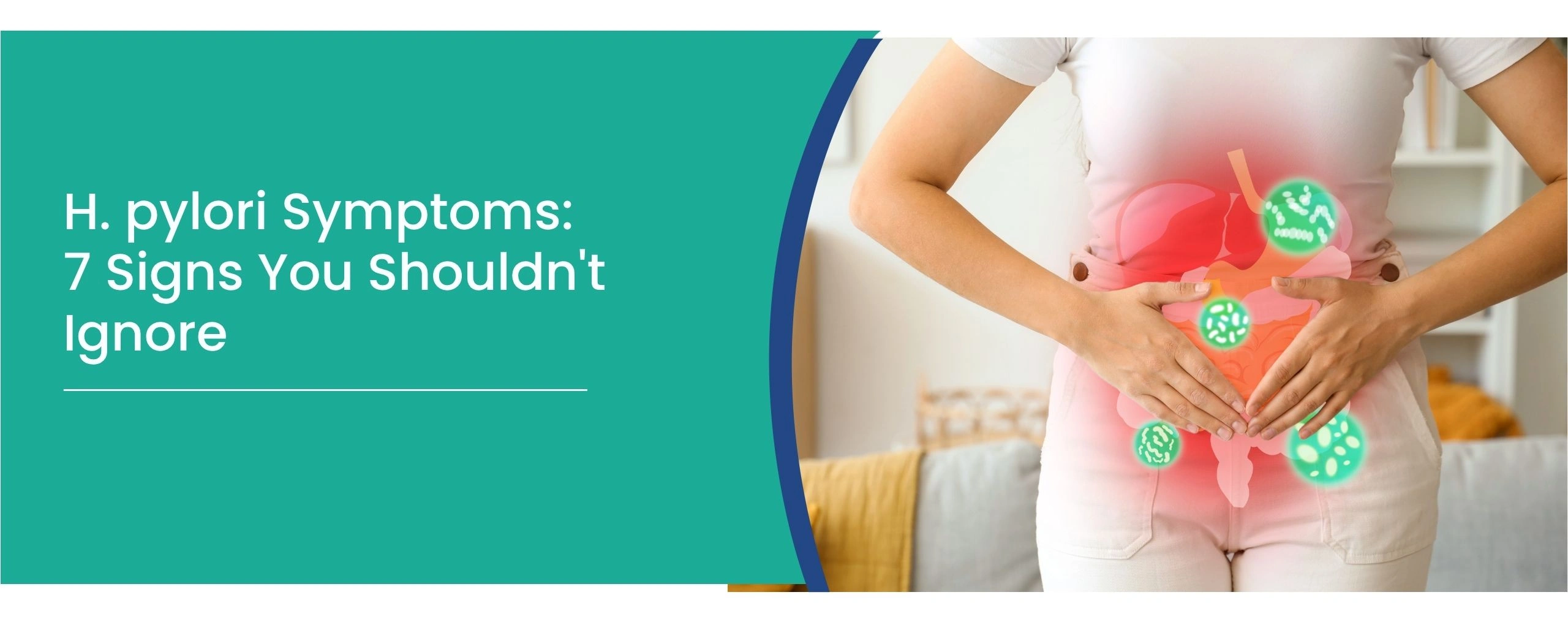
Do you frequently experience stomach pain, bloating or indigestion and simply assume it is acidity?
Sometimes, recurring digestive problems may have another underlying cause. One of them is an infection with Helicobacter pylori, commonly called H. pylori.
This is a type of bacteria that can infect the stomach lining. Many people with the infection do not develop noticeable symptoms. However, when symptoms occur, they may be linked to inflammation of the stomach lining, known as gastritis, or to peptic ulcers.
Knowing the common H. pylori symptoms can help you recognise when recurring stomach discomfort may need medical evaluation.
What Is H. pylori?
H. pylori, short for Helicobacter pylori, is a bacterium that can live in the stomach and affect its protective lining.
The infection is common worldwide and often occurs during childhood. It can spread through contact with infected bodily fluids and may also be associated with contaminated food or water and poor hand hygiene.
In many people, an infection causes no symptoms at all. But in some people, it can contribute to:
- Gastritis or inflammation of the stomach lining
- Peptic ulcers
- Recurrent upper abdominal discomfort
- Less commonly, complications such as stomach cancer
Having H. pylori does not mean that a person will develop these complications. However, persistent symptoms should not be ignored.
7 H. pylori Symptoms You Shouldn’t Ignore
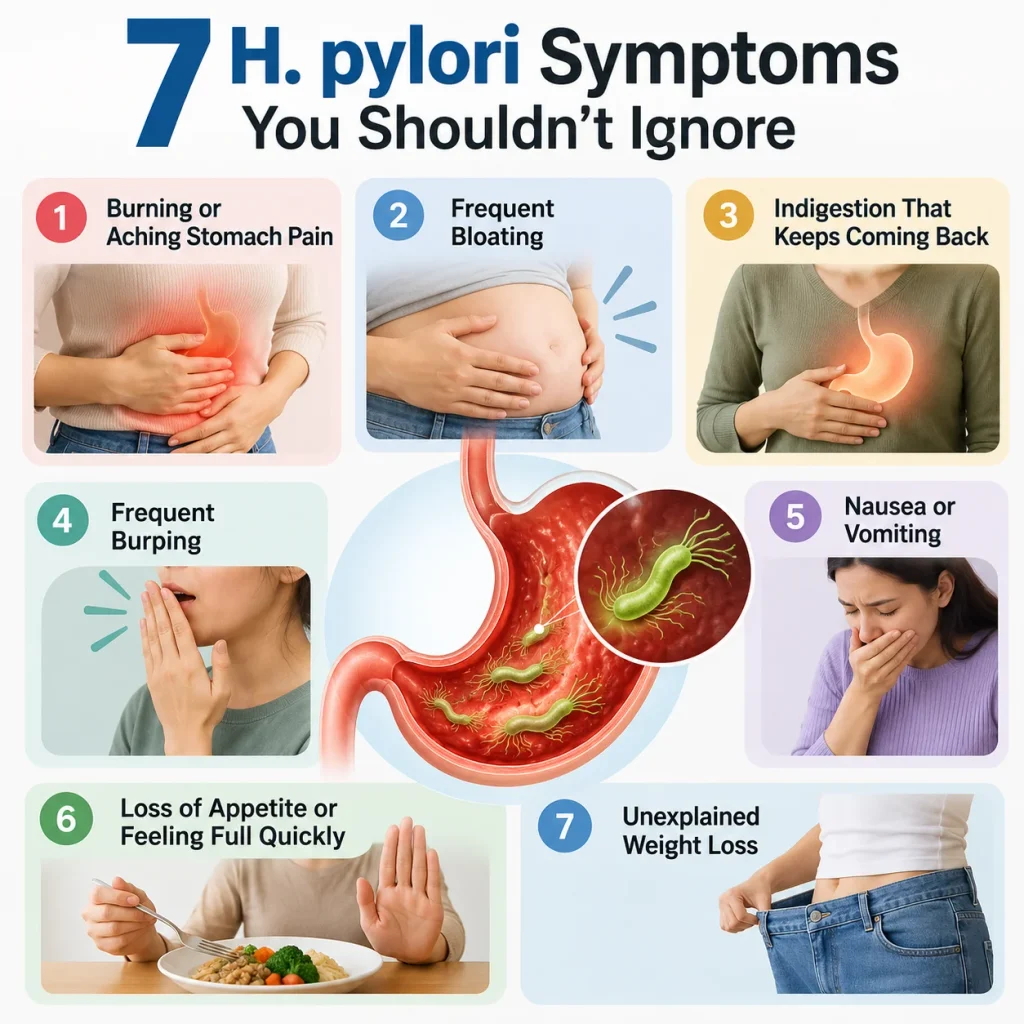
The symptoms of infection can overlap with common digestive problems, which is why it is easy to dismiss them as ordinary acidity or indigestion.
Here are seven symptoms worth paying attention to.
1. Burning or Aching Stomach Pain
One of the most common H. pylori symptoms is pain or discomfort in the upper or middle part of the abdomen.
The pain may feel like:
- A dull ache
- Burning
- Gnawing discomfort
- A recurring pain that comes and goes
In some people, the discomfort may become more noticeable when the stomach is empty or between meals. It may also occur at night.
Occasional stomach discomfort does not necessarily mean you have H. pylori. But if the pain keeps returning, becomes difficult to manage or is associated with other digestive symptoms, it is worth discussing with a doctor.
2. Frequent Bloating
Feeling bloated after a large meal is common. But persistent or recurring bloating may deserve closer attention, especially when it occurs along with abdominal discomfort or indigestion.
People with H. pylori-related gastritis may experience bloating and other digestive symptoms.
If you regularly feel that your stomach is unusually full, tight or uncomfortable even after relatively small meals, don’t automatically assume that food is the only cause.
3. Indigestion That Keeps Coming Back
Indigestion can feel different from person to person.
You may experience:
- Discomfort after eating
- A feeling of heaviness
- Burning or discomfort in the upper abdomen
- Excessive fullness
- Repeated digestive discomfort
This can contribute to inflammation of the stomach lining and peptic ulcers, both of which can cause indigestion-like symptoms.
If you are repeatedly relying on over-the-counter medicines for indigestion but the problem keeps returning, it may be time to look for the underlying cause.
4. Frequent Burping
Everyone burps. It is a normal way for the body to release swallowed air.
However, frequent burping along with bloating, stomach discomfort or indigestion can be one of the symptoms seen with infection.
The important point is that burping by itself does not confirm an infection.
Several digestive conditions can cause similar symptoms. Testing and medical evaluation are needed to determine the actual cause.
5. Nausea or Vomiting
Another possible sign is recurring nausea.
You may feel:
- Nauseated after eating
- Uncomfortable when your stomach is empty
- Less interested in food
- Like you may vomit
Some people with H. pylori-related gastritis or peptic ulcer disease can experience nausea or vomiting.
Vomiting blood, however, is not something to monitor at home. It can indicate bleeding in the upper digestive tract and requires urgent medical attention.
6. Loss of Appetite or Feeling Full Quickly
Have you started eating less because you feel full sooner than usual?
A reduced appetite or feeling unusually full after eating a small amount can occur with H. pylori-related digestive problems.
This may seem like a minor symptom at first. But when it persists, it can affect your nutritional intake and may contribute to unintended weight loss.
Pay particular attention if you notice a combination of:
Early fullness + reduced appetite + stomach pain + weight loss.
That combination deserves medical evaluation rather than repeated self-treatment.
7. Unexplained Weight Loss
Unintentional weight loss is one of the symptoms that should not simply be attributed to “weak digestion.”
The infection can sometimes be associated with reduced appetite and weight loss.
However, unexplained weight loss can have many causes. It does not automatically mean that you have H. pylori.
If you are losing weight without intentionally changing your diet or exercise routine, speak with a healthcare professional so the underlying cause can be investigated.
Can You Have H. pylori Without Symptoms?
Yes. This is one of the most important things to understand about H. pylori.
Many people who have the infection do not experience noticeable symptoms. When symptoms do occur, they may result from inflammation of the stomach lining or an ulcer rather than from the bacteria itself directly causing a particular sensation.
This means you cannot diagnose H. pylori simply by looking at your symptoms.
For example, stomach pain and bloating can occur because of many different digestive conditions. An H. pylori test may be recommended when a doctor believes the infection could be responsible for your symptoms or an ulcer.
When Should H. pylori Symptoms Become a Warning Sign?
Not every episode of acidity or stomach discomfort requires an H. pylori test.
However, you should consider seeing a doctor if you have:
- Persistent or recurring stomach pain
- Repeated indigestion
- Frequent bloating with other digestive symptoms
- Ongoing nausea or vomiting
- Loss of appetite
- Unexplained weight loss
- Symptoms that keep returning despite treatment
Some symptoms require more urgent medical attention.
Seek medical help promptly if you have:
These can indicate gastrointestinal bleeding or another serious digestive problem.
- Black or tarry stools
- Blood in your stool
- Vomiting blood
- Vomit that looks like coffee grounds
- Sudden or severe abdominal pain
- Difficulty swallowing
- Severe dizziness, unusual tiredness or fainting
How Is H. pylori Diagnosed?
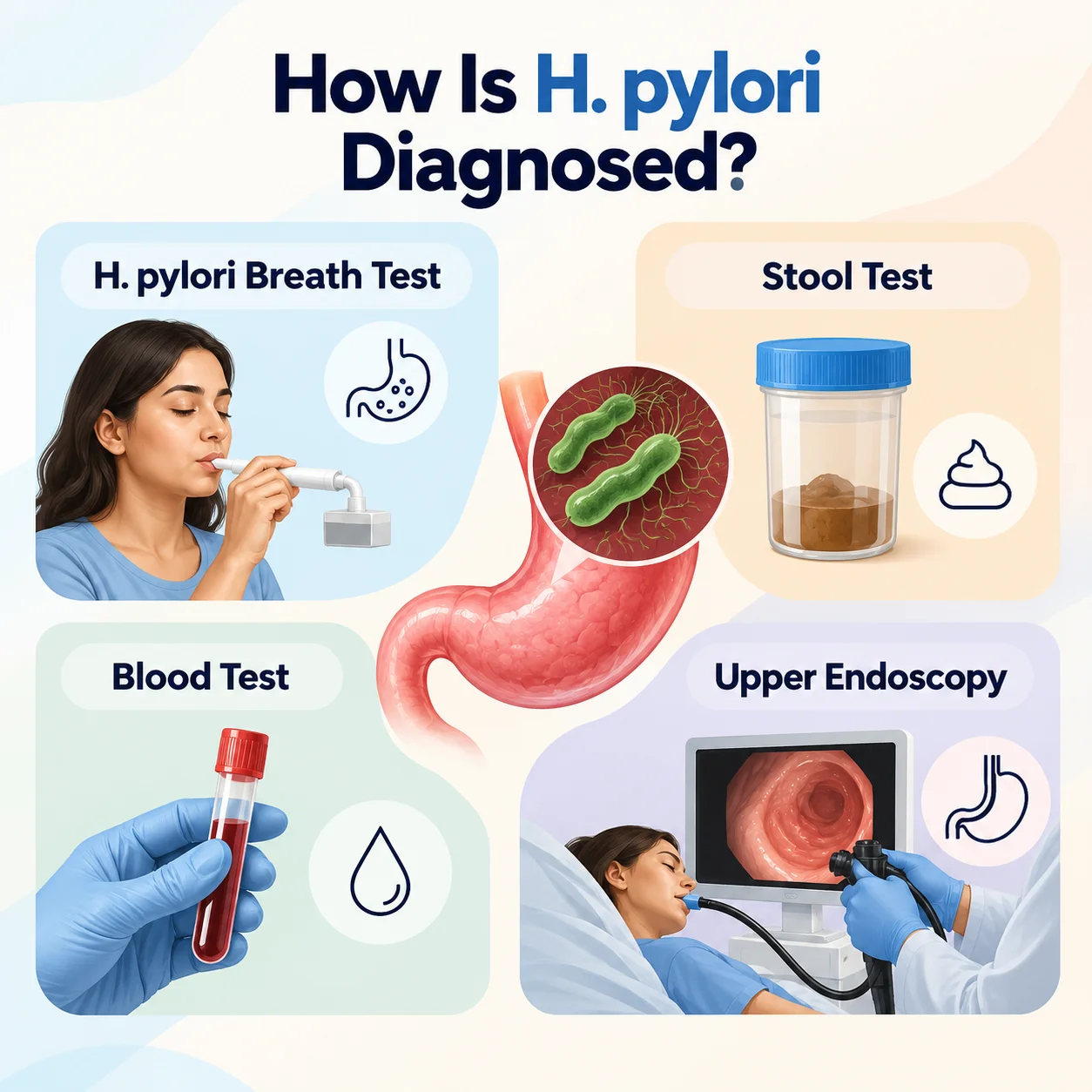
Symptoms alone cannot confirm an H. pylori infection.
Depending on your symptoms and medical history, your doctor may recommend one or more tests.
H. pylori Breath Test
The urea breath test is a commonly used non-invasive test. You consume a substance containing urea and provide breath samples. If H. pylori is present, the bacteria break down the urea in a way that can be detected through the breath.
Stool Test
A stool antigen test can look for evidence of H. pylori infection in a stool sample. Stool testing can also be used after treatment to help confirm whether the infection has been cleared.
Blood Test
Blood tests can detect antibodies associated with H. pylori. However, antibodies can remain after an infection has cleared, so blood testing may not always distinguish an active infection from a previous one.
Upper Endoscopy
If your doctor needs to investigate an ulcer, gastritis or another upper digestive condition, an upper endoscopy may be recommended. During the procedure, a thin camera is used to examine the upper digestive tract, and a small tissue sample may be taken for testing.
The appropriate test depends on your symptoms, medical history and clinical assessment.
How Is H. pylori Infection Treated?
If testing confirms H. pylori infection, treatment generally involves a combination of medicines rather than a single drug.
Treatment commonly includes antibiotics along with medicines that reduce stomach acid, and in some cases bismuth-based medication may also be included. The exact treatment depends on factors such as previous antibiotic exposure and local resistance patterns.
It is important to take the complete course exactly as prescribed.
Stopping antibiotics early or taking them incorrectly can make treatment less effective.
Your doctor may also recommend follow-up testing after treatment to confirm that the infection has been cleared.
Can H. pylori Symptoms Be Treated at Home?
You may be able to reduce certain digestive discomforts by avoiding foods or habits that trigger your symptoms, but home remedies cannot confirm or eliminate an H. pylori infection.
If H. pylori is responsible for your symptoms, appropriate medical treatment may be needed to clear the infection.
Rather than repeatedly treating stomach pain as acidity, consider getting evaluated if symptoms keep coming back.
When Should You See a Gastroenterologist?
Consider consulting a gastroenterologist if you have recurring stomach pain, persistent indigestion, unexplained weight loss, frequent nausea or other ongoing digestive symptoms.
A gastroenterologist can assess your symptoms, determine whether H. pylori testing is appropriate and look for other possible causes of your digestive problems.
If you are looking for H. pylori treatment in Noida or need evaluation for recurring stomach problems, choosing a hospital with access to gastroenterology consultation and appropriate diagnostic facilities can help you receive a more complete evaluation.
Frequently Asked Question (FAQs)
1. What is the most common symptom of H. pylori?
Stomach or upper abdominal pain is a commonly reported symptom when H. pylori causes symptomatic gastritis or peptic ulcer disease. Other symptoms may include bloating, indigestion, nausea, frequent burping, loss of appetite and weight loss.
2. Can H. pylori cause gas and bloating?
Yes. Bloating and frequent burping can occur with H. pylori infection. However, these symptoms are not specific to H. pylori and can occur with many other digestive conditions.
3. Can H. pylori cause weight loss?
It can be associated with unexplained weight loss, particularly when the infection causes reduced appetite or ongoing digestive symptoms. However, unexplained weight loss has many possible causes and should be evaluated by a healthcare professional.
4. How do you know if you have H. pylori?
Symptoms alone cannot confirm an infection. Doctors may use a breath test, stool test, blood test or, in selected cases, an upper endoscopy with biopsy.
5. Can H. pylori go away on its own?
You should not assume that an H. pylori infection has cleared simply because symptoms improve. If testing confirms an infection, your doctor can recommend appropriate treatment and follow-up testing to determine whether the bacteria have been eradicated.
6. When should I get tested for H. pylori?
Testing may be appropriate when you have symptoms suggestive of gastritis or peptic ulcer disease or when your doctor identifies other reasons to investigate H. pylori. Your doctor can determine which test is appropriate based on your symptoms and medical history.
Conclusion
Occasional acidity or indigestion is common. But when stomach pain, bloating, nausea or indigestion keeps coming back, repeatedly treating the symptoms may not address the underlying problem.
H. pylori is one possible cause, but it is not the only one.
The right approach is to identify the cause rather than self-diagnosing from symptoms.
If your digestive symptoms are persistent, worsening or accompanied by warning signs such as bleeding or unexplained weight loss, speak with a qualified gastroenterologist for appropriate evaluation.
For patients looking for gastroenterology care or H. pylori testing in Noida, specialist evaluation can help determine the right next step.