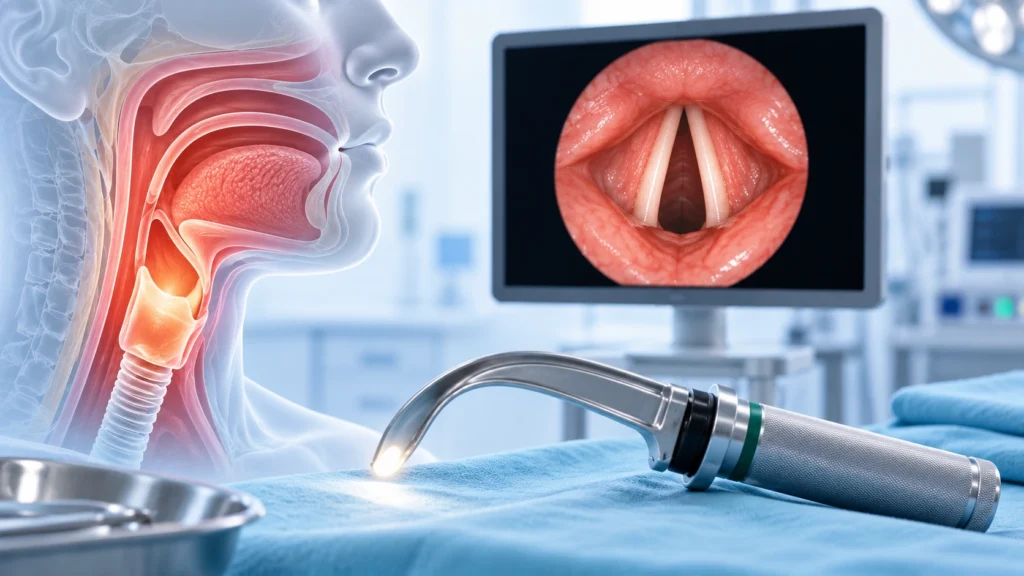
Nasopharyngoscopy is a common and minimally invasive procedure used to examine the inside of the nose, nasal passages, and the upper part of the throat behind the nose. It is performed using a thin, flexible tube with a light and camera at the tip, called a nasopharyngoscope. This allows the doctor to see areas that cannot be examined with a simple torch or mirror.
The procedure is widely used in ENT practice to evaluate symptoms such as nasal blockage, chronic sinus problems, recurrent nosebleeds, loss of smell, voice changes, throat discomfort, swallowing difficulty, ear problems, and suspected growths in the nose or throat. It is also used to check the vocal cords, adenoids, and the back of the throat in patients with persistent cough, hoarseness, or breathing issues.
What is Nasopharyngoscopy?
Nasopharyngoscopy is a diagnostic procedure in which an ENT specialist uses a thin, flexible endoscope to examine the nasal cavity, nasopharynx, and surrounding structures. The endoscope is passed gently through the nostril and advanced to visualize the nasal passages, sinuses drainage pathways, adenoids, back of the nose, and the upper part of the throat.
The procedure is usually done in the outpatient setting. It takes only a few minutes and does not require general anesthesia in most cases. A local anesthetic spray or gel may be used to numb the nose and reduce discomfort. The doctor watches the images on a monitor while guiding the scope carefully.
Nasopharyngoscopy is different from rigid nasal endoscopy, which uses a straight, rigid scope. The flexible nasopharyngoscope can bend and reach areas that are difficult to see with a rigid scope, making it useful for examining the voice box and upper airway as well.
Why is Nasopharyngoscopy Done?
Nasopharyngoscopy is done to investigate symptoms, diagnose conditions, and guide treatment planning.
Common reasons for the procedure
- Persistent nasal blockage or congestion.
- Chronic sinusitis or recurrent sinus infections.
- Frequent nosebleeds.
- Loss of smell or altered smell.
- Persistent postnasal drip.
- Throat discomfort or foreign body sensation.
- Voice changes or hoarseness.
- Difficulty swallowing.
- Chronic cough not responding to treatment.
- Ear problems such as fluid in the middle ear.
- Suspected nasal polyps or growths.
- Evaluation of adenoids in children.
- Assessment of the vocal cords and airway.
- Follow-up after nasal or throat surgery.
- Screening for tumors in high-risk patients.
What the doctor looks for
- Swelling or inflammation in the nasal passages.
- Polyps, cysts, or growths.
- Deviated nasal septum or structural issues.
- Signs of sinus infection or drainage problems.
- Enlarged adenoids.
- Abnormalities in the nasopharynx.
- Vocal cord movement and appearance.
- Signs of reflux affecting the throat.
- Any suspicious lesions that may need biopsy.
How is Nasopharyngoscopy Performed?
The procedure is straightforward and usually completed within a few minutes.
Step-by-step overview
- The patient sits upright in a comfortable position.
- The doctor explains the procedure and answers questions.
- A local anesthetic spray or gel is applied to the nose.
- A decongestant may be used to open the nasal passages.
- The flexible nasopharyngoscope is gently inserted into one nostril.
- The doctor advances the scope to examine the nasal cavity and nasopharynx.
- The patient may be asked to breathe, speak, or swallow during the exam.
- The scope is then passed further to view the voice box if needed.
- Images are viewed on a monitor in real time.
- The scope is removed gently once the examination is complete.
- The doctor discusses findings and next steps with the patient.
What the patient may feel
- A cool sensation from the spray or gel.
- Mild pressure as the scope passes through the nose.
- A feeling of fullness or urge to sneeze.
- Watery eyes or mild tearing.
- Temporary gagging when the throat area is examined.
- Mild discomfort that resolves quickly after the procedure.
Duration of the procedure
- The actual examination usually takes 5 to 10 minutes.
- Preparation and discussion may add extra time.
- Most patients can leave immediately after the procedure.
Preparation for Nasopharyngoscopy
Preparation is simple, but a few steps can make the procedure smoother.
Before the procedure
- Inform the doctor about all medicines being taken.
- Mention any history of bleeding disorders or blood thinners.
- Share any allergies, especially to anesthetic sprays.
- Inform about previous nasal or throat surgeries.
- Let the doctor know if you are pregnant or have medical conditions.
- Avoid heavy meals just before the appointment if advised.
- Come with a clean nose, free of excessive discharge if possible.
- Bring previous reports or scans if available.
On the day of the procedure
- Arrive a few minutes early for registration.
- Wear comfortable clothing.
- Avoid strong perfumes or nasal sprays unless prescribed.
- Relax and ask questions if unsure about any step.
Special considerations
- Children may need extra explanation and reassurance.
- Patients with severe nasal blockage may need decongestants beforehand.
- Those with anxiety can discuss options with the doctor.
- Patients on blood thinners should follow medical advice about continuation.
What to Expect During the Procedure?
Knowing what to expect can reduce anxiety and improve cooperation.
During the examination
- The doctor will explain each step as it happens.
- You will be asked to sit still and breathe normally.
- You may be asked to speak or swallow at certain points.
- The scope will move gently through the nasal passage.
- You may feel mild pressure but should not feel sharp pain.
- If discomfort occurs, you can signal the doctor to pause.
- The procedure is usually well tolerated by most patients.
After the scope is removed
- You may feel mild numbness in the nose or throat.
- There may be slight watery discharge or tearing.
- Some patients sneeze a few times.
- Most people feel normal within minutes.
- The doctor will share initial findings immediately.
Risks and Side Effects
Nasopharyngoscopy is generally safe, but like any medical procedure, it has some risks.
Common and mild side effects
- Mild nasal discomfort or irritation.
- Sneezing or runny nose after the procedure.
- Watery eyes or tearing.
- Temporary gagging or throat irritation.
- Minor nosebleed in some cases.
- Mild headache or pressure sensation.
Rare complications
- Significant nosebleed requiring treatment.
- Allergic reaction to anesthetic spray.
- Vasovagal reaction causing dizziness or fainting.
- Injury to nasal structures in very rare cases.
- Infection, which is extremely uncommon with proper sterilization.
Why risks are low
- The procedure is minimally invasive.
- It is performed by trained ENT specialists.
- Sterile, single-use or properly sterilized scopes are used.
- Local anesthesia reduces discomfort and movement.
- The procedure is short and well controlled.
Recovery After Nasopharyngoscopy
Recovery is usually quick, and most patients resume normal activities immediately.
Immediate recovery
- You can leave the clinic shortly after the procedure.
- No sedation means no need for a companion in most cases.
- Mild numbness wears off within an hour.
- Normal eating and drinking can usually be resumed.
Care after the procedure
- Avoid blowing the nose forcefully for a few hours.
- Use saline nasal spray if recommended.
- Avoid picking or inserting objects into the nose.
- Follow any specific instructions given by the doctor.
- Report any heavy bleeding or severe pain.
Return to normal activities
- Most patients return to work or school the same day.
- No special rest is needed unless advised.
- Avoid strenuous activity if minor bleeding occurred.
- Follow up as scheduled for results or further treatment.
Results and Next Steps
The doctor can often share findings immediately after the procedure.
Possible outcomes
- Normal examination with no significant abnormalities.
- Inflammation or infection requiring medication.
- Structural issues such as deviated septum or polyps.
- Enlarged adenoids needing further evaluation.
- Vocal cord abnormalities requiring voice care.
- Suspicious lesions needing biopsy or imaging.
- Findings that explain chronic symptoms.
Next steps may include
- Prescription of nasal sprays or medications.
- Allergy evaluation or treatment.
- Sinus treatment or irrigation advice.
- Voice therapy or reflux management.
- Imaging such as CT scan if needed.
- Biopsy of any suspicious area.
- Planning for surgery if structural problems are found.
- Regular follow-up to monitor progress.
Uses of Nasopharyngoscopy in Different Conditions
Nasopharyngoscopy is useful in many ENT conditions.
Nasal and sinus conditions
- Chronic sinusitis evaluation.
- Nasal polyp detection.
- Deviated septum assessment.
- Post-surgical follow-up.
- Evaluation of nasal masses.
Throat and voice conditions
- Vocal cord paralysis assessment.
- Hoarseness evaluation.
- Laryngopharyngeal reflux signs.
- Throat growth or lesion examination.
- Airway assessment.
Ear-related conditions
- Eustachian tube function evaluation.
- Adenoid assessment in children with ear fluid.
- Nasopharyngeal causes of ear problems.
Pediatric uses
- Enlarged adenoids causing breathing issues.
- Recurrent ear infections evaluation.
- Nasal obstruction in children.
- Voice and airway assessment.
Why Choose Rama Hospital for Nasopharyngoscopy?
Nasopharyngoscopy requires skill, proper equipment, and a patient-friendly approach. A hospital with experienced ENT specialists and modern endoscopy facilities can provide accurate diagnosis and comfortable care.
- Experienced ENT specialists trained in endoscopy.
- High-quality flexible endoscopes for clear visualization.
- Proper sterilization and infection control.
- Comfortable procedure rooms with monitoring.
- Ability to perform biopsy or further tests if needed.
- Coordinated care for related ENT conditions.
Frequently Asked Questions (FAQs)
Is nasopharyngoscopy painful?
Most patients feel only mild discomfort or pressure. Local anesthetic spray reduces sensation in the nose. The procedure is quick and generally well tolerated by adults and children.
How long does the procedure take?
The actual examination usually takes 5 to 10 minutes. Preparation and discussion may add extra time, but most patients complete the visit within half an hour.
Do I need to fast before nasopharyngoscopy?
Fasting is usually not required since no sedation is given. However, follow any specific instructions from your doctor, especially if other tests are planned on the same day.
Can I drive after the procedure?
Yes, most patients can drive themselves home since no sedation is used. If you feel dizzy or uncomfortable, wait until you feel normal before driving.
Are there any risks involved?
Risks are minimal. Some patients may have mild nosebleed, irritation, or watery eyes. Serious complications are very rare when performed by trained specialists.
Will I get results immediately?
The doctor can usually share findings right after the procedure. If biopsy or additional tests are needed, final reports may take a few days.
Can children undergo nasopharyngoscopy?
Yes, children can safely undergo this procedure. It is commonly used to evaluate enlarged adenoids, nasal obstruction, and recurrent ear problems in pediatric patients.
Conclusion
Nasopharyngoscopy is a safe, quick, and highly informative procedure that helps ENT specialists diagnose a wide range of nasal, throat, and voice conditions. It provides clear visualization of areas that cannot be seen with routine examination, leading to more accurate diagnosis and better treatment planning.
The procedure is minimally invasive, well tolerated, and usually requires no special preparation or recovery time. For patients with persistent nasal symptoms, voice changes, throat discomfort, or recurrent ear problems, nasopharyngoscopy can provide valuable answers and guide effective management.
Rama Hospital offers expert nasopharyngoscopy services with experienced ENT specialists, modern endoscopy equipment, and a patient-friendly approach. From preparation to results and follow-up care, the team ensures a comfortable and informative experience for every patient.