Split-thickness skin grafting, commonly called STSG, is a surgical procedure used to cover large areas of skin loss. It is often needed after severe burns, traumatic injuries, chronic wounds, infections, or surgical removal of skin lesions. In this procedure, a thin layer of healthy skin is taken from one part of the body, called the donor site, and placed over the area that needs coverage, called the recipient site.
Split-thickness skin grafting is one of the most widely used techniques in reconstructive surgery because it can cover large wounds, has a good success rate, and the donor site usually heals on its own. The graft takes blood supply from the new area and gradually becomes part of the surrounding skin. While the appearance and texture may not be exactly the same as normal skin, the graft helps protect the wound, reduce infection risk, and improve function and mobility.
What is Split-Thickness Skin Grafting?
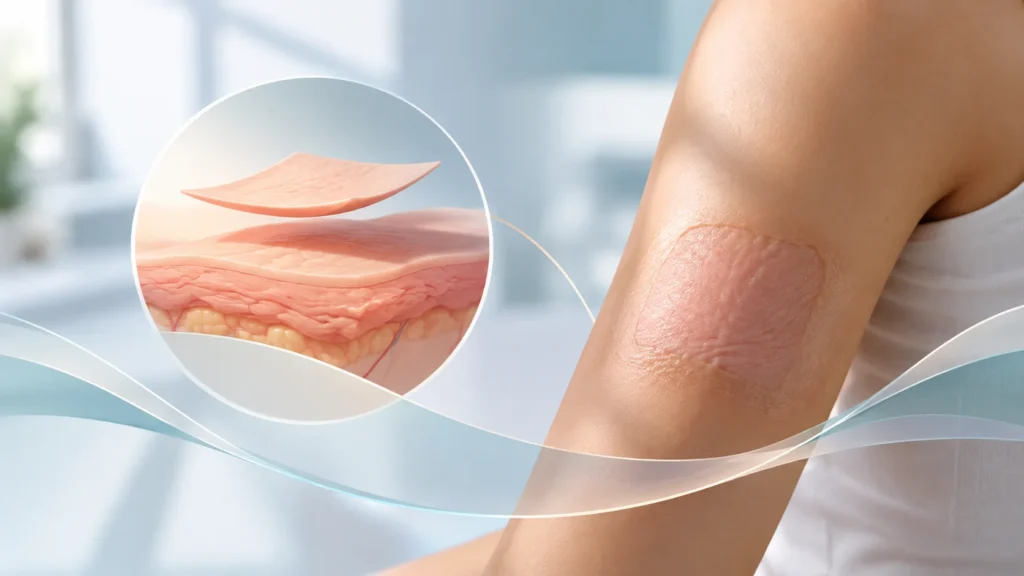
Split-thickness skin grafting is a surgical technique where a thin layer of skin, including the top layer (epidermis) and part of the second layer (dermis), is removed from a healthy area and transplanted to a wounded area. The remaining deeper layers at the donor site are left intact, which allows the donor area to heal on its own over time.
This is different from a full-thickness skin graft, where the entire thickness of the skin is taken. STSG is preferred when a large area needs to be covered, when the wound bed has good blood supply, and when the priority is wound closure rather than perfect cosmetic match.
The graft initially survives by absorbing nutrients from the wound bed. Over the next few days, new blood vessels grow into the graft, a process called revascularization. Once the graft establishes its own blood supply, it becomes more stable and starts to heal like normal skin.
When is STSG Recommended?
Split-thickness skin grafting is used in a variety of situations where skin has been lost or damaged and cannot heal well on its own.
Common indications for STSG
- Large burn wounds where natural healing would be slow or lead to severe scarring.
- Traumatic injuries with significant skin loss.
- Chronic ulcers that have not healed with standard treatment.
- Surgical removal of large skin lesions or tumors.
- Wounds after severe infections or necrotizing soft tissue infections.
- Areas where skin contraction needs to be reduced to preserve movement.
- Coverage of exposed tissue that needs protection, such as muscle, tendon, or bone with good blood supply.
Why Split-thickness skin grafting is chosen over other options
- It can cover large areas with a single donor site.
- The donor site heals on its own without needing another graft.
- It has a high success rate in suitable wounds.
- It reduces the risk of infection by closing the wound.
- It helps restore function and mobility in areas like joints.
Pre-Procedure Evaluation
Before split-thickness skin grafting, a thorough evaluation is done to ensure the patient is fit for surgery and the wound is suitable for grafting.
Evaluation steps
- Detailed medical history, including past surgeries, diabetes, smoking, and medications.
- Assessment of the wound size, depth, and location.
- Evaluation of blood supply to the wound bed.
- Check for infection and control of any active infection before grafting.
- Assessment of nutritional status, as poor nutrition can affect healing.
- Discussion of expectations, possible scarring, and need for further procedures.
- Planning of donor site based on skin color, texture, and availability.
Preparations before surgery
- Optimization of blood sugar in diabetic patients.
- Stopping or adjusting certain medicines as advised.
- Smoking cessation to improve healing.
- Nutritional support with adequate protein and vitamins.
- Counseling about the procedure, recovery, and wound care.
The Split-thickness skin grafting Procedure
The procedure is performed in an operating room under sterile conditions. The exact steps may vary depending on the wound and the surgeon’s approach.
Anesthesia
- General anesthesia is often used for large grafts or in children.
- Regional or local anesthesia may be used for smaller areas.
- The choice depends on the size and location of the graft, patient comfort, and overall health.
Harvesting the graft
- A special instrument called a dermatome is used to take a thin, uniform layer of skin from the donor site.
- Common donor sites include the thigh, buttock, abdomen, or upper arm.
- The thickness of the graft is adjusted based on the wound needs.
- The harvested skin is carefully handled to avoid damage.
Preparing the recipient site
- The wound bed is cleaned and any dead or infected tissue is removed.
- Bleeding is controlled to create a stable surface for the graft.
- The area is shaped to allow good contact between the graft and the wound.
Placing the graft
- The harvested skin is spread over the wound area.
- It may be used as a solid sheet or meshed to cover a larger area.
- Meshing allows fluid to drain and helps the graft expand, but may leave a patterned appearance.
- The graft is secured with sutures, staples, or special adhesives.
Dressing and stabilization
- A special dressing is applied to hold the graft in place.
- Pressure dressings or negative pressure therapy may be used to improve contact.
- The area is immobilized as much as possible to prevent shearing of the graft.
Donor Site Care
The donor site is treated like a superficial wound and usually heals within one to three weeks.
Donor site healing process
- The area may be covered with a special dressing that stays in place for several days.
- Some discomfort, burning, or itching is common during healing.
- The site gradually forms new skin and may appear pink or red initially.
- Over time, the color often blends better with surrounding skin.
Donor site care pointers
- Keep the dressing clean and dry as instructed.
- Avoid picking or scratching the healing area.
- Report increasing pain, redness, or discharge to the medical team.
- Protect the area from sun exposure during healing.
- Use moisturizers or scar gels once healed, if advised.
Recipient Site Care
The grafted area needs careful protection while it establishes blood supply and heals.
Early healing phase
- The graft is most fragile in the first few days.
- It relies on the wound bed for nutrition before new blood vessels grow.
- Movement or friction can dislodge the graft.
- Dressings are kept in place for a specified period.
Recipient site care pointers
- Keep the dressing intact until the surgeon advises removal.
- Avoid putting pressure or friction on the grafted area.
- Elevate the limb if the graft is on an arm or leg to reduce swelling.
- Watch for signs of infection such as increasing pain, redness, swelling, or foul smell.
- Attend all follow-up visits for dressing changes and assessment.
Recovery After Split-thickness skin grafting
Recovery depends on the size and location of the graft, the patient’s overall health, and how well wound care instructions are followed.
Hospital stay
- Some patients may need a short hospital stay for monitoring.
- Larger grafts or complex wounds may require longer admission.
- Pain control, antibiotics, and wound care are managed in the hospital.
Pain and discomfort
- Mild to moderate pain is common at both donor and recipient sites.
- Pain medicines are prescribed as needed.
- Discomfort usually improves over the first one to two weeks.
Activity restrictions
- Heavy activity and strenuous exercise are restricted initially.
- Movements that stretch or rub the graft are limited.
- Gradual return to normal activity is guided by the surgeon.
Time to healing
- Donor sites often heal within one to three weeks.
- Recipient sites may take several weeks to fully settle.
- Final appearance and texture continue to improve over months.
Wound Care at Home
Proper home care is essential for graft success and good healing.
General wound care pointers
- Follow dressing change instructions exactly as given.
- Wash hands before touching any dressing or wound area.
- Keep the area clean and dry unless advised otherwise.
- Avoid soaking the graft in water until cleared by the surgeon.
- Do not apply creams, oils, or home remedies without medical advice.
Signs to watch for
- Increasing pain not relieved by medicines.
- Redness spreading around the graft or donor site.
- Swelling, warmth, or foul-smelling discharge.
- Fever or chills.
- Graft turning dark, black, or lifting at the edges.
- Excessive bleeding from either site.
Any of these signs should be reported to the medical team promptly.
Possible Complications
Like any surgery, STSG carries some risks. Most complications can be managed if detected early.
Possible complications at the graft site
- Partial or complete graft loss.
- Infection of the graft or wound.
- Fluid collection under the graft.
- Poor color match or texture difference.
- Excessive scarring or contracture.
- Delayed healing.
Possible complications at the donor site
- Infection.
- Delayed healing.
- Increased scarring or color change.
- Pain or sensitivity.
- Itching during healing.
Systemic risks
- Reaction to anesthesia.
- Bleeding or blood clots.
- Poor healing due to diabetes, smoking, or malnutrition.
Careful patient selection, surgical technique, and post-operative care help reduce these risks.
Rehabilitation and Physiotherapy
Rehabilitation is an important part of recovery, especially when grafts are near joints or functional areas.
Rehabilitation goals
- Prevent stiffness and contracture.
- Maintain or restore range of motion.
- Improve strength and function.
- Reduce scarring and tightness.
- Help the patient return to daily activities.
Physiotherapy pointers
- Gentle movements as advised by the therapist.
- Gradual increase in activity level.
- Use of splints or supports if needed.
- Scar massage and stretching once healing allows.
- Regular follow-up to adjust the rehab plan.
Long-Term Outcomes
Most patients achieve good wound closure and functional improvement after split-thickness skin grafting.
Expected long-term results
- Stable wound coverage with reduced infection risk.
- Improved ability to move and use the affected area.
- Gradual improvement in color and texture over months.
- Donor site healing with minimal long-term issues in most cases.
Factors affecting outcomes
- Size and depth of the original wound.
- Location of the graft.
- Patient’s age and overall health.
- Control of diabetes and other conditions.
- Adherence to wound care and follow-up.
- Avoidance of smoking and good nutrition.
Some patients may need additional procedures later for scar revision, contracture release, or cosmetic improvement.
Why Choose Rama Hospital for Split-thickness skin grafting?
Split-thickness skin grafting requires skilled surgical technique, careful wound management, and coordinated post-operative care. A hospital with experienced plastic and reconstructive surgeons, dedicated wound care teams, and rehabilitation support can significantly improve outcomes.
- Comprehensive pre-operative assessment and optimization.
- Experienced surgical team for graft harvesting and placement.
- Advanced wound care and infection control.
- Pain management and nutritional support.
- Physiotherapy and rehabilitation services.
- Long-term follow-up for scar management and function.
Frequently Asked Questions (FAQs)
Is split-thickness skin grafting painful?
Some pain and discomfort are expected at both the donor and graft sites, especially in the first one to two weeks. Pain medicines are prescribed to keep the patient comfortable. Most people find that pain gradually improves as healing progresses.
How long does it take for the graft to heal?
Initial healing of the graft usually takes a few weeks, while the donor site often heals within one to three weeks. Final appearance and texture continue to improve over several months. Full maturation of the scar may take up to a year or more.
Will the graft look like normal skin?
The graft helps cover the wound and restore function, but it may not look exactly like surrounding skin. Color, texture, and thickness can be different. Over time, the appearance often improves, and additional procedures can be considered for cosmetic refinement if needed.
Can the graft fail?
Graft failure can happen if the graft does not get enough blood supply, if there is infection, or if there is too much movement or fluid under the graft. Careful surgical technique, proper dressing, and following care instructions help reduce this risk.
What care is needed after Split-thickness skin grafting?
Patients need to keep dressings clean and dry, avoid pressure or friction on the graft, take prescribed medicines, and attend follow-up visits. Any signs of infection, increasing pain, or graft discoloration should be reported immediately to the medical team.
Will there be scarring?
Some scarring is expected at both the donor and recipient sites. The extent of scarring depends on the size of the graft, location, skin type, and individual healing. Scar care, sun protection, and sometimes additional treatments can help improve the final appearance.
Can Split-thickness skin grafting be done in children and elderly patients?
Yes, Split-thickness skin grafting can be performed in both children and older adults when indicated. The decision is based on overall health, wound condition, and ability to tolerate anesthesia and recovery. Special care is taken to optimize nutrition, pain control, and wound care in these groups.
Conclusion
Split-thickness skin grafting is a well-established and effective treatment for covering large areas of skin loss due to burns, trauma, chronic wounds, or surgery. While it does not restore skin to its original appearance, it provides stable wound coverage, reduces infection risk, and improves function and quality of life.
Success depends on careful patient selection, skilled surgical technique, and diligent post-operative care. For patients with large or complex wounds, a specialist hospital team can make a major difference in graft survival, healing, and long-term outcomes.
Rama Hospital can provide comprehensive care for Split-thickness skin grafting, from pre-operative evaluation and surgery to wound care, rehabilitation, and long-term follow-up, with a focus on safety, function, and patient well-being.