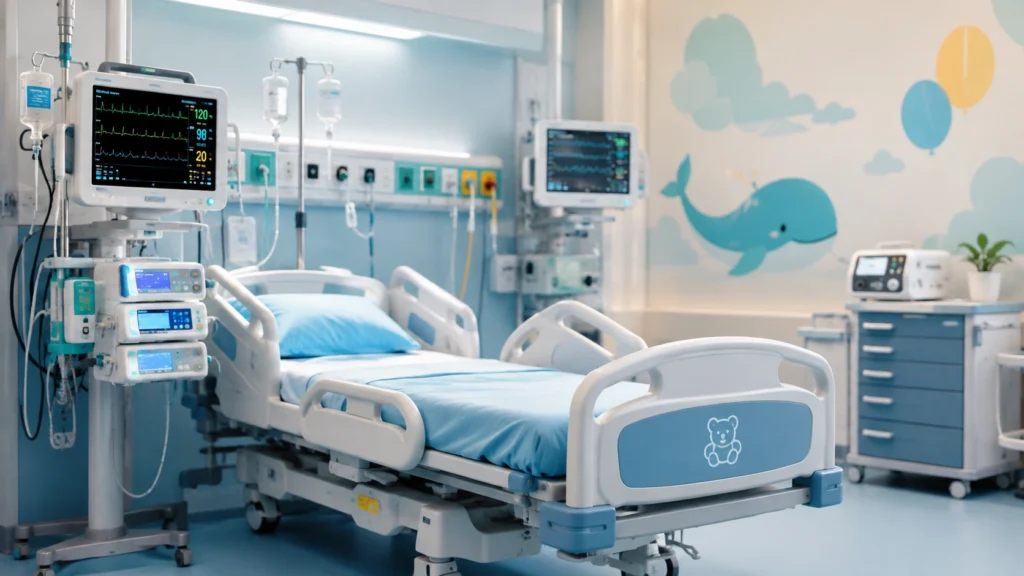
The Pediatric Intensive Care Unit, commonly known as PICU, is a specialized hospital unit designed to provide critical care for infants, children, and adolescents who are seriously ill or injured. Children in the PICU require close monitoring, advanced life support, and intensive medical treatment that cannot be provided in a regular ward. The PICU is equipped with specialized equipment, trained staff, and protocols specifically designed for the unique needs of critically ill children.
When a child becomes critically ill due to severe infection, breathing problems, heart conditions, neurological issues, trauma, or after major surgery, the PICU provides the highest level of care. The environment is designed to support both the medical needs of the child and the emotional needs of the family during a difficult time. Every aspect of care in the PICU is focused on stabilizing the child, treating the underlying condition, and supporting recovery.
What is PICU?
PICU stands for Pediatric Intensive Care Unit. It is a specialized area in a hospital where critically ill children receive intensive medical care and constant monitoring. The PICU is different from a regular pediatric ward because it is designed for children who need advanced life support and close observation.
The unit is staffed by pediatric intensivists, who are doctors specially trained in caring for critically ill children. The nursing team is also specially trained in pediatric critical care. The PICU has advanced equipment for monitoring heart rate, breathing, blood pressure, oxygen levels, and other vital signs continuously.
Children come to the PICU when their condition is serious enough that they need more attention and support than a regular ward can provide. This may be due to severe illness, injury, complications from surgery, or the need for life support such as a ventilator. The goal of the PICU is to stabilize the child, treat the underlying problem, and support recovery until the child can be moved to a regular ward.
Who Needs PICU Care?
Children who need PICU care are those who are critically ill or at risk of becoming critically ill. The decision to admit a child to the PICU is based on the severity of their condition and the level of care they require.
Common reasons for PICU admission include:
- Severe breathing problems requiring ventilator support.
- Serious infections such as sepsis or severe pneumonia.
- Heart conditions requiring intensive monitoring or support.
- Neurological conditions such as seizures, coma, or brain injury.
- Severe dehydration or electrolyte imbalance.
- Major trauma from accidents or injuries.
- Post-operative care after major surgery.
- Severe allergic reactions or anaphylaxis.
- Diabetic ketoacidosis or other metabolic emergencies.
- Poisoning or drug overdose.
- Severe burns requiring intensive care.
- Organ failure requiring support such as dialysis.
- Children needing close monitoring after serious illness.
Signs that a child may need intensive care
- Difficulty breathing or rapid breathing.
- Blue or pale color of lips or skin.
- Very high or very low blood pressure.
- Altered consciousness or difficulty waking up.
- Severe dehydration with reduced urine output.
- Persistent seizures or abnormal movements.
- Severe pain that cannot be controlled with regular medicines.
- Need for continuous monitoring of vital signs.
- Requirement for intravenous medicines to support heart or blood pressure.
- Need for mechanical ventilation or oxygen support.
Common Conditions Treated in PICU
The PICU treats a wide range of serious conditions affecting different body systems.
Respiratory conditions
- Severe pneumonia requiring oxygen or ventilator support.
- Asthma attacks that do not respond to regular treatment.
- Respiratory failure from various causes.
- Bronchiolitis in infants with severe breathing difficulty.
- Post-operative respiratory support after chest or airway surgery.
- Respiratory distress syndrome in newborns and infants.
Cardiovascular conditions
- Heart failure requiring intensive monitoring and support.
- Congenital heart disease requiring pre or post-operative care.
- Severe arrhythmias or abnormal heart rhythms.
- Shock from various causes requiring blood pressure support.
- Post-cardiac surgery monitoring and care.
- Myocarditis or inflammation of the heart muscle.
Neurological conditions
- Severe seizures or status epilepticus.
- Head injury or traumatic brain injury.
- Meningitis or encephalitis with altered consciousness.
- Stroke in children requiring intensive monitoring.
- Post-neurosurgical care after brain or spine surgery.
- Coma or reduced level of consciousness from various causes.
Infectious conditions
- Sepsis or severe systemic infection.
- Severe pneumonia requiring intensive care.
- Meningitis requiring close monitoring.
- Severe viral infections affecting multiple organs.
- Infections in immunocompromised children.
- Severe dehydration from gastroenteritis requiring IV support.
Other conditions
- Diabetic ketoacidosis requiring insulin and fluid management.
- Severe electrolyte imbalances.
- Kidney failure requiring dialysis support.
- Liver failure requiring intensive monitoring.
- Severe burns requiring fluid and pain management.
- Poisoning or drug overdose requiring detoxification support.
- Post-operative care after major abdominal or orthopedic surgery.
Equipment and Monitoring in PICU
The PICU is equipped with specialized equipment designed for children of all ages, from infants to adolescents.
Monitoring equipment
- Continuous heart rate monitoring.
- Blood pressure monitoring, both non-invasive and invasive.
- Oxygen saturation monitoring.
- Respiratory rate monitoring.
- Temperature monitoring.
- Intracranial pressure monitoring in neurological cases.
- Continuous ECG monitoring for heart rhythm.
- Urine output monitoring through catheters.
Life support equipment
- Mechanical ventilators for breathing support.
- Oxygen delivery systems including high-flow oxygen.
- Infusion pumps for precise medicine delivery.
- Defibrillators for emergency heart treatment.
- Suction equipment for airway clearance.
- Blood gas analyzers for monitoring oxygen and carbon dioxide levels.
- Dialysis machines for kidney support when needed.
- ECMO (extracorporeal membrane oxygenation) in specialized centers for severe heart or lung failure.
Other specialized equipment
- Incubators and warmers for temperature control.
- Specialized beds for critically ill children.
- Portable monitors for safe transport within the hospital.
- Ultrasound machines for bedside assessment.
- X-ray facilities for immediate imaging.
- Laboratory support for rapid test results.
Treatment Approaches in PICU
Treatment in the PICU is highly individualized based on the child’s condition, age, and specific needs.
1. Respiratory support
- Oxygen therapy through nasal prongs, masks, or helmets.
- Non-invasive ventilation such as CPAP or BiPAP.
- Mechanical ventilation through a breathing tube when needed.
- Airway suctioning to keep breathing passages clear.
- Chest physiotherapy to help clear secretions.
- Medications to open airways and reduce inflammation.
2. Circulatory support
- Intravenous fluids to maintain blood pressure and hydration.
- Medicines to support heart function and blood pressure.
- Blood transfusions when needed for anemia or blood loss.
- Monitoring of urine output to assess kidney function.
- Electrolyte management to maintain balance.
- Nutritional support through IV or feeding tubes.
3. Infection management
- Antibiotics administered intravenously for severe infections.
- Antiviral or antifungal medicines when appropriate.
- Source control such as drainage of infected areas.
- Monitoring of infection markers through blood tests.
- Isolation precautions to prevent spread of infection.
- Supportive care to help the body fight infection.
4. Neurological support
- Medications to control seizures.
- Monitoring of brain function and consciousness level.
- Management of brain swelling when present.
- Sedation and pain management for comfort.
- Positioning to protect the brain and prevent complications.
- Regular neurological assessments.
5. Pain and comfort management
- Pain assessment using age-appropriate scales.
- Medications for pain relief administered safely.
- Sedation when needed for procedures or ventilation.
- Comfort measures such as positioning and soothing.
- Family presence to provide emotional comfort.
- Regular assessment of comfort levels.
6. Nutritional support
- IV nutrition when the child cannot eat.
- Feeding through a tube when needed.
- Gradual introduction of oral feeding when ready.
- Monitoring of growth and nutritional status.
- Specialized formulas for specific conditions.
- Support from nutrition specialists.
Family Support in PICU
Having a child in the PICU is extremely stressful for families. The PICU team understands this and provides support for parents and siblings.
Communication with families
- Regular updates from the medical team.
- Clear explanation of the child’s condition and treatment.
- Opportunity for parents to ask questions.
- Discussion of treatment goals and expectations.
- Involvement of families in care decisions when appropriate.
- Translation services if needed for non-local families.
Emotional support
- Counseling services for stressed families.
- Support from social workers when needed.
- Connection with other families who have had similar experiences.
- Spiritual support if requested by the family.
- Understanding and patience from all staff members.
- Recognition of the emotional impact on parents and siblings.
Practical support
- Flexible visiting hours for parents.
- Rest areas for family members.
- Assistance with accommodation for out-of-town families.
- Help with understanding medical bills and insurance.
- Coordination with other hospital departments.
- Support for siblings who may be affected.
Safety Measures in PICU
Patient safety is the top priority in the PICU. Multiple measures are in place to ensure the highest level of safety.
Infection prevention
- Strict hand hygiene protocols for all staff and visitors.
- Use of personal protective equipment when needed.
- Isolation rooms for children with contagious infections.
- Regular cleaning and disinfection of equipment.
- Monitoring for hospital-acquired infections.
- Antibiotic stewardship to prevent resistance.
Medication safety
- Double-checking of all medication doses.
- Use of infusion pumps for precise delivery.
- Weight-based dosing calculations for children.
- Regular review of medication lists.
- Monitoring for side effects and interactions.
- Clear labeling of all medications.
Equipment safety
- Regular maintenance and checking of all equipment.
- Backup systems for critical equipment.
- Staff training on proper equipment use.
- Alarm systems to alert staff of any problems.
- Regular safety drills and protocols.
- Quality assurance programs.
Patient monitoring
- Continuous monitoring of vital signs.
- Regular assessment by nursing staff.
- Daily rounds by the medical team.
- Prompt response to any changes in condition.
- Documentation of all care provided.
- Regular review of treatment plans.
What Parents Can Expect in PICU?
Understanding what happens in the PICU can help reduce anxiety for parents.
Admission process
- Initial assessment by the PICU team.
- Explanation of the child’s condition and plan.
- Placement of necessary monitors and lines.
- Setting up of equipment and medications.
- Orientation for parents to the unit.
- Discussion of visiting policies and communication.
Daily routine
- Regular monitoring of vital signs and symptoms.
- Administration of medications and treatments.
- Regular assessments by doctors and nurses.
- Updates to parents on progress and changes.
- Adjustment of treatment based on response.
- Planning for discharge when the child improves.
Parent involvement
- Parents are encouraged to be present with their child.
- Parents can participate in care activities when appropriate.
- Parents can provide comfort through touch and voice.
- Parents are kept informed of all major decisions.
- Parents can ask questions at any time.
- Parents are supported in understanding their child’s needs.
Transition from PICU to Regular Ward
When a child improves, they are moved from the PICU to a regular pediatric ward.
Criteria for transfer
- Stable vital signs without intensive support.
- No longer requiring mechanical ventilation.
- Able to maintain oxygen levels without intensive support.
- Stable blood pressure without continuous medications.
- Able to take some nutrition orally or through feeding tube.
- No longer requiring continuous intensive monitoring.
Transfer process
- Discussion with parents about the transfer.
- Preparation of the child for the move.
- Handover of care to the ward team.
- Continuation of treatment plan in the ward.
- Follow-up by PICU team if needed.
- Support for parents during the transition.
Why Choose Rama Hospital for PICU Services?
Pediatric intensive care requires specialized expertise, advanced equipment, and a compassionate approach. A hospital with experienced pediatric intensivists, trained nursing staff, and comprehensive support services can make a significant difference in outcomes.
- 24/7 availability of pediatric intensivists.
- Specially trained PICU nursing staff.
- Advanced monitoring and life support equipment.
- Multidisciplinary team approach.
- Comprehensive support services for families.
- Focus on both medical and emotional needs.
Frequently Asked Questions (FAQs)
When does a child need PICU care?
A child needs PICU care when they are critically ill and require close monitoring, life support, or intensive treatment. This includes severe breathing problems, serious infections, heart conditions, neurological issues, or after major surgery.
How long do children stay in PICU?
The length of stay varies depending on the child’s condition. Some children stay for a few days, while others may need weeks of care. The team works to stabilize the child and move them to a regular ward as soon as it is safe.
Can parents stay with their child in PICU?
Yes, parents are usually allowed to stay with their child in the PICU. Most units have flexible visiting policies for parents. Parents are encouraged to be present and participate in their child’s care when appropriate.
Is PICU care safe for children?
Yes, PICU care is very safe with proper protocols and trained staff. Multiple safety measures are in place including infection prevention, medication safety, and continuous monitoring. The team is specially trained to handle any emergency.
What happens after a child leaves PICU?
After leaving PICU, children are moved to a regular pediatric ward for continued care. They continue to receive treatment and monitoring until they are ready for discharge. Follow-up care is arranged as needed.
How can parents help their child in PICU?
Parents can help by being present, providing comfort through touch and voice, and participating in care activities. They should communicate with the medical team, ask questions, and follow guidance for their child’s care.
What support is available for families?
Families receive emotional support, counseling services, and practical assistance. The medical team provides regular updates and involves families in care decisions. Social workers and other support staff are available to help families cope.
Conclusion
The Pediatric Intensive Care Unit provides critical care for children who are seriously ill or injured. With specialized equipment, trained staff, and comprehensive support services, the PICU offers the highest level of care for critically ill children. The focus is on stabilizing the child, treating the underlying condition, and supporting recovery while providing emotional support to families.
For children with severe breathing problems, serious infections, heart conditions, neurological issues, or those requiring post-operative care, the PICU provides essential life-saving treatment. With advances in pediatric critical care, many children who once would not have survived now recover and go on to live normal lives.
Rama Hospital can provide comprehensive PICU services with experienced pediatric intensivists, specially trained nursing staff, advanced equipment, and family-centered care. The goal is to give every child the best chance of recovery while supporting families through this difficult time.