-

-

Holter Monitoring

Holter Monitoring

Holter Monitoring

Holter Monitoring (24-Hour ECG): Purpose, Procedure, Results, and Heart Rhythm Evaluation

A normal ECG records the electrical activity of the heart for only a few seconds or minutes. This is useful when an abnormal heart rhythm is present at the time of the test. However, many heart rhythm problems come and go. A person may experience palpitations, dizziness, fainting, skipped beats, chest discomfort, or sudden breathlessness at home, during work, while sleeping, or during exercise—while their clinic ECG appears completely normal.

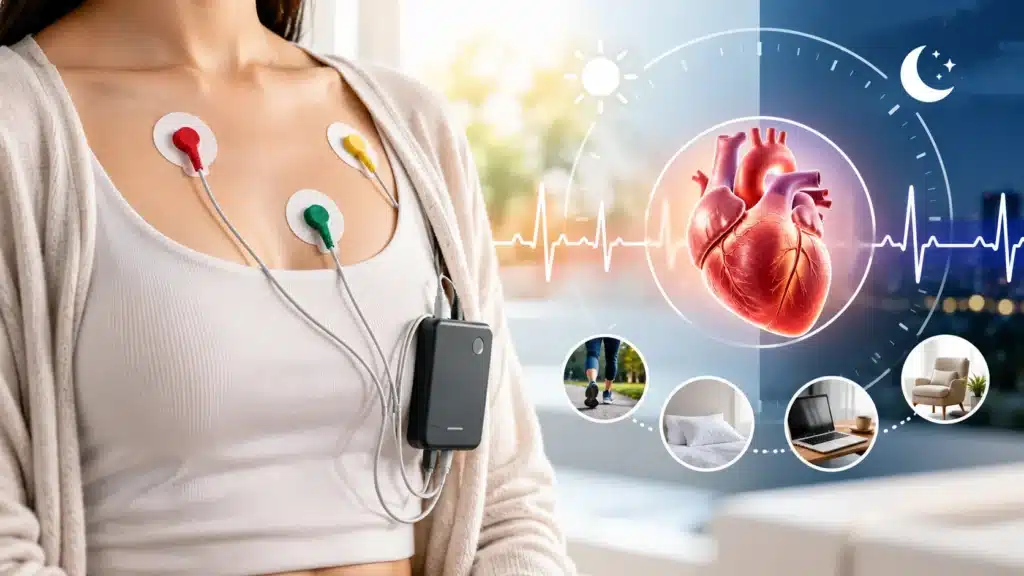
This is where Holter monitoring, also called a 24-hour ECG, becomes useful. A Holter monitor is a small wearable device that records the heart’s electrical activity continuously while the person follows their usual routine. It helps cardiologists understand how the heart behaves over a longer period, including during sleep, walking, work, meals, stress, and symptoms.

What Is Holter Monitoring?

Holter monitoring is a type of portable electrocardiogram, or ECG. It records the heart’s electrical activity continuously outside the doctor’s clinic or hospital. Small adhesive electrodes are placed on the chest, and wires connect them to a lightweight recorder that is worn on a belt, strap, pouch, or shoulder harness.

The heart beats through electrical signals that travel in a coordinated pattern. A standard ECG records these signals briefly. A Holter monitor records them over an extended period, usually 24 hours, 48 hours, or longer, depending on the device and the doctor’s clinical question. This makes it easier to detect rhythm abnormalities that may not happen during a short ECG appointment.

Holter monitoring is non-invasive. It does not involve injections, anesthesia, surgery, radiation, or hospital admission in most cases. The device is fitted in a cardiology department or diagnostic centre, and the patient usually goes home and continues normal daily activities with some precautions.

Why Is a 24-Hour ECG Done?

A cardiologist may advise Holter monitoring when symptoms suggest a heart rhythm issue but routine ECG findings are normal or inconclusive. It is especially useful when symptoms happen often enough that they may be captured during the recording period.

Holter monitoring may be advised for:

  • Palpitations, which may feel like pounding, fluttering, racing, skipping, or irregular heartbeats.
  • Recurrent dizziness or light-headedness.
  • Fainting, near-fainting, or unexplained loss of consciousness.
  • Sudden weakness or unusual fatigue.
  • Suspected slow heart rate, also called bradycardia.
  • Suspected fast heart rate, also called tachycardia.
  • Possible atrial fibrillation or other arrhythmias.
  • Episodes of breathlessness that may be related to rhythm changes.
  • Chest discomfort when an intermittent rhythm problem is suspected.
  • Monitoring after a heart attack or in certain structural heart conditions.
  • Evaluating the effect of heart rhythm medicines, pacemakers, or other treatment.
  • Assessing the frequency of premature beats or extra beats.

Holter monitors help identify irregular heartbeats that are not captured on a standard ECG because they record heart activity continuously during routine daily life.

What Conditions Can Holter Monitoring Help Detect?

A Holter monitor does not diagnose every heart condition on its own. However, it can provide important evidence about the heart’s rhythm and electrical activity.

It may help identify:

  • Atrial fibrillation, a common irregular rhythm that can increase stroke risk.
  • Atrial flutter.
  • Supraventricular tachycardia, which is a rapid rhythm starting above the ventricles.
  • Ventricular tachycardia, a potentially serious fast rhythm arising from the lower chambers of the heart.
  • Bradycardia, or abnormally slow heart rhythm.
  • Sinus pauses, where the heart rhythm pauses longer than expected.
  • Heart block, where electrical signals travel slowly or do not travel normally through the heart.
  • Premature atrial contractions, often called early or extra beats from the upper chambers.
  • Premature ventricular contractions, early or extra beats from the lower chambers.
  • Rhythm changes related to exercise, sleep, stress, or medicines.
  • Possible rhythm-related causes of dizziness or fainting.

A Holter recording can also show whether symptoms such as palpitations, chest discomfort, breathlessness, or dizziness happened at the same time as an ECG abnormality. That correlation is often one of the most useful parts of the test.

Who May Need Holter Monitoring?

Holter monitoring may be recommended for adults, older people, teenagers, and children when a heart rhythm problem is suspected. The decision depends on symptoms, medical history, physical examination, routine ECG results, and other cardiac risk factors.

A cardiologist may recommend the test if you have:

  • Repeated palpitations that last seconds or minutes.
  • A sensation that the heart is racing, fluttering, or stopping briefly.
  • Dizziness without an obvious cause.
  • Fainting or almost fainting.
  • Frequent unexplained fatigue.
  • Heartbeat irregularity noticed during examination.
  • A previous abnormal ECG.
  • A history of heart disease, heart attack, cardiomyopathy, or heart failure.
  • A family history of significant rhythm disorders or sudden cardiac death.
  • Symptoms after starting or changing a heart medicine.
  • A pacemaker or implanted heart device that needs rhythm assessment.

People with frequent symptoms, such as daily palpitations, are usually more likely to benefit from a 24-hour Holter monitor. When symptoms happen less often, a cardiologist may recommend a longer event monitor or patch monitor instead.

Symptoms That May Lead to a Holter Test

Some heart rhythm symptoms are easy to recognize, while others are vague. It is still important to mention them clearly during the cardiology consultation.

Common symptoms include:

  • Fluttering in the chest.
  • A pounding heartbeat.
  • Feeling that the heart is skipping beats.
  • A racing heartbeat.
  • A slow or unusually forceful heartbeat.
  • Sudden dizziness.
  • Feeling faint.
  • Actual fainting.
  • Shortness of breath.
  • Chest pressure or discomfort.
  • Unexplained tiredness.
  • Reduced exercise tolerance.
  • Sudden sweating with palpitations.
  • Anxiety-like feelings that occur along with rapid or irregular heartbeat.

Not every palpitation is dangerous. Many people have occasional extra beats, especially during stress, caffeine intake, poor sleep, dehydration, or illness. However, recurring symptoms, fainting, chest pain, or breathlessness should be assessed by a doctor.

Holter Monitoring Versus a Standard ECG

A standard ECG and a Holter monitor both assess the electrical activity of the heart, but they serve different purposes.

A standard ECG is performed while the patient is resting in a clinic or hospital. It captures a short snapshot of the heartbeat, usually lasting only a few seconds. It can identify many important rhythm, conduction, and heart-attack-related changes if they are present during the test.

A Holter monitor records the heart continuously for an extended time while the patient is moving through normal life. It is useful when the abnormal rhythm comes and goes and may not appear during a short clinic ECG.

A standard ECG may be more useful when:

  • The symptom is happening during the appointment.
  • There is severe chest pain or a suspected heart attack.
  • Immediate rhythm assessment is required.
  • The doctor needs a quick baseline tracing.

A Holter monitor may be more useful when:

  • Symptoms occur at different times during the day.
  • Palpitations happen frequently but unpredictably.
  • Dizziness or fainting has no clear explanation.
  • The clinic ECG is normal but symptoms continue.
  • The cardiologist wants to monitor treatment response over time.

Holter Monitoring Versus an Event Monitor

A 24-hour ECG records continuously over a relatively short period, typically 24 to 48 hours. An event monitor or longer ambulatory monitor may be worn for days or weeks and is often used when symptoms are less frequent.

Holter monitoring is generally useful when:

  • Symptoms occur daily.
  • Palpitations are frequent.
  • The cardiologist needs continuous rhythm information.
  • A detailed 24-hour rhythm pattern is required.

A longer event monitor may be considered when:

  • Symptoms occur only once a week or less.
  • Fainting episodes are rare.
  • The first Holter monitor does not capture symptoms.
  • The doctor needs longer-term rhythm surveillance.

Holter monitors continuously record for around 24 to 48 hours, while event monitors can be used for longer periods and may record automatically or when the patient activates them during symptoms.

What Happens During the Procedure?

The procedure is simple and usually takes a short time to set up.

During Holter monitor fitting:

  • A technician will explain the test and answer basic questions.
  • The chest area will be cleaned to improve electrode contact.
  • Small adhesive patches called electrodes will be placed on the chest.
  • Wires will connect the electrodes to a small recording device.
  • The monitor will be placed in a pouch, belt clip, shoulder strap, or wearable holder.
  • The healthcare team will check that the device is recording properly.
  • You will receive instructions for wearing and caring for the monitor.
  • You may be given a symptom diary or asked to use a device button to mark symptoms.

The monitor records the heart’s electrical signals while you go about regular daily activities. You must keep the device on for the full prescribed time, including while sleeping, unless the healthcare team tells you otherwise.

What Should You Do While Wearing the Monitor?

The value of a Holter test comes from recording the heart during normal life. Patients are usually encouraged to continue routine activity unless the doctor gives restrictions.

During the monitoring period:

  • Follow your normal routine as much as possible.
  • Go to work, walk, rest, eat, and sleep as you normally would.
  • Take your usual medicines unless your doctor tells you to change them.
  • Record symptoms accurately.
  • Note the time of symptoms.
  • Mention what you were doing when symptoms started.
  • Write down whether you felt palpitations, dizziness, breathlessness, chest discomfort, faintness, nausea, sweating, or weakness.
  • Record exercise, meals, medication times, sleep, stressful events, and other major activities if advised.

What Should You Avoid During a Holter Test?

Your healthcare provider will explain device-specific instructions. In many traditional Holter monitors, the recorder should not get wet.

Usually, you should avoid:

  • Removing the electrodes or monitor before the prescribed recording period ends.
  • Showering, bathing, or swimming unless you are specifically told that the device is waterproof.
  • Getting the monitor wet.
  • Applying lotion, powder, or oil near the electrode patches.
  • Pulling or twisting the wires.
  • Sleeping in a way that dislodges electrodes, if possible.
  • Using strong magnets or electrical equipment near the device if the team advises against it.
  • Deliberately triggering symptoms through unsafe exercise, excessive caffeine, alcohol, or medication changes.

Traditional Holter monitor leads generally need to remain attached throughout the test, and some services advise patients not to shower while wearing the device. Always follow the instructions provided for your specific device, as newer monitors may differ.

Is Holter Monitoring Painful?

Holter monitoring is painless and non-invasive. The electrodes are attached to the chest with adhesive patches. Some people may feel mild pulling when the patches are removed or mild skin irritation under the adhesive.

Possible minor discomforts include:

  • Itching under the electrode patches.
  • Mild redness after patch removal.
  • Discomfort while sleeping with the recorder attached.
  • Anxiety about noticing heart symptoms during the test.
  • Difficulty finding a comfortable position if wires are present.

Tell the healthcare team if you have sensitive skin or develop significant itching, rash, burning, or blisters. Patients with skin conditions should discuss this before the monitor is fitted.

Is Holter Monitoring Safe?

Holter monitoring is generally safe. The monitor records the heart’s electrical activity; it does not send electricity into the body. There is no radiation exposure, injection, or contrast dye involved.

The main concern is minor skin irritation from the electrode adhesive. The test is also not a substitute for emergency care. If you experience severe chest pain, fainting, severe breathlessness, weakness on one side of the body, or other emergency symptoms while wearing the device, seek immediate medical attention rather than waiting for the monitoring period to end.

Understanding Holter Monitor Results

After the monitoring period is over, the device is returned to the hospital or diagnostic centre. The recording is downloaded and reviewed by trained cardiac staff and a cardiologist.

The report may include information about:

  • Average heart rate.
  • Minimum and maximum heart rate.
  • Normal rhythm pattern.
  • Slow heart rhythms.
  • Fast heart rhythms.
  • Extra beats.
  • Pauses in the heartbeat.
  • Atrial fibrillation or flutter.
  • Other arrhythmias.
  • Changes during sleep, activity, or symptoms.
  • Correlation between symptoms and rhythm events.
  • Quality of the recorded signal.

A Holter report does not always mean that a person has a serious heart problem. Many people have occasional extra beats that are harmless, particularly if the heart is otherwise structurally normal. The cardiologist interprets the report along with your symptoms, age, medical history, routine ECG, echocardiogram, blood tests, and other findings.

What Does a Normal Holter Report Mean?

A normal Holter result means that no important abnormal rhythm was found during the recording period. It may show a normal variation in heart rate with activity, rest, and sleep.

However, a normal 24-hour ECG does not always completely rule out an intermittent rhythm problem. If symptoms did not happen during the test, or if they occur only once every few weeks, the cardiologist may recommend longer monitoring or another diagnostic approach.

A normal report may still be reassuring when:

  • Symptoms are mild and no dangerous rhythm is found.
  • The heart rate changes normally with activity.
  • There are no significant pauses or high-risk arrhythmias.
  • Symptoms occurred without ECG abnormalities.
  • Other heart tests are also normal.

What Happens If the Report Is Abnormal?

An abnormal report does not automatically mean surgery or hospitalization is required. The next step depends on the type and severity of the finding.

The cardiologist may recommend:

  • No treatment, if extra beats are benign and symptoms are mild.
  • Lifestyle changes, such as reducing caffeine, alcohol, smoking, dehydration, or stress triggers.
  • Blood tests to check thyroid function, electrolytes, anemia, or other contributors.
  • Adjustment of heart medicines.
  • Medicines to control heart rate or rhythm.
  • Echocardiography to assess heart structure and pumping function.
  • Exercise stress testing.
  • Longer-term event monitoring.
  • Referral to an electrophysiologist, a cardiologist specializing in heart rhythm disorders.
  • Pacemaker assessment if significant slow rhythms or heart block are detected.
  • Catheter ablation in selected rhythm disorders.
  • Emergency assessment if a dangerous rhythm is detected or symptoms are severe.

Holter Monitoring for Palpitations

Palpitations are one of the most common reasons for Holter monitoring. They may feel like fluttering, pounding, racing, missed beats, or sudden forceful beats in the chest.

Possible causes of palpitations include:

  • Stress or anxiety.
  • Lack of sleep.
  • Caffeine or energy drinks.
  • Smoking.
  • Alcohol.
  • Fever.
  • Thyroid disease.
  • Anemia.
  • Dehydration.
  • Heart rhythm disorders.
  • Certain medicines.
  • Pregnancy or hormonal changes.

A Holter monitor can help determine whether the feeling of palpitations corresponds to a normal heart rhythm, harmless extra beats, or a more significant arrhythmia.

Benefits of Holter Monitoring

Holter monitoring offers several important benefits in cardiac evaluation.

Key benefits include:

  • Non-invasive assessment of the heart’s rhythm.
  • Continuous recording during everyday activities.
  • Detection of intermittent rhythm problems.
  • Correlation of symptoms with ECG findings.
  • No radiation exposure.
  • No injections or anesthesia.
  • Useful for assessing whether treatment is working.
  • Helps guide further testing or referral.
  • Can provide reassurance when no serious rhythm issue is found.

It is a practical way to extend cardiac assessment beyond the short window of a standard ECG.

Limitations of a 24-Hour ECG

Holter monitoring is useful, but it has limitations.

Important limitations include:

  • It may not capture symptoms that happen rarely.
  • A normal report does not rule out all heart conditions.
  • Electrodes may become loose, creating gaps in recording.
  • It does not show heart structure as an echocardiogram does.
  • It does not replace emergency testing during severe chest pain or collapse.
  • It may not explain symptoms that are caused by non-cardiac conditions.

If symptoms are infrequent, a longer event recorder, patch monitor, implantable loop recorder, or other test may be more appropriate.

When to Seek Emergency Care?

Holter monitoring is an outpatient diagnostic test. It should never delay emergency treatment.

  • Severe or persistent chest pain.
  • Sudden shortness of breath.
  • Fainting or loss of consciousness.
  • A fast heartbeat with severe dizziness or weakness.
  • New weakness or numbness on one side of the body.
  • Difficulty speaking or understanding speech.
  • Severe sweating with chest discomfort.
  • A seizure.
  • Severe palpitations with collapse.
  • Sudden confusion.

Why Choose Rama Hospital for Holter Monitoring?

Holter monitoring should be part of a complete cardiac assessment, not just a standalone test. At Rama Hospital, the focus is on understanding the patient’s symptoms, recording the heart rhythm accurately, and ensuring the results are interpreted in the full clinical context.

  • Assessment by a cardiology team.
  • Proper application of electrodes and device fitting.
  • Guidance about activity, symptom diaries, and device care.
  • Analysis of recorded heart rhythm data.
  • Correlation of symptoms with ECG events.
  • Review of medicines and cardiac risk factors.
  • Further tests such as ECG, echocardiography, blood tests, or stress testing when indicated.
  • Referral for electrophysiology or advanced cardiac care if needed.
  • Follow-up planning based on the findings.

Frequently Asked Questions (FAQs)

Why is a 24-hour ECG needed if my normal ECG is normal?

A routine ECG records only a brief period of heart activity. If palpitations, dizziness, or irregular rhythms come and go, they may not occur during that short test. A Holter monitor records longer and can capture these intermittent changes.

Can I sleep while wearing a Holter monitor?

Yes. You should generally keep the monitor on while sleeping because nighttime recordings are an important part of the test. Try to sleep normally while ensuring the wires and electrodes remain attached.

Can I take a bath or shower with a Holter monitor?

This depends on the device. Many traditional Holter monitors should not get wet, so patients are advised to bathe before fitting and avoid showers during the recording period. Follow the specific instructions given by your cardiac team.

Is a Holter monitor painful?

No, Holter monitoring is painless. You may feel mild skin irritation, itchiness, or pulling from the adhesive patches, but there are no needles, injections, or electrical shocks involved.

What should I write in the Holter symptom diary?

Record the exact time of symptoms and what you were doing at that moment. Include palpitations, dizziness, chest discomfort, breathlessness, nausea, sweating, medicines, exercise, meals, and sleep-related symptoms, because these can be compared with the ECG recording.

How long does it take to get Holter monitor results?

The device must first be returned, downloaded, and reviewed by trained staff and a cardiologist. The exact time varies by hospital and device, but the care team will inform you when and how the report will be discussed.

What happens if my Holter monitor shows an irregular heartbeat?

The cardiologist will assess the type, frequency, severity, and relation to your symptoms. Some findings only need reassurance or lifestyle changes, while others may need medicines, more testing, electrophysiology consultation, or specific heart-rhythm treatment.

Conclusion

Holter monitoring, also known as a 24-hour ECG, is a safe and useful cardiac diagnostic test that records the heart’s electrical activity during everyday life. It is especially helpful for finding intermittent arrhythmias that may not appear during a short ECG in the clinic.

For people with palpitations, dizziness, fainting, unexplained fatigue, irregular heartbeat, or suspected rhythm disorders, a Holter monitor can provide important answers. The test helps cardiologists link symptoms to the heart’s rhythm, assess risk, and choose the most appropriate next step.

If you have recurring palpitations, dizziness, fainting, chest discomfort, or an irregular pulse, do not ignore the symptoms. A cardiology consultation and timely Holter monitoring may help identify the cause early and support safer, more effective heart care.


Table of Contents

Explore More

What to Know More About Holter Monitoring

Find Ailments & Treatments

Search Ailments

Quickly find the information you need. Search our database to explore detailed information on various diseases and conditions, including symptoms, causes, and treatment options.

Search Treatments

Quickly find the information you need. Search our database to explore detailed information on various diseases and conditions, including symptoms, causes, and treatment options.

Recommended Reading

Video Playlist

No rows found.

Experience Healthcare the Rama Way

Emergency • OPD • Surgery • ICU Care

Need Help? Talk to our experts

Get a callback from our experts

Request a callback