
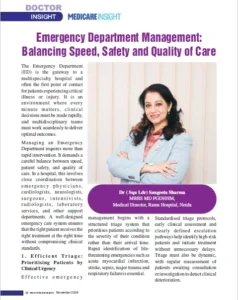
Emergency Department Management: Balancing Speed, Safety and Quality of Care
In a medical emergency, every minute matters. Dr (Sqn Ldr) Sangeeta Sharma, Medical Director, Rama Hospital, Noida, shares her perspective in Medicare Insight (November 2026) on how a well-run Emergency Department (ED) balances rapid action, patient safety and quality of care.
Key insights
-
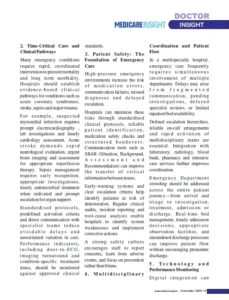
Efficient triage: Patients are prioritised by clinical urgency, not arrival time. Early identification of life-threatening conditions such as heart attack, stroke, sepsis, major trauma and respiratory failure is essential.
-
Time-critical clinical pathways: Evidence-based protocols for acute coronary syndromes, stroke, sepsis and trauma support faster diagnosis and treatment.
-
Patient safety: Standardised protocols, reliable patient identification, medication safety checks and structured handovers (such as SBAR) reduce errors and communication gaps.
-
Coordination and patient flow: Clear escalation hierarchies and integration with laboratory, radiology, blood bank, pharmacy and ICU services help avoid delays.
A strong emergency department depends on teamwork across emergency physicians, cardiologists, neurologists, surgeons, intensivists and support services, so the right patient gets the right treatment at the right time.
Read the article: Medicare Insight, November 2026, page 18.