
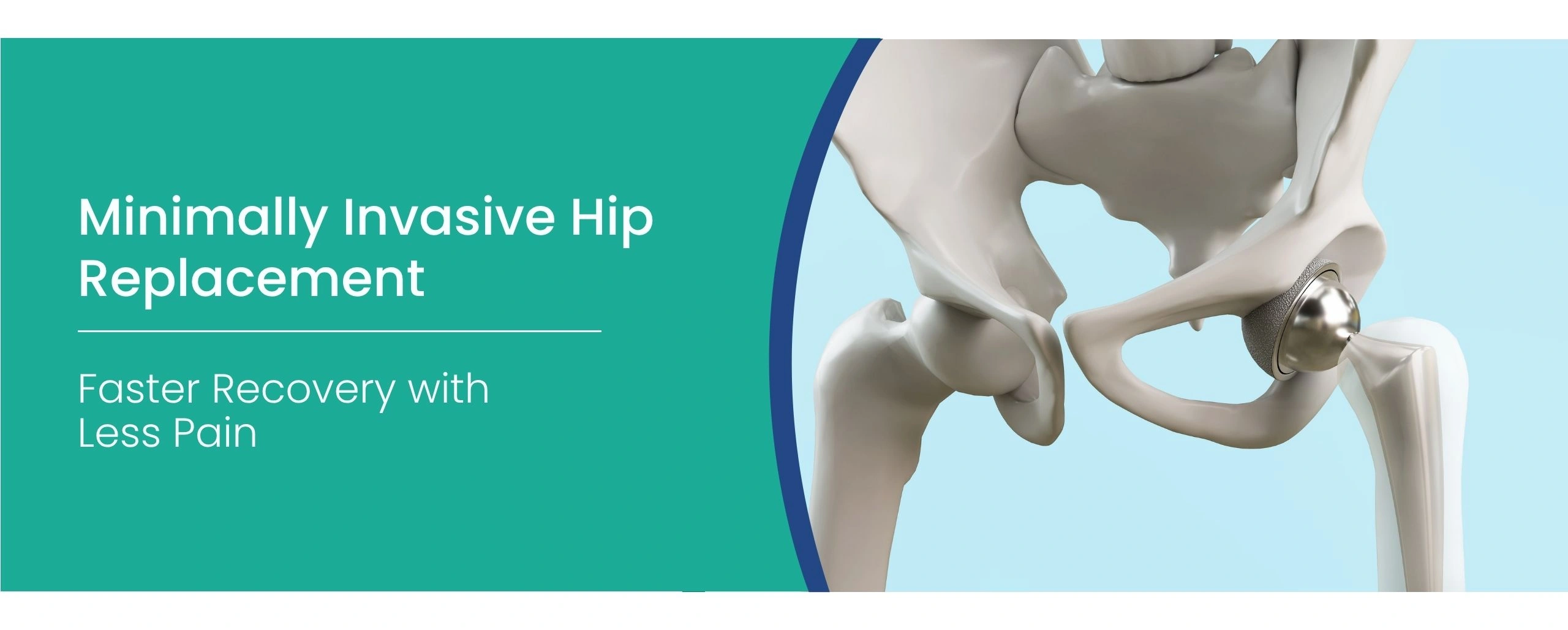
Hip pain can quietly steal your life. One morning you can’t climb stairs. Then you stop walking to the market. Then the grandchildren visit and you watch from the chair.
If that sounds familiar, you are not alone.
Hip replacement is one of the most successful procedures in modern medicine. And today, thanks to minimally invasive hip replacement, it is safer, faster, and far less painful than most people expect.
For many people, chronic hip pain develops gradually. At first, it may only appear after a long walk or a busy day. Over time, the pain becomes more frequent, affecting everyday activities such as standing, sitting, climbing stairs, getting into a car, or even sleeping comfortably at night. As mobility decreases, independence and quality of life often suffer.
The good news is that minimally invasive hip replacement has transformed the way hip replacement surgery is performed. Unlike traditional approaches, this advanced technique uses smaller incisions and causes less disruption to surrounding muscles and tissues. As a result, many patients experience less postoperative pain, shorter hospital stays, faster recovery, and a quicker return to normal activities.
Many people still believe that hip replacement is a major surgery that requires months of bed rest and prolonged discomfort. In reality, modern minimally invasive hip replacement techniques have made recovery much smoother than it was in the past. Many patients begin walking within a day of surgery and gradually return to their daily routines with the help of physiotherapy.
Whether your hip pain is caused by osteoarthritis, rheumatoid arthritis, avascular necrosis, or an old injury, minimally invasive hip replacement may offer a long-term solution when other treatments no longer provide relief. Understanding how the procedure works, its benefits, and what to expect during recovery can help you make an informed decision about your joint health.
What is minimally invasive hip replacement?
For many years, hip replacement surgery involved large incisions, extensive tissue disruption, and a longer recovery period. While these traditional procedures helped restore mobility and relieve pain, advancements in orthopedic surgery have led to safer and more patient-friendly approaches.
One of the biggest innovations is minimally invasive hip replacement, a modern surgical technique designed to replace the damaged hip joint through smaller incisions while preserving as much healthy muscle and soft tissue as possible. As a result, many patients experience less postoperative pain, reduced blood loss, shorter hospital stays, and a faster return to daily activities.
Today, minimally invasive hip replacement is becoming an increasingly preferred option for patients suffering from severe hip arthritis, avascular necrosis, or other degenerative hip conditions. The procedure aims to achieve the same long-term benefits as traditional hip replacement, pain relief, improved mobility, and better quality of life, but with a less disruptive surgical approach.
Traditional hip replacement required a large incision, sometimes 10 to 12 inches long, and often involved cutting through significant muscle to access the hip joint. In contrast, minimally invasive hip replacement uses specialized surgical techniques and instruments that allow surgeons to reach the joint through smaller incisions while minimizing damage to surrounding tissues.
The goal remains the same: replace the damaged joint with a durable, high-quality implant that restores smooth movement and function. The key difference lies in how the surgeon accesses the joint, making minimally invasive hip replacement an attractive option for eligible patients seeking a quicker and more comfortable recovery.
Small-incision hip surgery changes that completely:
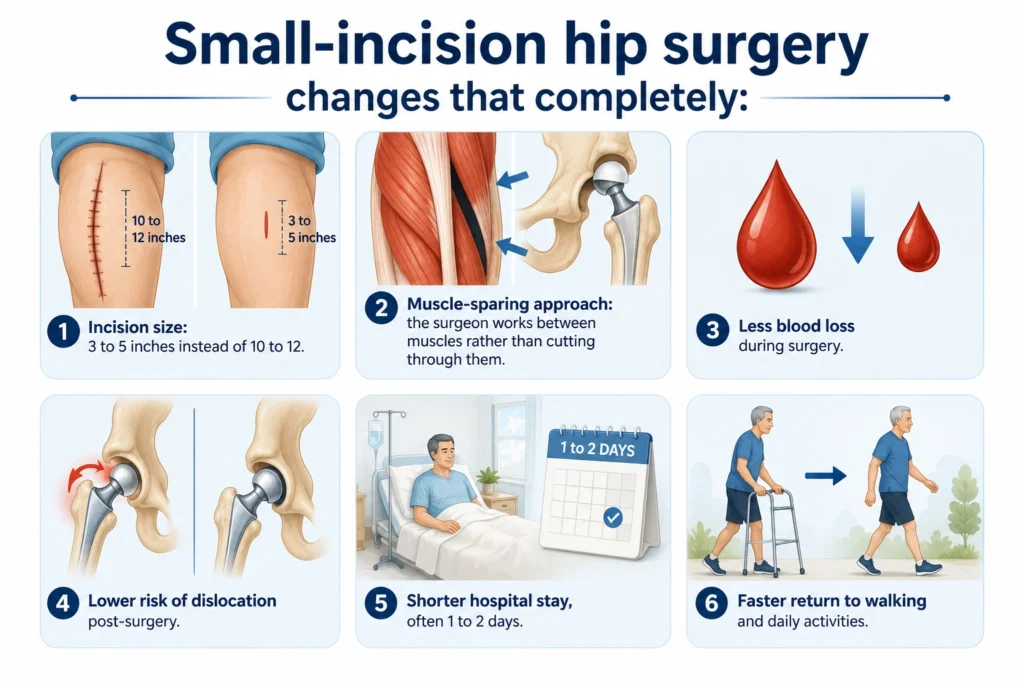
- Incision size: 3 to 5 inches instead of 10 to 12.
- Muscle-sparing approach: the surgeon works between muscles rather than cutting through them.
- Less blood loss during surgery.
- Lower risk of dislocation post-surgery.
- Shorter hospital stay, often 1 to 2 days.
- Faster return to walking and daily activities.
Traditional hip replacement vs. minimally invasive hip replacement.
Modern total minimally invasive hip replacement surgery is not what it used to be. The recovery numbers above are real, and they matter.
| Feature | Traditional Hip Replacement | Minimally Invasive Hip Replacement |
| Incision Size | 10–12 inches | 3–5 inches |
| Muscle Damage | Significant cutting | Muscle-sparing technique |
| Hospital Stay | 5–7 days | 1–2 days |
| Blood Loss | Higher | Significantly lower |
| Pain After Surgery | Higher, longer duration | Less pain, faster relief |
| Time to Walk | 3–5 days post-surgery | Same day or next day |
| Recovery Timeline | 3–6 months | 6–12 weeks (often faster) |
| Scar Visibility | Large, prominent | Small, discreet |
How the surgery actually works: step by step
Understanding what happens helps reduce fear. Here is the journey of a patient undergoing muscle-sparing hip replacement at a center like Rama Hospital.
Each step is planned. Nothing is rushed. The patient’s safety and comfort guide every decision.
- Patient Consultation & X-Ray Assessment – Initial evaluation of symptoms, joint condition, and treatment planning.
- Fitness Evaluation – Blood tests, heart assessment, and overall health screening to ensure surgical readiness.
- Pre-Surgery Counselling & Implant Selection – Discussion of the procedure, recovery expectations, and selection of the most suitable implant.
- Minimally Invasive Surgery – Hip replacement procedure performed, typically taking 1.5–2 hours.
- Recovery Room Monitoring – Close observation for 2–4 hours after surgery to ensure stable recovery.
- Walking with Support – Assisted walking usually begins on the same day or the next morning.
- Hospital Discharge – Most patients are discharged within 1–2 days after surgery.
- Physiotherapy Begins – Rehabilitation exercises start during the first week to improve strength and mobility.
- Independent Walking – Many patients can walk comfortably without support within 4–6 weeks.
- Return to Normal Activities – Most daily activities can be resumed within 8–12 weeks, depending on recovery progress.
Who needs hip replacement?
Hip replacement is not the first option. It is the right option when everything else has stopped working.
You may be a candidate if:
- Hip pain wakes you up at night.
- Pain medications are no longer giving relief.
- You cannot walk more than 15 to 20 minutes without severe discomfort.
- You have been told you have severe arthritis or avascular necrosis.
- Stiffness prevents normal daily activities like bathing, dressing, or bending.
- Previous physiotherapy and injections have not helped.
The real benefits of faster recovery hip replacement
Minimally invasive hip replacement has transformed the way patients recover from hip surgery. Unlike traditional approaches that often involve larger incisions and greater disruption of muscles and soft tissues, minimally invasive hip replacement focuses on achieving the same surgical goals through smaller incisions and tissue-sparing techniques. The result is often less postoperative pain, reduced blood loss, and a quicker return to daily activities.
The concept of “faster recovery” is not just a marketing claim. Numerous studies and clinical experiences have shown that patients undergoing minimally invasive hip replacement can often begin walking sooner, spend less time in the hospital, and regain independence more quickly than many patients who undergo conventional surgery. While recovery timelines vary from person to person, the overall goal is to help patients return to a more active and comfortable life as early as possible.
For older adults, this benefit is particularly important. Prolonged bed rest after surgery can increase the risk of complications such as blood clots, muscle weakness, lung infections, and loss of mobility. By promoting earlier movement and rehabilitation, minimally invasive hip replacement helps reduce these risks and supports a smoother recovery journey.
Today, many orthopedic specialists recommend Minimally Invasive Hip Replacement for suitable candidates because it combines advanced surgical techniques with enhanced recovery protocols. When performed by an experienced orthopedic team, this approach can provide excellent long-term outcomes while helping patients regain confidence in their mobility sooner. The focus is not only on replacing the damaged joint but also on making the recovery process safer, faster, and more comfortable for the patient.
Less muscle trauma means the following:
- Lower post-operative pain scores
- Reduced need for strong pain medication
- Less risk of infection at the surgical site
- Quicker muscle strength return
Shorter hospital stay means the following:
- Lower hospital-acquired infection risk
- Less disruption to family and daily life
- Reduced overall cost of treatment
Earlier walking means the following:
- Lower risk of blood clots (deep vein thrombosis)
- Faster cardiovascular recovery
- Better psychological outcomes for the patient
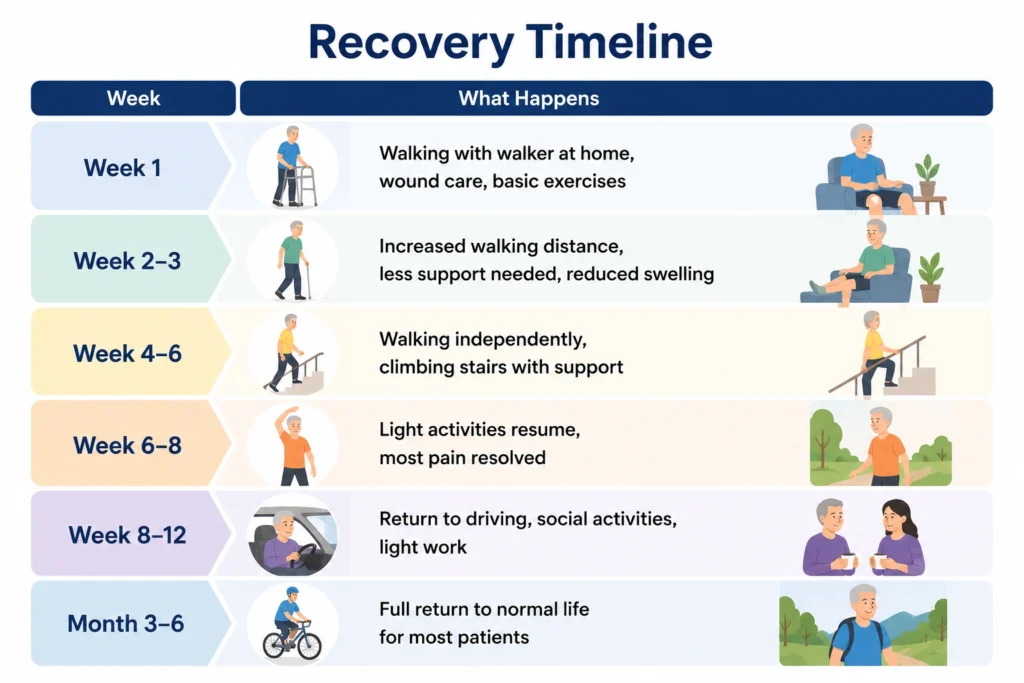
Recovery timeline: what to expect week by week
Faster recovery from hip replacement surgery in Noida does not mean skipping steps. It means moving through each phase more comfortably.
Every patient heals at their own pace. Age, fitness level, and the underlying condition all affect recovery speed. A good orthopedic team at a place like Rama Hospital builds your plan around you, not a generic timeline.
Frequently Asked Questions (FAQs)
Q: How painful is hip replacement surgery? Will I suffer a lot after?
Pain management in modern hip replacement surgery is very different from even 10 years ago. You will receive a carefully managed combination of anesthesia, nerve blocks, and oral medication.
Q: When will I be able to walk after hip replacement?
With small-incision hip surgery, many patients take their first steps on the same day as surgery or the next morning, with a walker for support. By 4 to 6 weeks, most are walking without support.
Q: How long will the hip implant last?
Modern implants used in hip replacement are designed to last 15 to 25 years, sometimes longer. The quality of the implant and surgeon technique both matter.
Q: Is hip replacement safe for elderly patients?
Yes. In fact, faster recovery hip replacement techniques are especially beneficial for elderly patients because they reduce time in bed, which lowers the risk of complications like blood clots and chest infections.
Q: What if I am scared and want to delay the surgery?
That is very normal. Many patients live with hip pain for years before deciding. However, delaying hip replacement beyond the right window can lead to muscle weakening, gait problems, and increased surgical complexity. A consultation with the best orthopedic surgeon in Noida will help you make an informed decision without pressure.
Conclusion
You do not have to accept hip pain as a permanent part of your life. Hip replacement, especially with minimally invasive techniques in best orthpaedic hospital in Noida, has helped hundreds of thousands of patients in India walk freely again, return to their families, and live without constant pain.
If you are in Noida or anywhere in NCR, Rama Hospital, best hospital in Noida offers expert consultation, advanced hip replacement surgery, and comprehensive rehabilitation under one roof.
Book your consultation today. The next chapter, the one without hip pain, starts here.