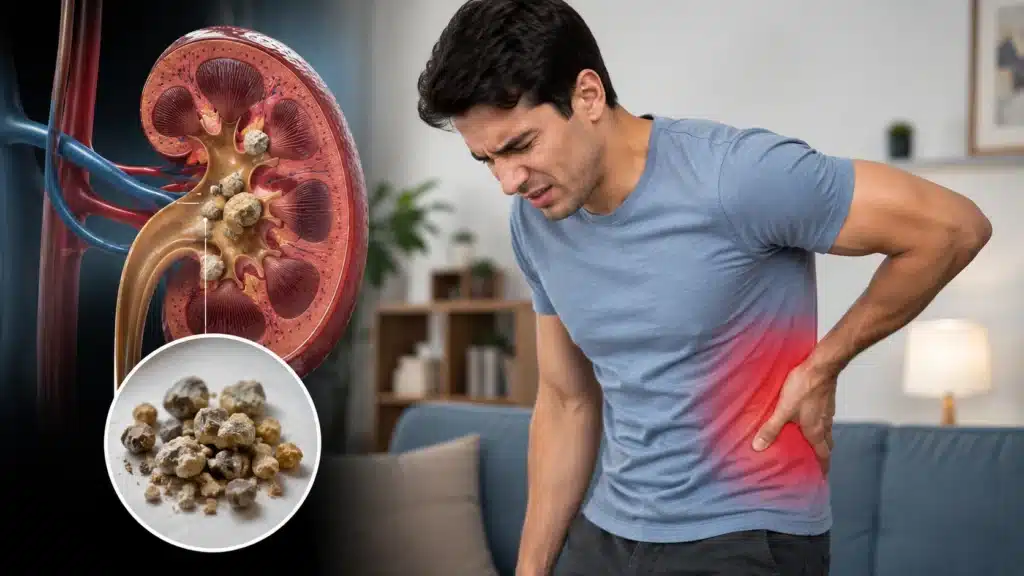
A sudden sharp pain in the back, burning while urinating, or blood in urine these could be early kidney stone symptoms that should never be ignored.
Kidney stones are a common urinary condition that can affect people of any age. From mild discomfort to severe kidney stone pain, the symptoms can disrupt daily life and may even lead to complications if left untreated.
Factors like dehydration, unhealthy food habits, high salt intake, and poor lifestyle choices are some common answers to what causes kidney stone formation. The good news is that with timely diagnosis, proper kidney stone treatment, and awareness about how to prevent kidney stones, most cases can be managed effectively.
Understanding the early signs of kidney stones can help you seek treatment before the condition becomes serious.
Tiny crystals. Big pain.
That’s the reality of kidney stones.
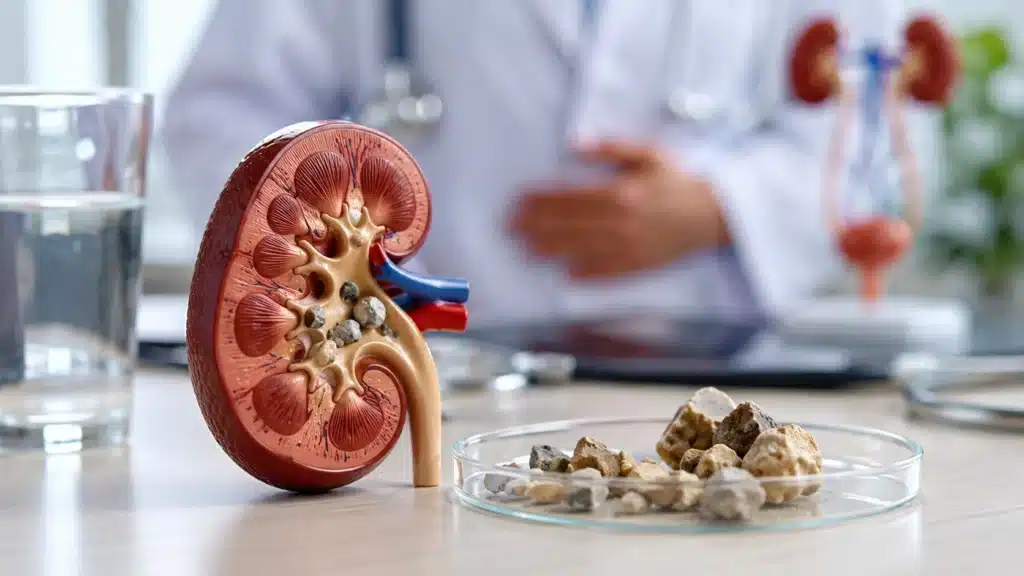
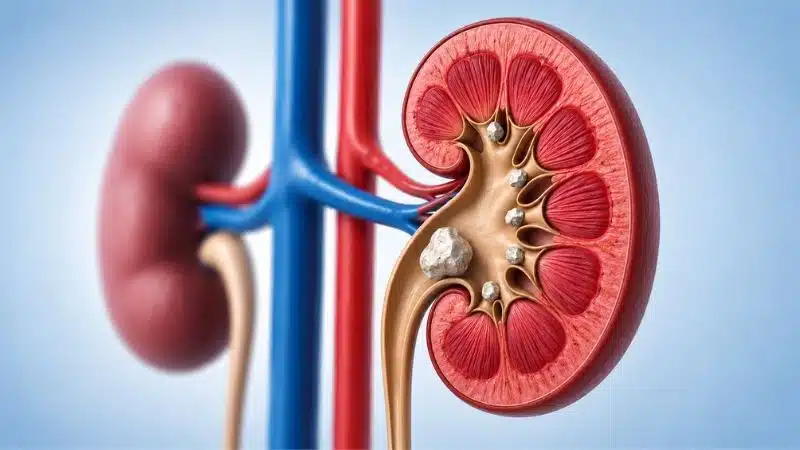
Kidney stones, medically known as nephrolithiasis, are hard deposits made of minerals and salts that form inside the kidneys. They develop when substances like calcium, oxalate, and uric acid build up in concentrated urine and stick together.
Some stones are as small as a grain of sand, while others can grow larger and block the urinary tract. Small stones may pass naturally, but bigger stones can cause severe Kidney stone pain, difficulty urinating, infection, and other complications.
Today, kidney stones are becoming increasingly common due to dehydration, unhealthy eating habits, high salt intake, and poor lifestyle choices. Recognizing early kidney stone symptoms and understanding them.
Not all kidney stones are the same.
Some form because of dehydration, some because of infections, and others because of diet or genetics.
Knowing the type of stone is important because it helps doctors understand what caused the stone and how to stop it from coming back again.
1. Calcium Oxalate Stones: The most common type of kidney stone. These form when calcium combines with oxalate found in foods like spinach, nuts, tea, and chocolate. Dehydration and high salt intake can increase the risk.
2. Uric Acid Stones: These stones develop when urine becomes too acidic. They are commonly seen in people who eat excess red meat, drink less water, or have conditions like gout and diabetes.
3. Struvite Stones: Usually caused by urinary tract infections (UTIs), these stones can grow quickly and become large if not treated on time. They are more common in women.
4. Cystine Stones: A rare type of stone linked to a genetic condition called cystinuria. These stones often develop at a younger age and may run in families.
“Why did this happen to me?”
That’s one of the first questions people ask after experiencing severe kidney stone pain.
The truth is, kidney stones usually don’t form overnight. They develop slowly due to a combination of poor hydration, unhealthy food habits, medical conditions, and lifestyle factors. And once you’ve had one stone, the chances of getting another become much higher, making prevention extremely important.
Sometimes, kidney stones may stay silent for a long time. Small stones sitting inside the kidney may not cause any discomfort at all. But once the stone starts moving through the urinary tract, the symptoms can appear suddenly, and the pain can become severe.
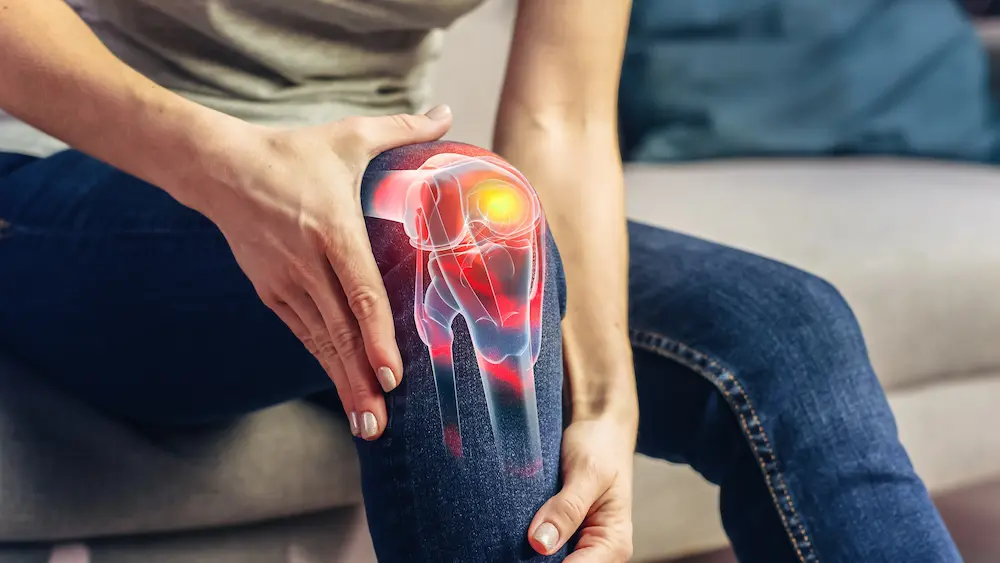
In fact, kidney stone pain is often described as one of the most intense pains a person can experience. The pain usually comes in waves, becoming stronger and then easing for a short time before returning again.
Recognizing these early signs of kidney stones can help in faster diagnosis and timely kidney stone treatment before complications develop.
One important thing to remember: The size of the stone does not always decide the severity of the pain. Even a small stone moving through the ureter can cause extreme kidney stone pain, while a larger stone may remain silent inside the kidney for a long time.
Certain situations and conditions make you significantly more likely to develop kidney stones. Your risk is higher if:
Not every kidney stone needs surgery. Some stones are small enough to pass naturally, while others may require advanced procedures for safe removal. The right kidney stone treatment depends on the size of the stone, its location, the severity of kidney stone symptoms, and whether there is an infection or blockage.
Common kidney stone treatment options include the following:
Once you experience severe kidney stone pain, prevention becomes extremely important. Simple lifestyle changes can help reduce the risk of recurring nephrolithiasis. If you have repeated signs of kidney stones, regular follow-ups and dietary guidance from a doctor can help prevent future stone formation.
When you are dealing with kidney stones, where you receive care matters.
At Rama Hospital, you are not just receiving a procedure; you are receiving a complete, personalized plan of care from a team that understands the full spectrum of kidney health.
You deserve care that treats you as a person, not just a scan report. That is what we aim to provide. At Rama Hospital, you benefit from:
Yes, many small kidney stones can pass naturally without surgery. Whether a stone passes on its own mainly depends on its size and where it is located in the urinary tract.
In many cases, smaller stones pass with proper hydration, medicines, and rest. However, larger stones may need proper kidney stone treatment to avoid complications.
If your doctor advises home care, these steps may help:
Do not ignore severe kidney stone symptoms. These can be dangerous signs of kidney stone blockage or infection and may require urgent treatment. Visit a doctor immediately if you experience:
Most kidney stones that cause symptoms are not dangerous on their own. But if left untreated, particularly in the presence of a blockage, they can lead to serious complications.
Kidney stone pain is typically felt in the flank, the side of your back just below the ribcage, and travels downward toward the groin. It comes in waves, is often accompanied by nausea, and may coincide with blood in your urine. Muscle pain is usually constant, worsens with movement, and does not cause urinary symptoms. If you are unsure, an ultrasound or CT scan will give a clear answer.
The most effective immediate steps are to take a prescribed anti-inflammatory pain reliever like ibuprofen or diclofenac, drink water steadily, and apply a warm compress to the painful area. If the pain is severe and not controlled by over-the-counter medication, go to the hospital for stronger pain relief. Do not take someone else’s prescription pain medication.
Diet is one of the most powerful tools for preventing kidney stones, but it works best alongside adequate hydration and, if needed, medication. The most impactful changes are dramatically increasing your water intake, reducing salt, and moderating animal protein. I create personalized dietary recommendations for each patient based on their stone type.
A single episode of kidney stones, if treated promptly, rarely causes lasting damage. The risk of permanent damage comes from repeated blockages, recurrent infections, or a blockage that is left untreated for a prolonged period. This is why follow-up care and prevention matter enormously.
Yes, though it is less common. In children, nephrolithiasis is often linked to a genetic metabolic disorder, a structural kidney abnormality, or a urinary tract infection. Any child with kidney stone symptoms should be evaluated promptly and investigated more thoroughly than an adult since an underlying cause is more likely.
Light activity and walking are generally fine and may even help a small stone move through the ureter. Intense exercise that causes heavy sweating without replacing fluids can make things worse by concentrating your urine. Stay well hydrated if you are physically active.
Not at all. Many kidney stones, particularly smaller ones, pass on their own with increased water intake and pain management. Surgery or procedures are reserved for stones that are too large to pass, causing a blockage, associated with infection, or not responding to conservative management.
Lemon juice contains citrate, which can help prevent calcium oxalate stones from forming by binding to calcium in the urine. Drinking diluted fresh lemon juice in water daily can be a useful addition to your prevention strategy, but it is not a treatment for existing stones and should complement, not replace, your medical plan.
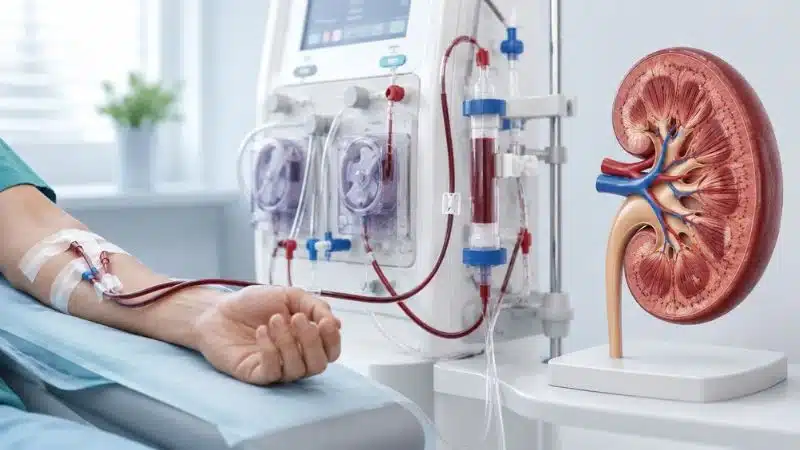
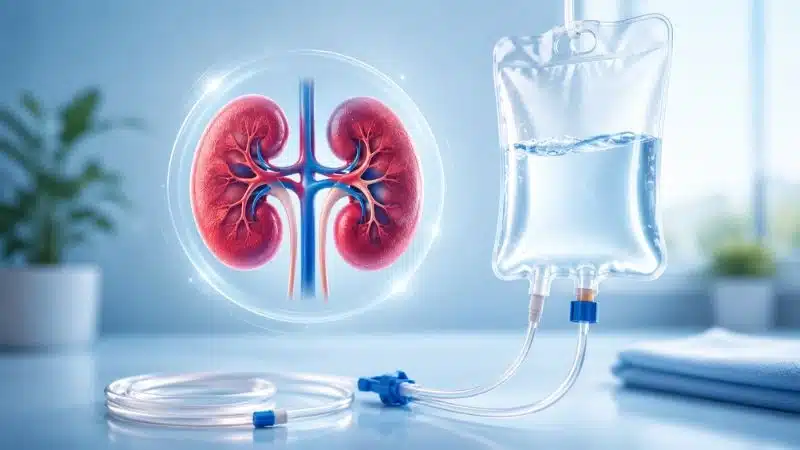
Most people don’t wake up one morning and suddenly develop kidney disease.
Every summer, hospitals across India see a noticeable rise in kidney stone cases.
Many people use the terms “kidney stone” and “ureter stone” interchangeably, but they are not exactly the same.
Kidney stones are becoming increasingly common, especially among young adults in India.
No rows found.