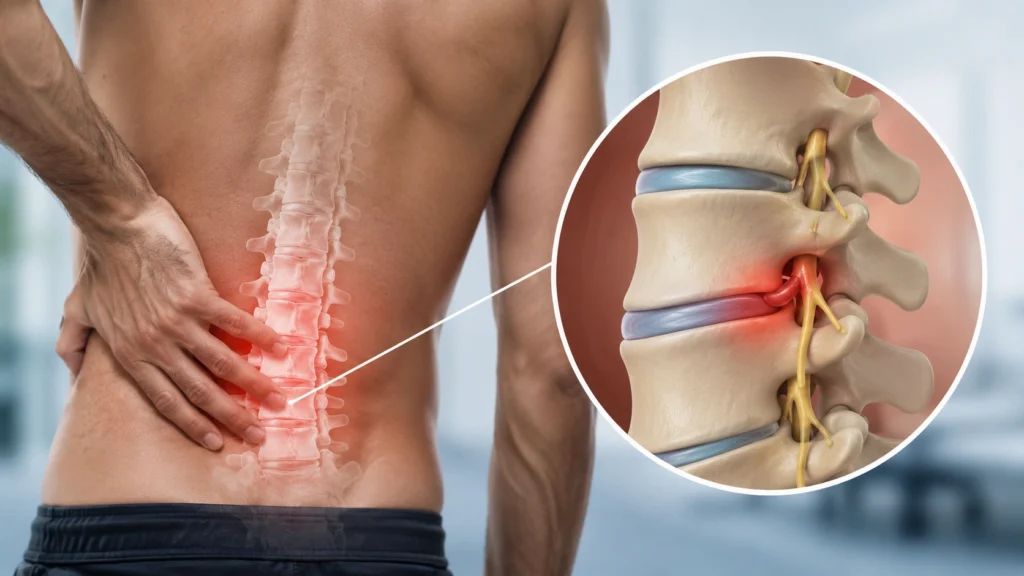
Most people use the term slip disc for almost any back pain, but a slip disc is not just ordinary pain in the back. It is a condition where the soft inner material of a spinal disc pushes out through its outer layer and may press on nearby nerves. This can cause pain, numbness, tingling, weakness, and difficulty in movement.
A herniated disc can happen in the neck, mid back, or lower back, but it is most common in the lower back. Some people recover with rest, physiotherapy, and medicines. Others may need injections or surgery if the pain is severe or if nerve problems develop.
This condition page explains what a slip disc is, why it happens, how it feels, how it is diagnosed, and what treatment options are available. It also covers lifestyle care, prevention, warning signs, surgery, recovery, and frequently asked questions in a simple and detailed way.
A slip disc, also called a herniated disc, prolapsed disc, or disc herniation, is a condition in which one of the cushions between the bones of the spine becomes damaged. These discs act like shock absorbers and help the spine move smoothly.
Each spinal disc has two parts:
When the outer ring weakens or tears, the inner material can bulge out or leak. This is called a disc herniation. If the disc presses on a nerve root or spinal cord, it can cause pain and other symptoms depending on the location.
Slip disc can occur in:
The lower back is the most common area because it bears the body’s weight and is exposed to frequent bending, lifting, twisting, and strain.
The spine is made up of small bones called vertebrae. Between these bones are discs that cushion the spinal column and allow movement. These discs are flexible structures that absorb pressure during walking, standing, lifting, and bending.
A healthy disc helps the spine:
When a disc becomes injured or degenerates, it may lose water content and elasticity. Over time, it becomes more likely to bulge or herniate. This can irritate nearby nerves and lead to pain, stiffness, weakness, or tingling.
Slip disc can happen in different forms depending on how much the disc has moved out of place.
It can also be classified based on location:
Lumbar and cervical disc problems are the most common because these regions move the most and carry more stress.
A slip disc can happen due to many reasons. Sometimes there is a clear trigger, while in other cases it develops gradually over time.
As discs age, they lose water content and become less flexible. This makes them more likely to tear or bulge. In younger people, a slip disc may happen suddenly after lifting something heavy or after an awkward movement.
Common causes include:
Age is a major factor because discs slowly degenerate over time. However, even younger adults can develop a slip disc if the spine is exposed to repeated stress or injury.
Some people are more likely to develop a slipped disc than others.
Symptoms depend on the location of the herniated disc and whether nerves are being compressed. If the disc presses on a nerve, the pain may follow the path of that nerve. This is called radicular pain or sciatica when it affects the leg.
Common symptoms include:
When the disc problem is in the neck, the symptoms may include:
Thoracic disc herniation is less common but may cause:
Lumbar disc herniation is the most common and may cause:
Sciatica is one of the most common results of a lower back disc herniation. It happens when the herniated disc presses on the sciatic nerve or nearby nerve roots.
Sciatica can range from mild to severe. In some cases, it improves naturally over time. In others, it continues until the nerve pressure is relieved.
People with sciatica may feel:
Many slip disc cases improve without surgery. But some symptoms suggest a more serious problem and need urgent medical evaluation.
These signs may suggest nerve compression or a condition called cauda equina syndrome, which requires emergency treatment.
Warning signs include:
These signs may suggest nerve compression or a condition called cauda equina syndrome, which requires emergency treatment.
Diagnosis begins with a doctor’s examination and a review of symptoms. The doctor will ask where the pain is, how long it has been there, what makes it worse, and whether there is numbness or weakness.
A physical examination may include:
Imaging may be needed if the symptoms are severe, persistent, or associated with nerve signs.
Common diagnostic tests:
MRI is usually the most useful test because it shows soft tissues, nerves, discs, and spinal structures clearly.
Treatment depends on the severity of symptoms, the location of the disc, and whether nerve compression is present. Most patients improve without surgery.
Short-term rest may help when pain is very severe, but prolonged bed rest is usually not helpful. Light activity is often better than complete inactivity.
Helpful steps:
Doctors may prescribe medicines to reduce pain and inflammation.
Common medicines may include:
These medicines should be taken only under medical supervision, especially if the patient has stomach, kidney, heart, or blood pressure problems.
Physiotherapy is one of the most important treatments for slip disc. It helps reduce pain, improve movement, strengthen muscles, and prevent recurrence.
Physiotherapy may include:
The exact exercises depend on the stage of the problem. Some exercises may help one patient but worsen another, so guidance from a trained physiotherapist is important.
Cold packs may help in the early painful phase by reducing inflammation. Heat therapy may help relax tight muscles and reduce stiffness later on.
If pain is severe and does not improve with basic treatment, doctors may suggest an epidural steroid injection. This injection helps reduce inflammation around the affected nerve and may provide relief.
It may be useful when:
Surgery is usually needed only in selected cases. It may be recommended when there is:
Surgery is usually considered when non-surgical treatment fails or when nerve damage risk is high. Common surgical procedures include:
Some patients feel better quickly, but disc healing may continue over time even after pain improves. That is why follow-up is important.
Recovery time depends on severity, age, lifestyle, and treatment response.
Spine health depends a lot on daily habits. Even after recovery, poor posture or repeated strain can bring symptoms back. Lifestyle changes can reduce strain on the spine and help prevent future disc problems.
Helpful habits:
Exercise should be guided carefully. The wrong exercise can increase pain, while the right exercise can improve recovery. A physiotherapist or spine specialist can choose the right exercise program according to the affected disc level.
Useful categories of exercise:
Important note:
Early treatment can reduce the chance of nerve damage and improve long-term outcomes. If a herniated disc is not treated properly, it can lead to problems.
Possible complications:
Prevention is especially important for people with a history of disc problems or jobs that involve sitting, lifting, or bending. Not all slip disc cases can be prevented, but the risk can be reduced.
Prevention tips:
Rama Hospital offers diagnosis and treatment support for patients with back pain, disc problems, nerve compression, and spinal conditions. The aim is to identify the exact cause and provide the right care at the right time.
Why patients may choose Rama Hospital:
For many patients, a proper diagnosis makes all the difference. Back pain is common, but the right treatment depends on knowing whether the problem is muscular, disc-related, nerve-related, or something else.
You should see a doctor if you have:
You should seek urgent medical care if:
Yes, both terms are commonly used for the same condition. In simple language, slip disc means a spinal disc has bulged or herniated and may be pressing on a nerve. The medical term more often used is herniated disc or disc prolapse.
Yes, many cases improve with rest, medicines, physiotherapy, and time. The disc may shrink naturally and the inflammation may settle. However, severe cases may need injections or surgery.
No, surgery is not needed in most cases. It is usually reserved for patients with severe pain, weakness, nerve compression, or failure of non-surgical treatment. Many people recover without surgery.
Recovery can take a few weeks to several months depending on the severity. Mild cases often improve faster, while patients with nerve pain or major disc herniation may need longer treatment. Consistency with physiotherapy is very important.
Yes, especially if the lower back disc presses on a nerve root. This can cause sciatica, where pain travels from the lower back into the buttock, leg, or foot. Numbness and tingling may also occur.
MRI is usually the best test because it shows the discs, nerves, and spinal structures clearly. X-rays do not show the disc itself well, so they are less useful for confirming a herniated disc.
Some exercises can make symptoms worse if done incorrectly. That is why exercise should be guided by a doctor or physiotherapist. The right exercises can help recovery, but the wrong ones may increase pain.
Yes, it can happen again if posture, lifting habits, or spinal strain are not corrected. Preventive care, exercise, and proper ergonomics can reduce the risk of recurrence.
Slip disc or herniated disc is a common but important spinal condition that can cause pain, nerve symptoms, weakness, and movement difficulty. It may start with simple back pain but can become serious if the disc presses on nerves or if symptoms are ignored.
The good news is that many patients improve with non-surgical treatment such as medicines, rest, physiotherapy, posture correction, and lifestyle changes. In more severe cases, injections or surgery may be needed to relieve pressure on the nerves and restore function.
A clear diagnosis and early treatment are the keys to recovery. If symptoms are lasting, worsening, or affecting the legs, arms, or bladder/bowel control, medical evaluation should not be delayed.
A herniated disk happens when one of the soft, rubbery cushions between the bones in your spine gets damaged.
A herniated (slipped or bulging) disk occurs when the soft, jelly-like center of a disk in your spine pushes against and leaks out of its outer ring.
No rows found.