
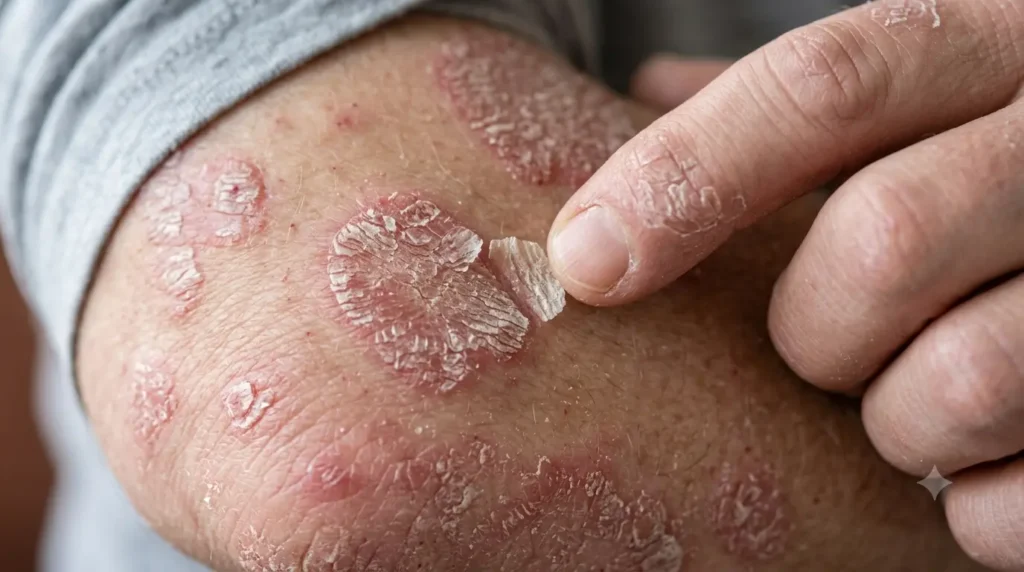
Living with persistent dry, itchy, or scaly skin can affect much more than your appearance it can influence your confidence, comfort, and quality of life. One of the most common chronic skin conditions responsible for these symptoms is Psoriasis. Although it is not contagious, it can cause recurring flare-ups that require long-term management.
Millions of people worldwide are affected by psoriasis, yet many remain unaware of its causes, triggers, available treatments, and lifestyle modifications that can help reduce symptoms. Thanks to advances in dermatology, most people can effectively control flare-ups with a personalized treatment plan. If you are looking for the Best Skin Care Hospital choosing an experienced dermatology team can help you receive an accurate diagnosis and personalized care for long-term skin health.
Psoriasis is a chronic inflammatory skin disease in which the immune system mistakenly speeds up the growth cycle of skin cells. Instead of taking about a month to renew, skin cells accumulate within a few days, forming thick, raised patches covered with silvery-white scales.
The most common form is psoriasis vulgaris, also known as chronic plaque psoriasis, accounting for nearly 80–90% of all cases.
Many people ask, “Is psoriasis an autoimmune disease?” The answer is yes. It is considered an immune-mediated condition where certain immune cells trigger inflammation that accelerates skin cell production.
A skin plaque is a raised, thickened area of skin covered with dry scales. These plaque skin lesions commonly appear on:
They may also develop on the face, nails, and genital region.
| Feature | Details |
| Disease Type | Chronic immune-mediated skin disorder |
| Contagious | No |
| Common Age | Any age, commonly 15–35 years |
| Curable | No permanent cure, but manageable |
| Recurrence | Yes |
There is no single psoriasis causative agent. Instead, several genetic, immune, and environmental factors work together.
Normally, immune cells protect the body from infections. In affected individuals, these immune cells mistakenly attack healthy skin tissue. This immune response releases inflammatory chemicals that dramatically increase skin cell production, leading to thick plaques and scaling.
Family history significantly increases the risk. Someone with one affected parent has a higher chance of developing psoriasis, while the risk increases further if both parents are affected. However, having genetic susceptibility does not guarantee symptoms.
Several environmental influences may contribute, including:
Although the underlying condition remains lifelong, symptoms often appear in cycles. Understanding what triggers psoriasis helps reduce flare-ups.
Stress: One of the most common triggers is emotional stress.
Research shows a strong relationship between psoriasis and stress. Increased stress levels stimulate inflammatory pathways, worsening skin lesions.
Stress Management Tips
Effective psoriasis and stress management often reduces flare frequency.
Skin Injury: Cuts, burns, scratches, tattoos, and surgical wounds may trigger new lesions. This phenomenon is called the Koebner response.
Infections: Certain infections, especially streptococcal throat infections, may trigger guttate lesions in children and young adults.
Weather: Cold, dry climates commonly worsen symptoms because skin loses moisture more quickly. Warm, humid weather may improve symptoms for some individuals.
Smoking and Alcohol: Both smoking and excessive alcohol consumption are associated with:
Certain Medicines: Some medications can trigger or worsen symptoms, including:
Always consult a dermatologist before stopping prescribed medication.
Risk Factors: Several factors increase the likelihood of developing this condition.
Family History: Genetics remain one of the strongest predictors.
Obesity: Excess body weight increases inflammation and makes treatment more challenging.
Smoking: Smoking increases both disease risk and severity.
Stress: Chronic emotional stress can initiate or worsen flare-ups.
Infections: Frequent bacterial or viral infections may trigger episodes in susceptible individuals.
The psoriasis pathology begins when immune cells become overactive. Instead of protecting the skin, they release inflammatory cytokines such as TNF-alpha, IL-17, and IL-23. These chemicals signal skin cells to multiply much faster than normal.
Normally, skin cells mature in about 28 days. In affected individuals, this process may take only 3–5 days.
Because old cells cannot shed quickly enough, they accumulate on the surface, producing:
Microscopically, psoriasis histology typically shows:
These characteristic findings help confirm the diagnosis when a skin biopsy is performed.
Psoriasis symptoms vary greatly from person to person. Some individuals experience only a few small patches, while others develop widespread skin involvement.
Early Symptoms
The initial stage may include:
Many people mistake these early signs for eczema or dry skin.
Common Symptoms
Typical symptoms include:
Mild
Moderate
Severe
There are several types of psoriasis, each with distinct symptoms, appearance, and affected body areas. Identifying the specific type is important because treatment options and disease severity can vary. The table below summarizes the most common forms and their key characteristics.
| Type | Description | Common Symptoms | Commonly Affected Areas |
| Plaque Psoriasis (Psoriasis Vulgaris) | The most common form, accounting for about 80–90% of cases. Characterized by thick, inflamed plaques covered with silvery-white scales. | Thick raised plaques, silvery scales, itching, cracking, bleeding | Elbows, knees, lower back, scalp |
| Guttate Psoriasis | Often develops suddenly after a bacterial throat infection and is more common in children and young adults. | Small drop-shaped red spots, mild scaling, sudden onset | Arms, legs, chest, back |
| Inverse (Flexural) Psoriasis | Develops in skin folds where friction and moisture are common. Lesions are smooth and shiny with minimal scaling. | Red, inflamed patches, soreness, irritation | Armpits, groin, under the breasts, buttock crease |
| Pustular Psoriasis | A rare but serious type characterized by white pus-filled blisters surrounded by inflamed skin. It may affect specific areas or become widespread. | Sterile pustules, redness, tenderness, burning sensation | Hands, feet, or the entire body (generalized form) |
| Erythrodermic Psoriasis | A rare and potentially life-threatening form that causes widespread inflammation and skin shedding. Requires immediate medical care. | Extensive redness, severe peeling, pain, fever, chills, dehydration | Most of the body’s surface |
| Scalp Psoriasis | A common form affecting the scalp, ranging from mild flaking to thick plaques. It may temporarily affect hair growth due to inflammation or scratching. | Thick scales, persistent itching, flaking, red patches, temporary hair shedding | Scalp, hairline, behind the ears, back of the neck |
| Nail Psoriasis | Affects the fingernails or toenails and may occur with or without skin symptoms. | Nail pitting, thickening, yellow discoloration, crumbling, separation from the nail bed | Fingernails and toenails |
| Palmoplantar Psoriasis | Affects the palms of the hands and soles of the feet, often causing painful cracking that interferes with daily activities. | Thick plaques, scaling, deep cracks, pain, redness | Palms, soles, fingers, toes |
Most cases can be diagnosed during a detailed skin examination by an experienced dermatologist.
The doctor evaluates:
If the diagnosis is uncertain, a skin biopsy may be recommended to examine the tissue under a microscope.
Although there is no specific blood test that confirms the condition, laboratory investigations may be performed to rule out infections, autoimmune disorders, or other inflammatory diseases. Additional tests may also be advised if psoriatic arthritis is suspected.
Although there is no permanent cure for psoriasis, modern dermatology offers several effective options that help control psoriasis symptoms, reduce flare-ups, and improve quality of life. The best treatment depends on the severity of the condition, the areas involved, age, overall health, and whether joints are affected.
Many people achieve long-term symptom control by combining medication with lifestyle changes and regular follow-up with a dermatologist.
Topical Treatments: Topical medicines are usually the first line of treatment for mild to moderate psoriasis. They help reduce inflammation, itching, scaling, and plaque thickness.
Corticosteroids: Topical corticosteroids remain one of the most commonly prescribed treatments for psoriasis. They help reduce redness, swelling, and itching within a short period.
Doctors prescribe different strengths depending on the affected area. Mild steroids are preferred for the face and skin folds, while stronger formulations may be used on thicker plaques found on the elbows, knees, palms, or soles.
Long-term unsupervised use should be avoided because it may cause skin thinning and other side effects.
Vitamin D Analogues: Vitamin D-based creams help slow excessive skin cell production while reducing inflammation. They are often combined with corticosteroids to improve treatment outcomes.
Salicylic Acid: Salicylic acid acts as a keratolytic agent, helping soften and remove thick scales. Removing excess scales allows other topical medications to penetrate the skin more effectively. It is commonly recommended for scalp involvement and thick plaques on the elbows, knees, hands, and feet.
Coal Tar Preparations: Coal tar has been used for decades to reduce itching, inflammation, and scaling. It is available as creams, ointments, shampoos, and lotions. Although effective for many people, its strong odor and potential to stain clothing limit its popularity.
Moisturizers: Regular moisturizing is an essential part of daily skin care.
A good moisturizer helps:
Fragrance-free, thick creams or ointments are generally preferred over lotions.
Phototherapy: Phototherapy uses controlled ultraviolet (UV) light to slow excessive skin cell growth. Treatment is usually performed under medical supervision and is recommended for moderate to severe disease or when topical treatments alone are not sufficient.
Common types include:
Narrowband UVB Therapy: This is one of the safest and most effective forms of light therapy. Sessions are typically scheduled two to three times a week for several weeks.
PUVA Therapy: PUVA treatment combines a light-sensitizing medication with UVA light exposure. It is generally reserved for more severe or resistant cases.
Home Light Therapy: Some patients may benefit from medically approved home phototherapy units under the guidance of a dermatologist. Self-treating with tanning beds is not recommended because it increases the risk of skin damage and skin cancer.
Oral Medications: When the disease is widespread or significantly affects daily life, oral medications may be prescribed.
Common options include:
These medicines work by reducing inflammation or regulating the immune response. Because they may affect the liver, kidneys, or immune system, regular blood tests and medical monitoring are necessary.
Biologic Therapy: One of the biggest advances in dermatology has been the development of biologics. Unlike traditional medicines, biologic drugs specifically target the immune pathways responsible for inflammation.
They may block proteins such as:
These medications are usually given as injections or intravenous infusions.
Biologics are recommended for moderate to severe disease, especially when conventional treatments have failed or when joint involvement is present.
Many patients experience significant improvement within a few months.
A common question is whether there is a permanent cure for psoriasis. Currently, there is no permanent cure, but many people remain symptom-free for months or even years with appropriate treatment and healthy lifestyle habits. Early diagnosis and consistent management often produce the best outcomes.
Natural Remedies and Home Care
Home care cannot replace medical treatment, but it can help reduce flare-ups and improve skin comfort.
Although diet alone cannot cure the condition, healthy eating habits may help reduce inflammation and improve overall health. An anti-inflammatory eating pattern is often recommended.
A balanced diet should emphasize:
These foods provide antioxidants and nutrients that support overall health.
Some people notice worsening symptoms after consuming certain foods.
Potential triggers include:
Food triggers vary from person to person, so maintaining a food diary may help identify individual sensitivities.
Some individuals may benefit from supplements when deficiencies are present.
Examples include:
Supplements should only be taken after consulting a healthcare professional.
The scalp is one of the most frequently affected areas.
Common symptoms include:
Hair loss usually occurs because of inflammation or excessive scratching rather than permanent damage to the hair follicles.
Treatment may include:
Gentle hair care and avoiding aggressive scratching are equally important.
Nail involvement affects many patients and may occur with or without skin lesions.
Common signs include:
Because fungal infections can produce similar changes, laboratory testing may sometimes be required.
Treatment often includes topical medications, injections around the nail, or systemic therapy in more severe cases.
Although the condition can develop almost anywhere on the body, certain areas require special care because the skin is thinner, more sensitive, or exposed to frequent friction.
Face: Facial involvement is less common than plaque formation on the elbows or knees but can be emotionally distressing. It often appears around the eyebrows, nose, forehead, hairline, or beard area.
Symptoms may include:
Because facial skin is delicate, treatment usually involves low-potency corticosteroids, topical calcineurin inhibitors, moisturizers, and gentle cleansers. Avoid using strong steroid creams without medical supervision.
Hands and Feet: The palms and soles experience constant pressure and friction, making symptoms more painful.
Common signs include:
Regular moisturization, prescription creams, protective gloves, and comfortable footwear help improve symptoms. Severe palm and sole involvement may require oral medication or biologic therapy.
Genital Area: Skin changes can also occur in the groin, buttocks, vulva, penis, or scrotum. Lesions in these areas are usually smooth, red, and less scaly because of moisture.
Many people hesitate to seek treatment due to embarrassment, but early medical care can significantly improve comfort and quality of life.
Treatment generally includes:
Skin symptoms are not the only concern. Around 20–30% of people may develop Psoriatic Arthritis, an inflammatory joint disease that can cause permanent joint damage if left untreated.
Watch for symptoms such as:
Some people notice joint symptoms before skin lesions appear.
There is no single laboratory test that confirms psoriatic arthritis. Diagnosis is based on:
Early diagnosis is important because timely treatment helps prevent irreversible joint damage.
Treatment may include:
People experiencing persistent joint pain should consult a dermatologist or rheumatologist promptly.
Several skin disorders resemble this condition. An accurate diagnosis ensures appropriate treatment.
| Condition | Key Difference |
| Eczema | Usually more itchy, less sharply defined, often associated with allergies |
| Seborrheic Dermatitis | Greasy yellow scales, commonly affects the scalp, eyebrows, and nose |
| Dandruff | Mild scalp flaking without thick plaques or significant inflammation |
| Ringworm | Fungal infection with ring-shaped lesions and central clearing |
| Fungal Skin Infection | Caused by fungi and responds to antifungal medicines, unlike autoimmune skin disorders |
Because treatments differ significantly, self-diagnosis should be avoided.
Without proper treatment, chronic inflammation may lead to several complications, including:
A severe form known as erythrodermic disease can become a medical emergency because of extensive skin inflammation and fluid loss. Immediate hospitalization may be required.
Although flare-ups cannot always be prevented, healthy habits often reduce their frequency and severity.
Keeping symptoms under control often requires long-term commitment rather than short-term treatment.
Seek medical advice if you experience:
Early diagnosis improves treatment outcomes and reduces the risk of complications.
Living with a chronic skin condition can be challenging, but it does not have to control your life. With early diagnosis, individualized treatment, proper skin care, and healthy lifestyle choices, most people can successfully manage symptoms and maintain an excellent quality of life.
If you notice persistent red, scaly patches, nail changes, or joint pain, do not ignore them. Seeking timely medical advice can prevent complications and improve long-term outcomes.
Whether your symptoms are mild or severe, seeking timely care from experienced dermatologists can make a significant difference in your treatment outcomes. At Rama Hospital, we are committed to providing advanced, evidence-based care for a wide range of dermatological conditions. If you are looking for the best hospital for skin diseases, schedule a consultation with our specialists to receive a personalized treatment plan and long-term support for healthier skin.
There is no permanent cure, but modern treatments can effectively control symptoms, reduce flare-ups, and help many people achieve long periods of remission.
No. It cannot spread through touching, hugging, sharing clothes, or sexual contact.
Yes. It is an immune-mediated inflammatory disorder in which the immune system mistakenly accelerates skin cell production.
No. It is not infectious or communicable.
Genetics play an important role, but having a family history does not guarantee that someone will develop the condition.
Yes. Emotional stress is one of the most common triggers.
Does it always itch?
Not always. Some people experience intense itching, while others mainly notice scaling and redness.
Scalp inflammation and excessive scratching may lead to temporary hair shedding. Hair usually regrows after the inflammation is controlled.
No. It is not caused by fungi and cannot be treated with antifungal medications alone.
A dermatologist is the most appropriate specialist for diagnosis and treatment. If joint symptoms are present, a rheumatologist may also be involved.
Yes. Although it is more common in adults, children and infants can also develop the condition.
A balanced anti-inflammatory diet may support overall health and help some individuals reduce flare-ups, but diet alone cannot replace medical treatment.
Controlled sunlight exposure may improve symptoms in some individuals. However, excessive sun exposure can damage the skin, so always follow your dermatologist’s advice.
Psoriasis is a skin disease that causes a rash with itchy, scaly patches, most commonly on the knees, elbows, trunk and scalp.
Psoriasis is a chronic (long-lasting) disease in which the immune system becomes overactive, causing skin cells to multiply too quickly. Patches of skin become scaly and inflamed, most often on the scalp, elbows, or knees, but other parts of the body can be affected as well. Scientists do not fully understand what causes psoriasis, but they know that it involves a mix of genetics and environmental factors.
Psoriasis is an autoimmune condition that affects approximately 7.5 million adults in the United States. It occurs equally among males and females, with two peak age ranges for onset being 15 to 25 and 50 to 60 years old.
No rows found.