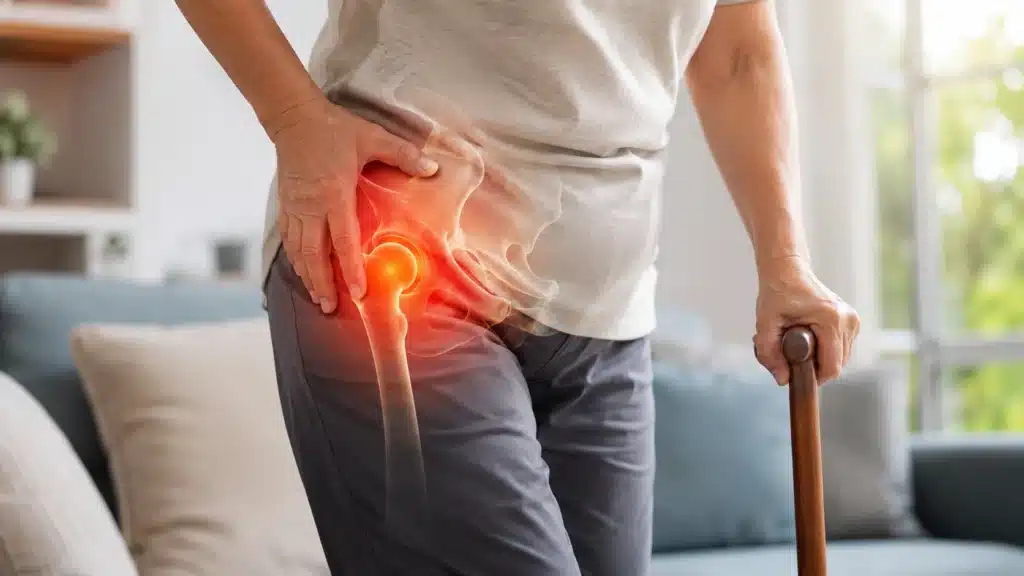
You broke a bone years ago. You tore a ligament playing sports. You were in a road accident. At the time, you recovered, or at least, you thought you had. The fracture healed. The swelling went down. Life went on.
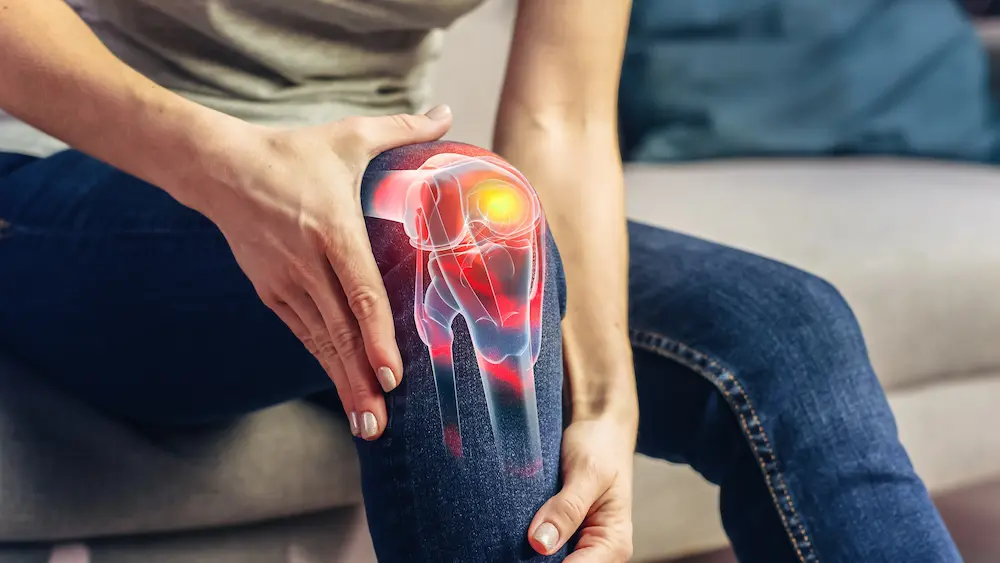
But now, years later, that same joint is hurting again. It’s stiff in the mornings. It aches after activity. It’s starting to affect how you walk, how you work, and how you sleep.
What you may be experiencing is post-traumatic arthritis, a form of arthritis that develops in a joint that was previously injured. It doesn’t happen immediately after the injury. It can develop months, years, or even decades later, a delayed consequence of trauma that damaged the joint’s cartilage, alignment, or internal structures.
Post-Traumatic Arthritis (PTA) accounts for approximately 12% of all osteoarthritis cases, making it one of the most common and least discussed forms of arthritis. Unlike age-related osteoarthritis can affect people in their 20s, 30s, and 40s. active, working individuals at the peak of their lives.
What is post-traumatic arthritis?
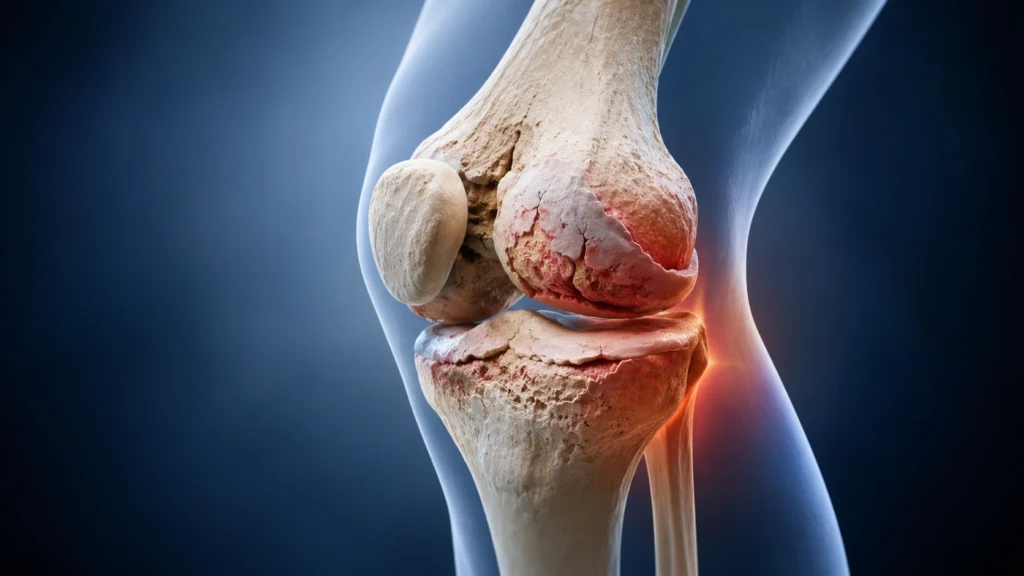
A joint injury may heal, but sometimes the damage doesn’t end there.
Post-traumatic arthritis is a type of arthritis that develops after an injury such as a fracture, dislocation, ligament tear, or severe joint trauma.
In simple terms, post-traumatic arthritis is the long-term wear and tear that can develop in a joint after an old injury. Sometimes symptoms appear months or even years after the original accident.
Here’s what happens:
- An injury damages the joint’s protective cartilage.
- Even after the injury heals, small amounts of damage may remain.
- Over time, the cartilage continues to wear down.
- The joint becomes painful, stiff, swollen, and less mobile.
- Eventually, the bones may start rubbing against each other, leading to arthritis symptoms.
How is it different from regular osteoarthritis?
|
Post-Traumatic Arthritis |
Osteoarthritis |
| Cause |
Previous joint injury |
Age and wear & tear |
| Age of onset |
Any age, including young adults |
Usually over 50 |
| Joints affected |
Specifically the injured joint |
Multiple weight-bearing joints |
| Progression |
Can be rapid |
Usually gradual |
| Prevention |
Possible with early intervention |
Limited preventability |
What are the types of post-traumatic arthritis?
Post-traumatic arthritis is classified based on the joint affected and the type of original injury.
Post-Traumatic Knee Arthritis
- The most common location.
- Develops after knee fractures, ACL tears, meniscus injuries, PCL tears, or knee dislocations.
- ACL injuries alone carry a 50–100% increased risk of developing knee arthritis within 10 to 20 years.
- Causes progressive knee pain, stiffness, and functional limitation, often ultimately requiring knee replacement.
Post-Traumatic Hip Arthritis
- Develops after acetabular (hip socket) fractures, femoral head fractures, or hip dislocations.
- Hip dislocations have a particularly high rate of subsequent avascular necrosis (bone death from disrupted blood supply) and arthritis.
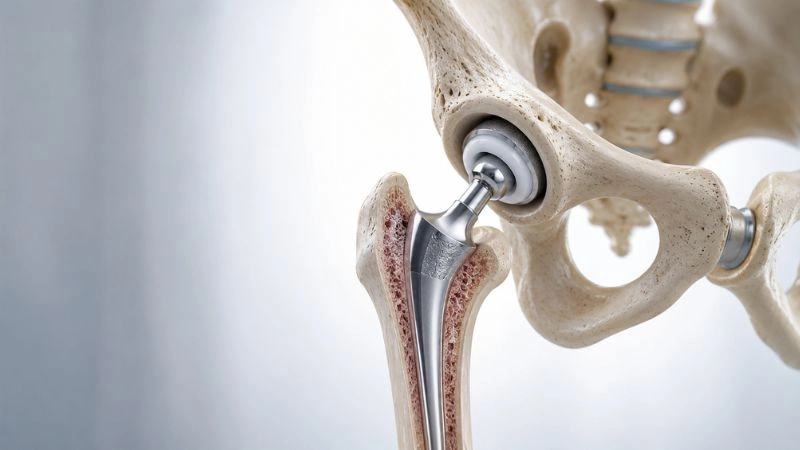
- Can progress to requiring total hip replacement.
Post-Traumatic Ankle Arthritis
- The ankle is one of the most commonly affected joints in PTA.
- Develops after ankle fractures (particularly pilon fractures and trimalleolar fractures), ankle dislocations, and severe ligament injuries.
- Ankle arthritis is disproportionately caused by trauma compared to other joints; the majority of ankle arthritis is post-traumatic.
Post-Traumatic Shoulder Arthritis
- Follows shoulder dislocations, fractures of the humeral head or glenoid, and rotator cuff tears.
- Repeated shoulder dislocations are a particularly significant risk factor.
- Can progress to requiring total shoulder replacement.
Post-Traumatic Wrist and Hand Arthritis
- Develops after scaphoid fractures, distal radius fractures, and carpal dislocations.
- Scaphoid fractures that heal poorly (scaphoid non-union) are a major cause of wrist arthritis.
- Can significantly impact grip strength and hand function.
Post-Traumatic Elbow Arthritis
- Follows elbow fractures, dislocations, and complex elbow injuries.
- Less common than other sites but can cause significant functional limitation given the elbow’s role in daily tasks.
Post-Traumatic Spine (Facet) Arthritis
- Develops in the facet joints of the spine following vertebral fractures, spinal injuries, or significant disc trauma.
- Causes chronic back or neck pain and reduced spinal mobility and can contribute to nerve compression.
Who is the ideal candidate for treatment?
Post-traumatic arthritis can develop months or even years after a joint injury. If pain, stiffness, or reduced movement is affecting your daily life, it may be time to seek treatment.
Early treatment can help reduce pain, improve joint function, and slow further joint damage, allowing you to stay active and maintain a better quality of life.
You may benefit from evaluation and treatment if:
- You have ongoing joint pain after a previous injury or fracture.
- Your joint feels stiff and difficult to move.
- You experience swelling, tenderness, or warmth around the joint.
- You notice grinding, clicking, or cracking sounds when moving the joint.
- Pain is getting worse despite rest or medications.
- Scans show cartilage damage or joint wear and tear.
- You are a young or active adult struggling with joint pain after a sports injury or accident.
- An old injury to the knee, hip, ankle, or shoulder is now affecting your mobility and daily activities.
What are the causes and risk factors of post-traumatic arthritis?
Understanding exactly why post-traumatic arthritis develops and what makes some people more vulnerable helps both in managing the condition and in preventing unnecessary progression.
How Injury Leads to Arthritis
Direct Cartilage Damage:
- Physical trauma directly cracks, crushes, or tears articular cartilage.
- Cartilage has an extremely limited capacity to repair itself; it has no blood supply of its own.
- Even microscopic damage to cartilage at the time of injury can trigger a progressive breakdown process.
Altered Joint Mechanics:
- Fractures that heal with even slight malalignment change the way forces are distributed across the joint.
- This altered loading concentrates stress on specific areas of cartilage, accelerating wear in those areas.
- Intra-articular fractures (fractures through the joint surface) are particularly high-risk because even 1 mm of step-off in the joint surface dramatically increases cartilage wear.
Ligament and Meniscus Damage:
- Ligament tears (ACL, PCL, MCL) disrupt joint stability, causing abnormal movement patterns that damage cartilage over time.
- Meniscus injuries, particularly large meniscus tears or complete meniscectomy, remove the knee’s natural shock absorbers, transferring load directly to cartilage.
Post-Injury Inflammation:
- After a joint injury, the immune system mounts an inflammatory response.
- Inflammatory chemicals (cytokines) released into the joint fluid can damage cartilage cells even after the acute injury has healed.
- This chronic low-grade inflammation within the joint is a key driver of PTA progression.
Injuries that commonly lead to post-traumatic arthritis
These injuries can damage the joint structure, leading to gradual cartilage wear and increasing the risk of post-traumatic arthritis over time.
- Joint fractures (intra-articular fractures) that damage the joint surface.
- ACL or PCL injuries, even after successful reconstruction surgery.
- Meniscus tears or meniscus removal, which increase stress on joint cartilage.
- Joint dislocations, especially in the hip, knee, or ankle.
- Severe ligament injuries that cause long-term joint instability.
- Crush injuries that directly damage the joint and surrounding tissues.
- Osteochondral injuries, where both the cartilage and underlying bone are affected.
Risk factors for post-traumatic arthritis (PTA)
- Severe joint injuries can cause lasting cartilage damage and increase the risk of PTA.
- Fractures involving the joint surface that do not heal properly can lead to early joint wear.
- Delayed treatment after an injury may allow further joint damage to occur.
- Older adults have a higher risk because cartilage becomes less resilient with age.
- Excess body weight places additional stress on already damaged joints.
- Returning to high-impact sports too soon can speed up joint deterioration.
- A family history of joint problems may increase susceptibility to arthritis.
- Repeated injuries to the same joint can gradually damage cartilage over time.
- Avascular necrosis (AVN), where bone loses its blood supply, can accelerate joint destruction.
- Incomplete rehabilitation after an injury can affect joint stability and long-term recovery.
What are the common symptoms of post-traumatic arthritis?
- Post-traumatic arthritis symptoms follow a recognizable pattern, developing months to years after a joint injury and gradually worsening over time.
- Joint pain that worsens with activity and may continue even during rest in advanced stages.
- Morning stiffness or stiffness after sitting for a long time that usually improves with movement.
- Joint swelling with a feeling of fullness, tenderness, or warmth around the affected area.
- Reduced movement making everyday activities like walking, climbing stairs, squatting, or bending more difficult.
- Grinding, clicking, or crunching sounds when moving the joint.
- Joint instability where the joint feels weak, wobbly, or may give way unexpectedly.
- Muscle weakness around the affected joint due to pain and reduced activity.
- Visible joint deformities such as bow legs, knock knees, or changes in joint shape in advanced cases.
- Pain spreading to nearby areas, such as hip arthritis causing pain in the groin, thigh, or knee.
Difficulty performing daily tasks due to increasing pain, stiffness, and reduced joint function.
How is post-traumatic arthritis diagnosed?
Diagnosing post-traumatic arthritis starts with understanding your previous injury and how your symptoms have changed over time. A combination of medical history, physical examination, and imaging tests helps confirm the diagnosis and assess the extent of joint damage.
Medical History
- The nature and severity of the original injury, type, mechanism, and how it was treated.
- Time since the injury and when symptoms began.
- How symptoms have progressed, gradually or rapidly.
- Impact on daily activities, work, and quality of life.
- Previous treatments tried and their effectiveness.
- Family history of arthritis.
Physical Examination
- Range of motion assessment: how far the joint moves compared to normal.
- Joint swelling, warmth, and tenderness.
- Muscle strength around the joint.
- Alignment and deformity, bow-legs, knock-knees, limb length discrepancy.
- Stability testing, assessing ligament integrity.
- Gait analysis, how you walk; often revealing compensatory patterns.
Imaging Investigations
X-Ray (First-Line Investigation):
- The most important initial imaging for post-traumatic arthritis diagnosis.
- Shows joint space narrowing, direct evidence of cartilage loss.
- Identifies osteophytes (bony spurs at joint margins).
- Shows subchondral sclerosis (hardening of bone beneath damaged cartilage).
- Reveals previous fracture malunion or malalignment contributing to arthritis.
- Used to grade the severity of PTA and guide treatment decisions.
- Weight-bearing X-rays, taken while standing, give the most accurate picture of functional joint space.
MRI (Magnetic Resonance Imaging):
- Provides detailed imaging of cartilage, ligaments, menisci, and bone.
- Detects early cartilage damage before it is visible on X-ray.
- Identifies associated ligament tears, meniscus damage, bone marrow edema (bone bruising), and soft tissue injuries.
- Essential when surgical planning, particularly for cartilage restoration procedures in younger patients.
- Also used to assess avascular necrosis after hip dislocation.
CT Scan:
- Provides detailed bone anatomy, particularly useful for assessing malunion (poorly healed fractures) contributing to joint malalignment.
- Used for complex surgical planning, particularly for osteotomy or joint replacement in cases with significant bone deformity.
- CT arthrography (with contrast) can assess cartilage damage when MRI is contraindicated.
Bone Scan (Isotope Scintigraphy):
- Can detect increased metabolic activity in an arthritic joint, particularly useful in early disease when X-rays are normal.
- Helps identify avascular necrosis affecting bone blood supply.
Laboratory Investigations
- Blood tests are not used to directly diagnose post-traumatic arthritis, but they help rule out other conditions.
- ESR and CRP are usually normal or only slightly raised in post-traumatic arthritis; very high levels may point to infection, rheumatoid arthritis, or gout.
- Rheumatoid factor (RF) and anti-CCP tests are typically negative; positive results suggest rheumatoid arthritis instead.
- Uric acid levels are checked to rule out gout as a cause of joint pain.
- Joint fluid analysis may be done if needed to exclude infection, gout, or pseudogout; in post-traumatic arthritis, fluid usually shows mild inflammation without crystals or bacteria.
Treatment options for post-traumatic arthritis
Post-traumatic arthritis care at Rama Hospital follows a clear, step-by-step approach designed around your comfort and recovery. Treatment starts with simple, non-surgical options and only moves to surgery when it is truly needed, ensuring every decision is evidence-based, personalized, and focused on restoring pain-free movement and daily function.
Non-Surgical Treatments
- Physiotherapy and Exercise Rehabilitation
- Strengthening exercises help build muscles around the joint, which reduces pressure on the damaged cartilage.
- Range-of-motion exercises keep the joint flexible and help reduce stiffness.
- Proprioceptive training improves balance and joint awareness, especially after ligament injuries.
- Gait training corrects walking patterns that may be putting extra stress on the joint.
- Hydrotherapy uses water-based exercise to reduce joint load while improving movement and strength.
- A structured physiotherapy program at Rama Hospital helps many patients regain comfort, mobility, and confidence.
- Weight Management
- Each kilogram of excess body weight places approximately 4 kilograms of additional stress on the knee joint.
- Weight reduction is one of the most impactful interventions for post-traumatic arthritis in weight-bearing joints.
- Even a 5–10% reduction in body weight produces measurable improvements in pain and function.
- Activity Modification and Joint Protection
- Identifying daily activities that worsen joint pain and making simple adjustments.
- Replacing high-impact exercise like running or jumping with low-impact options such as swimming or cycling.
- Using walking aids like sticks or frames to reduce pressure on painful joints during flare-ups.
- Wearing orthotics or braces to improve alignment and shift load away from the most affected part of the joint.
- Pain and Anti-Inflammatory Medications
- Oral anti-inflammatory medications reduce joint pain and swelling, improving day-to-day function.
- Topical anti-inflammatory gels applied to the skin over the joint are effective with fewer systemic side effects.
- Your doctor at Rama Hospital selects the safest, most appropriate option based on your age, health status, and PTA severity.
- Joint Injections
Corticosteroid Injections
- Steroid injected directly into the joint under sterile conditions.
- Provides fast, targeted relief from joint pain and inflammation.
- Particularly effective during a painful flare or in preparation for physiotherapy.
- Effects can last weeks to months.
Hyaluronic Acid (Viscosupplementation) Injections
- Hyaluronic acid is a natural component of healthy joint fluid, providing lubrication and cushioning.
- Injecting it into an arthritic joint improves these properties and can relieve pain for several months.
- Particularly beneficial for moderate post-traumatic arthritis in younger patients wanting to delay surgery.
Platelet-Rich Plasma (PRP) Therapy
- Your own blood is processed to concentrate growth factors, which are injected into the damaged joint.
- Can reduce joint pain, improve function, and may help slow cartilage breakdown.
- Growing evidence base, particularly for knee PTA in younger, more active patients.
- Bracing and Orthotics
- Unloader braces for knee PTA: Redistribute weight from the damaged compartment to the healthier side and can significantly reduce pain in unicompartmental disease.
- Ankle-foot orthoses (AFOs): Provide ankle-foot support and reduce impact loading.
- Custom orthotics in footwear: Correct underlying alignment problems contributing to joint stress.
- TENS (Transcutaneous Electrical Nerve Stimulation)
- Non-invasive electrical stimulation that interrupts pain signals.
- A useful adjunct for pain management in post-traumatic arthritis.
- Used as part of the broader physiotherapy program.
Surgical Treatment Options
Surgery is considered when joint damage is advanced and pain or stiffness starts affecting daily life despite non-surgical care. Treatment is always chosen based on age, activity level, and the extent of joint damage.
- Arthroscopy (Keyhole Surgery)
- A small camera is used inside the joint through tiny cuts.
- Removes loose cartilage or bone fragments.
- Smooths rough joint surfaces.
- Useful in early to moderate arthritis.
- Faster recovery, usually back to activity in weeks.
- Helps reduce symptoms but does not cure advanced damage.
- Osteotomy (Bone Realignment Surgery)
- Bone is reshaped to shift weight away from damaged areas.
- Common in younger, active patients.
- Especially useful in early knee arthritis with uneven wear.
- Can delay joint replacement for many years.
- Preserves natural joints as long as possible.
- Cartilage Restoration Procedures
- Used when damage is limited to a small area.
- Microfracture: small holes stimulate new repair tissue.
- ACI: patient’s cartilage cells are grown and re-implanted.
- OATS: healthy cartilage is transferred to damaged areas.
- Best for younger patients with early, localized damage.
- Total Knee Replacement (TKR)
- Used when the entire knee is severely damaged.
- Damaged joint surfaces are replaced with artificial components.
- Relieves severe pain and restores mobility.
- Walking starts within 24 hours after surgery.
- Recovery usually takes 3–6 months.
- Highly effective for advanced post-traumatic arthritis.
- Partial Knee Replacement
- When only one part of the knee is affected.
- Smaller surgery with faster recovery.
- Less bone removal compared to total knee replacement.
- Feels more natural than full replacement in suitable cases.
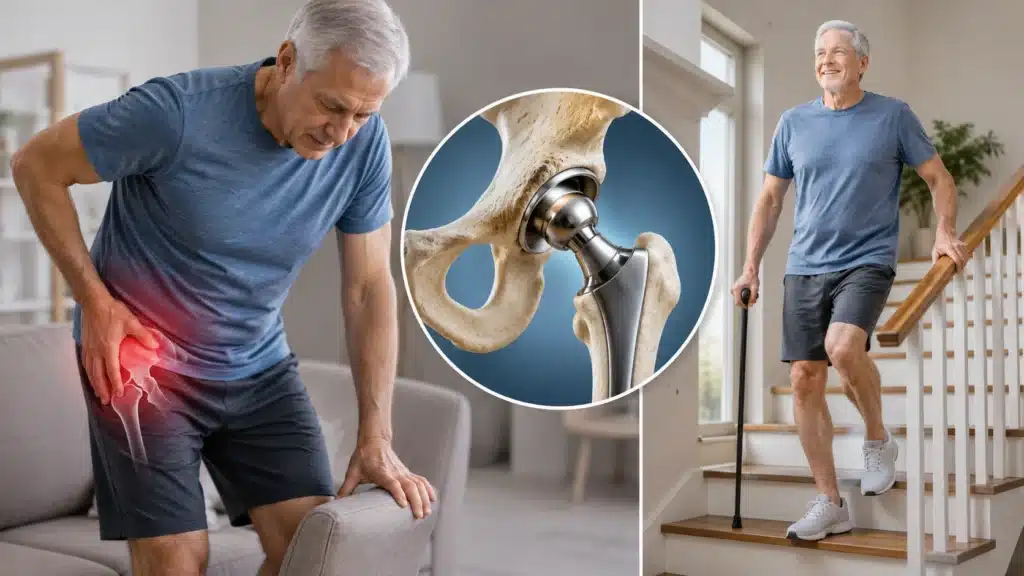
- Total Hip Replacement (THR)
- For advanced hip joint damage after injury.
- A damaged hip joint is replaced with a prosthesis.
- Restores walking and reduces pain significantly.
- Physiotherapy begins early for faster recovery.
- Full recovery usually in 3–6 months.
- Ankle Replacement or Fusion
- For severe ankle arthritis.
- Replacement: preserves movement with an artificial joint.
- Fusion: bones are joined to eliminate pain completely.
- Choice depends on age, activity, and bone condition.
- Shoulder Replacement
- For severe shoulder joint damage after injury.
- Restores movement and reduces chronic pain.
- Includes standard or reverse shoulder replacement options.
- Improves ability to lift and rotate the arm.
- Joint Fusion (Arthrodesis)
- Used for small joints like wrist or foot.
- Bones are permanently fused.
- Removes pain completely.
- Movement is reduced but function is often improved due to pain relief.
What are the benefits of treatment?
Proper treatment of post-traumatic arthritis can make a real difference in daily life and long-term mobility. With the right approach, patients often regain comfort, movement, and confidence over time.
- Significant and long-lasting pain relief, especially after joint replacement surgery.
- Improved joint movement, helping you walk, work, and manage daily activities more easily.
- Better sleep quality by reducing night pain and constant discomfort.
- Stronger supporting muscles through guided physiotherapy and rehabilitation.
- Improved joint alignment through corrective procedures, reducing ongoing wear.
- Slower disease progression when treated early and appropriately.
- Greater independence in daily life without constant pain limitations.
- Better mental well-being as chronic pain and stress reduce over time.
- Long-lasting results, with modern implants often lasting 15–25 years.
- Restored confidence to return to activities that pain once restricted.
Why choose Rama Hospital for post-traumatic arthritis treatment?
- Expert care for complex joint cases, including previous injuries, deformities, and metal implants.
- Complete treatment planning from early therapy to advanced joint replacement when needed.
- Advanced cartilage repair options for younger patients to delay or avoid joint replacement.
- Highly experienced surgeons with thousands of successful joint replacement procedures.
- Strong focus on rehabilitation with personalized physiotherapy starting from day one.
- Multidisciplinary team approach for safer, more accurate, and well-planned treatment decisions.
- Patient-first care that considers your age, lifestyle, and long-term mobility goals.
Can post-traumatic arthritis be controlled without surgery?
- Yes, many patients with post-traumatic arthritis can manage symptoms effectively for a long time without surgery.
- Early-stage disease responds best to physiotherapy, weight control, injections, and lifestyle changes.
- Younger and active patients often maintain good joint function for years with consistent non-surgical care.
- The amount of remaining cartilage is the biggest factor in long-term outcome.
- Regular physiotherapy and disciplined lifestyle habits significantly slow progression.
- Early diagnosis and early management give the best chance to delay or avoid surgery.
- If surgery becomes necessary later, non-surgical care helps build strength for better recovery.
- Surgery is not failure but a proven solution when joint damage becomes advanced and irreversible.
When should you see a doctor for post-traumatic arthritis?
- You have ongoing joint pain in an old injury that never fully went away.
- Your joint feels stiff, especially in the morning or after long periods of sitting.
- You notice swelling, warmth, or tenderness in the previously injured area.
- A grinding, clicking, or “catching” sensation has started in the joint.
- Walking, climbing stairs, or daily movements are becoming harder over time.
- Pain is getting worse despite self-care or basic medications.
- Imaging shows cartilage wear or early bone changes in the affected joint.
What happens if post-traumatic arthritis is left untreated?
Ignoring post-traumatic arthritis does not stop its progression. Over time, it steadily worsens and affects both joint health and overall quality of life.
- Cartilage damage is permanent and continues to worsen over time.
- Joint wear leads to bone-on-bone contact, deformity, and stiffness.
- Pain increases, and everyday movement becomes increasingly difficult.
- Muscle weakness develops due to reduced activity and ongoing pain.
- Weak muscles further reduce joint stability and increase strain.
- Higher risk of falls due to poor balance and unstable joints.
- Falls can lead to serious injuries, especially hip fractures in older adults.
- Long-term pain can make the nervous system more sensitive to pain signals.
- Sleep gets disturbed, leading to fatigue and reduced recovery.
- Ongoing pain and disability can affect mood and mental well-being.
- Depression and anxiety become more common with untreated conditions.
- Delayed treatment often makes future surgery more complex and challenging.
Frequently Asked Questions (FAQs)
-
How long after an injury does post-traumatic arthritis develop?
There is no fixed timeline. Post-traumatic arthritis can develop as soon as a few months after a severe injury, or it may take 10 to 20 years to become symptomatic. The more severe the original injury and the younger the patient, the earlier symptoms typically appear. ACL injuries, for example, carry a substantially increased risk of knee arthritis within 10 to 20 years even after successful reconstruction.
-
I had surgery on my joint years ago. Can I still develop post-traumatic arthritis?
Yes, in fact, previous joint surgery is one of the risk factors for PTA. Surgery may have fixed the acute problem (fracture or ligament tear) but cannot always fully reverse the cartilage damage or altered joint mechanics caused by the original injury. Regular follow-up and early attention to new joint symptoms are important after any significant joint surgery.
-
I’m only 35 and have post-traumatic arthritis in my knee. Is knee replacement appropriate at my age?
Not necessarily as a first option, and this is an important conversation. For younger patients, we explore all appropriate non-surgical options first, followed by osteotomy (joint realignment) or cartilage restoration procedures where suitable, aiming to preserve the natural joint and delay replacement as long as possible. However, if joint destruction is severe and quality of life is significantly impacted, knee replacement can be appropriate at any age, and modern implants are designed to last 20 or more years.
-
Is post-traumatic arthritis different from osteoarthritis on imaging?
Often yes, a radiologist and orthopedic surgeon experienced in PTA can usually identify features on X-ray and MRI that suggest post-traumatic origin, including previous fracture lines, malunion, bone density changes, and a pattern of joint damage related to the injured area rather than generalized wear. The history of trauma is the most important distinguishing factor.
-
Can PRP therapy help with post-traumatic arthritis?
Emerging evidence supports PRP (Platelet-Rich Plasma) therapy as a useful treatment for mild to moderate PTA particularly in younger patients. It can reduce pain, improve function, and may slow cartilage breakdown. At Rama Hospital, we offer PRP as part of our non-surgical management pathway, particularly for patients who want to delay surgery. Results vary, and PRP is not a substitute for surgery in advanced disease.
-
Will I need to have old metalwork removed before knee or hip replacement?
Sometimes yes. If previous fracture fixation plates, screws, or nails are in the way of the planned joint replacement approach, they may need to be removed, either at a prior operation or at the time of joint replacement itself. This adds complexity to the procedure. At Rama Hospital, our surgeons review all previous operative records and imaging carefully during pre-operative planning to anticipate and manage this effectively.
-
How does post-traumatic arthritis affect younger people differently?
Younger patients with PTA face unique challenges; they are more active, have higher functional demands, and need solutions that last longer. The goals of treatment differ: preserving the natural joint as long as possible through osteotomy, cartilage restoration, and structured non-surgical management takes priority over early replacement. When replacement is eventually needed, implant choice, surgical technique, and long-term follow-up planning take on added importance for a patient who may live with their implant for 40 or more years.
Conclusion
Post-traumatic arthritis is one of the most underappreciated consequences of joint injury, silently developing years after an accident, fracture, or sports injury, and progressively robbing people of their mobility, independence, and quality of life.
But it is not inevitable that it progresses to disability. And it is absolutely treatable, at every stage, from early conservative management to advanced joint replacement surgery.
Our experienced orthopedic and rehabilitation team provides comprehensive post-traumatic arthritis care, tailored to your age, activity level, joint condition, and life goals. Whether you need structured physiotherapy and PRP therapy to manage early symptoms, osteotomy to realign a malaligned joint, or knee or hip replacement for advanced disease, we have the expertise, technology, and commitment to deliver outstanding outcomes.
If you are living with joint pain following a past injury, however long ago that injury was, don’t dismiss it and don’t just accept it.