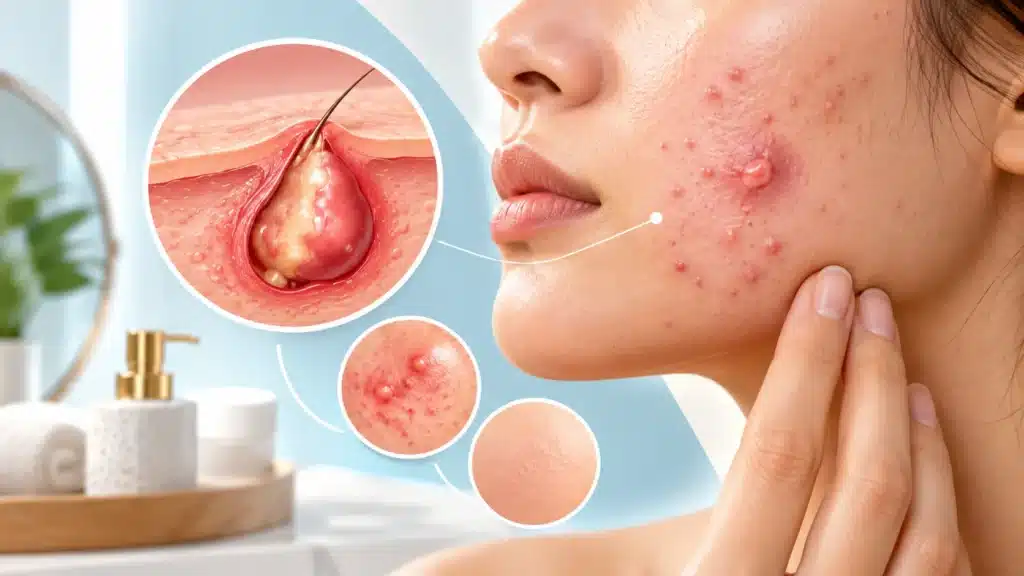
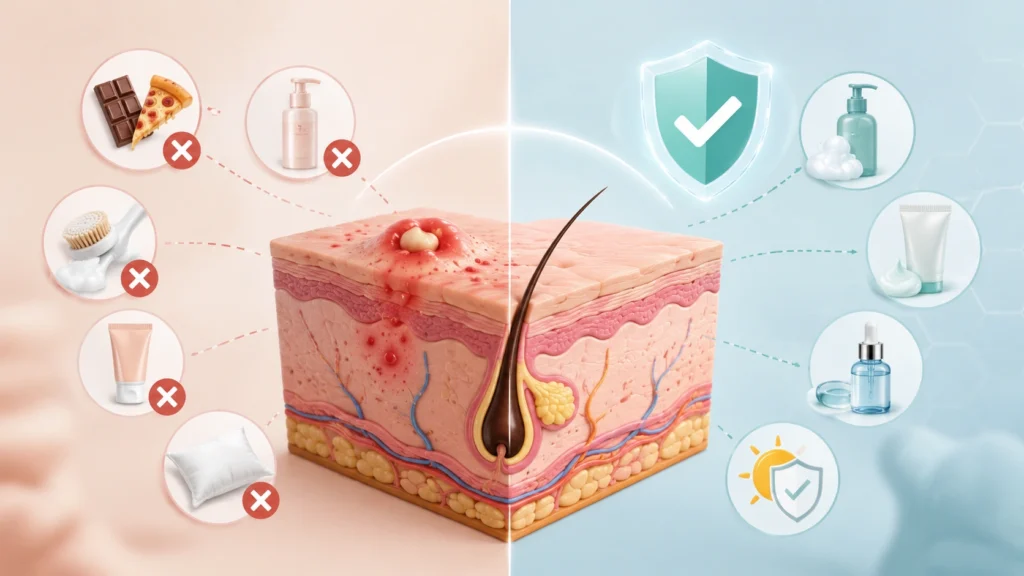
Cystic acne is one of the most severe and painful forms of acne. Unlike regular pimples, cystic acne develops deep under the skin and forms large, painful, inflamed bumps or cysts. These cysts can last for weeks or months and often leave behind scars, dark marks, or uneven skin texture if not treated properly.
Many people confuse cystic acne with normal acne or occasional breakouts. However, cystic acne is different because it goes deeper into the skin and involves more inflammation. It can affect the face, jawline, chest, back, shoulders, and neck. In many cases, it causes not only physical discomfort but also emotional stress, low confidence, and social anxiety, especially in teenagers and young adults.
What is Cystic Acne?
Cystic acne is a severe form of inflammatory acne. It happens when pores become blocked with oil, dead skin cells, and bacteria, leading to deep infection and inflammation under the skin. Unlike surface pimples, cystic acne forms deep nodules or cysts that are painful and often leave scars.
Cystic acne is more common in teenagers and young adults but can occur at any age. It may be linked to hormones, genetics, stress, diet, or skincare habits. Because it affects deeper layers of skin, it often needs stronger treatment than over-the-counter products.
Types of Acne
Acne can range from mild to severe. Understanding the type helps guide the right treatment.
Based on severity
- Mild acne, with a few blackheads, whiteheads, or small pimples.
- Moderate acne, with more frequent pimples, redness, and some inflammation.
- Severe acne, with deep cysts, nodules, and widespread inflammation.
- Cystic acne, the most severe form, with painful deep cysts and high risk of scarring.
Based on lesion type
- Comedonal acne, with blackheads and whiteheads.
- Inflammatory acne, with red, swollen pimples.
- Nodular acne, with large, hard bumps under the skin.
- Cystic acne, with soft, painful, fluid-filled cysts deep in the skin.
Based on location
- Facial acne, affecting cheeks, forehead, chin, or jawline.
- Body acne, affecting chest, back, shoulders, or neck.
- Hormonal acne, often along the jawline and chin in women.
Causes of Cystic Acne
Cystic acne happens due to a combination of factors that increase oil production, block pores, and trigger inflammation.
Common causes include:
- Excess oil production by the skin.
- Clogged pores from dead skin cells.
- Bacteria growing inside blocked pores.
- Hormonal changes during puberty, periods, pregnancy, or PCOS.
- Family history of severe acne.
- Stress, which can increase oil production and inflammation.
- Certain medicines such as steroids or some hormonal drugs.
- Diet high in sugar, dairy, or processed foods in some people.
- Heavy or oily skincare and cosmetic products.
- Friction from masks, helmets, or tight clothing.
Why cysts form
When a pore becomes deeply blocked, oil and bacteria build up inside. The immune system reacts, causing swelling and pus formation. This leads to a painful cyst deep under the skin. Because the inflammation is deep, it can damage surrounding tissue and leave scars after healing.
Risk Factors for Cystic Acne
Some people are more likely to develop cystic acne than others.
Higher-risk groups
- Teenagers going through puberty.
- Young adults with hormonal imbalance.
- Women with PCOS or irregular periods.
- People with a family history of severe acne.
- Those with oily skin type.
- People under high stress.
- Those using heavy cosmetics or oily products.
- Individuals with poor skincare habits.
- People with certain medical conditions or medicines.
Why risk increases in these groups
- Hormones increase oil production.
- Genetics can make skin more prone to inflammation.
- Stress and poor sleep worsen breakouts.
- Certain products block pores and trap oil.
- Medical conditions can disturb hormone balance.
Symptoms of Cystic Acne
Cystic acne has distinct signs that make it different from mild acne.
Common symptoms include:
- Large, painful bumps deep under the skin.
- Red or skin-colored cysts.
- Swelling and tenderness.
- Pus-filled lesions in some cases.
- Recurrent breakouts in the same areas.
- Scars or dark marks after healing.
- Oily skin and enlarged pores.
- Pain when touching the affected area.
Where cystic acne usually appears
- Face, especially cheeks, jawline, and chin.
- Neck.
- Chest.
- Back.
- Shoulders.
Emotional and social impact
Cystic acne can affect confidence and mental well-being. Many patients feel embarrassed, anxious, or depressed due to visible breakouts and scars. This is why treatment should address both skin health and emotional support.
Cystic Acne in Different Age Groups
Cystic acne can affect people at different stages of life.
In teenagers
- Common during puberty due to hormonal changes.
- Often appears on the face, chest, and back.
- May improve with age but needs treatment to prevent scars.
In young adults
- Often linked to stress, diet, or hormonal imbalance.
- May persist into the twenties or thirties.
- Needs consistent skincare and medical treatment.
In women
- May be related to menstrual cycle, PCOS, or pregnancy.
- Often appears along the jawline and chin.
- May require hormonal evaluation and treatment.
In older adults
- Less common but possible due to hormonal changes or medicines.
- May be linked to other skin conditions.
- Needs careful evaluation to rule out other causes.
How is Cystic Acne Diagnosed?
Diagnosis is usually based on skin examination and medical history. In some cases, further tests may be needed to identify underlying causes.
Diagnostic steps
- Detailed skin examination.
- History of breakouts, duration, and pattern.
- Review of skincare and cosmetic products.
- Menstrual and hormonal history in women.
- Family history of acne.
- Assessment of scarring and skin type.
Tests that may be done if needed
- Hormonal tests in women with irregular periods or PCOS signs.
- Blood tests to check for underlying conditions.
- Skin culture if infection is suspected.
- Skin biopsy in rare or unusual cases.
Why diagnosis matters
Cystic acne can sometimes be confused with other skin conditions such as rosacea, folliculitis, or skin infections. Proper diagnosis ensures the right treatment and prevents worsening or scarring.
Treatment for Cystic Acne
Treatment depends on the severity, location, and cause of acne. The goal is to reduce inflammation, prevent new cysts, and minimize scarring.
1. Topical treatments
Creams, gels, or lotions applied directly to the skin can help reduce oil and bacteria.
- Retinoids to unclog pores and improve skin renewal.
- Benzoyl peroxide to reduce bacteria.
- Topical antibiotics to control infection.
- Azelaic acid to reduce inflammation and marks.
2. Oral medicines
For moderate to severe cystic acne, oral medicines may be needed.
- Oral antibiotics to reduce bacteria and inflammation.
- Hormonal treatment for women with hormonal acne or PCOS.
- Isotretinoin for severe, resistant, or scarring acne.
3. Procedural treatments
Some patients benefit from in-clinic procedures.
- Chemical peels to improve skin texture and reduce marks.
- Laser therapy to reduce inflammation and scars.
- Light therapy to target acne-causing bacteria.
- Drainage or extraction of large cysts under medical supervision.
- Steroid injections for very large, painful cysts.
4. Skincare routine
A simple, gentle routine supports medical treatment.
- Use a mild, non-comedogenic cleanser twice daily.
- Avoid harsh scrubbing or over-washing.
- Use oil-free, non-comedogenic moisturizer.
- Apply sunscreen daily, especially if using retinoids or peels.
- Avoid picking or squeezing cysts.
5. Lifestyle and diet support
Daily habits can influence acne severity.
- Eat a balanced diet with fruits, vegetables, and whole grains.
- Limit high-sugar and highly processed foods.
- Reduce dairy intake if it seems to worsen acne.
- Manage stress through exercise, sleep, or relaxation.
- Get adequate sleep.
- Avoid touching the face frequently.
6. Follow-up care
Cystic acne often needs ongoing management.
- Regular follow-up with a dermatologist.
- Adjust treatment based on response.
- Monitor for side effects of medicines.
- Treat scars after active acne is controlled.
Home Care for Mild Cystic Acne
For mild cases, home care can support medical treatment.
Helpful home care steps
- Wash face gently twice daily.
- Use non-comedogenic products.
- Avoid heavy makeup or remove it before sleeping.
- Keep hair clean and away from the face.
- Change pillowcases regularly.
- Avoid picking or squeezing cysts.
- Use sunscreen daily.
- Maintain a healthy diet and sleep routine.
Things to avoid
- Harsh scrubs or exfoliants.
- Oily or greasy products.
- Touching or popping cysts.
- Over-washing or using too many products.
- Self-medication with strong medicines without advice.
Diet Advice for Cystic Acne
Diet may influence acne in some people, especially those sensitive to certain foods.
Foods that may help
- Fruits and vegetables rich in antioxidants.
- Whole grains.
- Lean proteins.
- Nuts and seeds.
- Water and hydrating fluids.
Foods that may worsen acne in some people
- High-sugar snacks and drinks.
- Highly processed foods.
- Excess dairy or skim milk in sensitive individuals.
- Very oily or fried foods.
Important dietary points
- Diet alone may not cure cystic acne but can support treatment.
- Individual triggers vary from person to person.
- Keeping a food diary can help identify personal triggers.
- A balanced diet supports overall skin health.
Possible Complications
Untreated or severe cystic acne can lead to long-term skin and emotional problems.
Possible complications
- Permanent scars or pitted skin.
- Dark spots or hyperpigmentation.
- Skin texture changes.
- Recurrent painful cysts.
- Low self-esteem or anxiety.
- Depression in severe cases.
Why complications happen
Deep inflammation damages skin tissue and collagen. When cysts heal, they may leave scars or uneven texture. Early treatment reduces this risk and improves long-term skin appearance.
When to See a Dermatologist
Medical evaluation is important if acne is severe, painful, or not improving with home care.
- Large, painful cysts.
- Acne that leaves scars.
- Breakouts that do not improve with over-the-counter products.
- Acne along the jawline or chin with hormonal signs.
- Emotional distress due to acne.
- Sudden worsening of acne.
- Acne with other symptoms such as irregular periods or excessive hair growth.
Prevention of Cystic Acne
While not all cystic acne can be prevented, risk can be reduced.
Prevention pointers
- Follow a gentle skincare routine.
- Use non-comedogenic products.
- Avoid heavy or oily cosmetics.
- Keep skin clean but do not over-wash.
- Manage stress and sleep well.
- Eat a balanced diet.
- Avoid picking or squeezing pimples.
- Seek early treatment for hormonal imbalance.
- Follow dermatologist advice for high-risk skin types.
For people with family history
- Start skincare early.
- Monitor for early signs of acne.
- Seek medical advice before scarring develops.
Why Choose Rama Hospital for Cystic Acne Treatment?
Cystic acne needs expert care because it is deeper, more painful, and more likely to scar than regular acne. A dermatologist can create a personalized plan based on skin type, severity, and underlying causes.
- Accurate diagnosis of acne type and severity.
- Personalized treatment plans.
- Access to advanced treatments such as peels, lasers, and injections.
- Management of hormonal or underlying causes.
- Scar prevention and treatment.
- Emotional and psychological support.
Frequently Asked Questions (FAQs)
Is cystic acne the same as regular acne?
No, cystic acne is deeper and more severe. It forms painful cysts under the skin and has a higher risk of scarring compared to surface pimples.
Can cystic acne be cured?
Cystic acne can be controlled and often cleared with proper treatment. Some people may need long-term management to prevent recurrence, especially if hormones or genetics play a role.
What causes cystic acne?
It is caused by a combination of excess oil, clogged pores, bacteria, hormones, and inflammation. Genetics, stress, diet, and skincare habits can also contribute.
Can cystic acne leave scars?
Yes, cystic acne often leaves scars because the inflammation is deep. Early treatment and avoiding picking or squeezing can reduce scarring.
How long does it take to see results with treatment?
Results vary. Some improvement may be seen in a few weeks, but full control may take several months. Consistency with treatment and follow-up is important.
Is diet linked to cystic acne?
Diet may worsen acne in some people, especially high-sugar or dairy-rich foods. However, diet alone is rarely the sole cause and should be considered along with other factors.
Can cystic acne be treated at home?
Mild cases may improve with gentle skincare and lifestyle changes. But cystic acne usually needs medical treatment to prevent scarring and control deep inflammation.
Is cystic acne more common in women?
It can affect both men and women, but hormonal cystic acne along the jawline is more common in women, especially those with PCOS or irregular periods.
When should I see a dermatologist?
See a dermatologist if cysts are large, painful, recurrent, or leaving scars. Early treatment gives the best chance of clear skin and minimal scarring.
Conclusion
Cystic acne is a severe and often painful form of acne that can affect both skin health and emotional well-being. It develops deep under the skin and is more likely to leave scars if not treated early. The good news is that with proper diagnosis, medical treatment, skincare, and lifestyle support, cystic acne can be controlled effectively.
The most important steps are early evaluation, personalized treatment, gentle skincare, and prevention of scarring. For patients with painful cysts, recurrent breakouts, or visible scars, a dermatologist can make a major difference in both skin appearance and confidence. With the right care, most people can achieve clearer, healthier skin and reduce the risk of long-term damage.
Rama Hospital can help evaluate cystic acne, identify underlying causes, and provide a comprehensive treatment plan that supports clear skin, scar prevention, and improved quality of life.