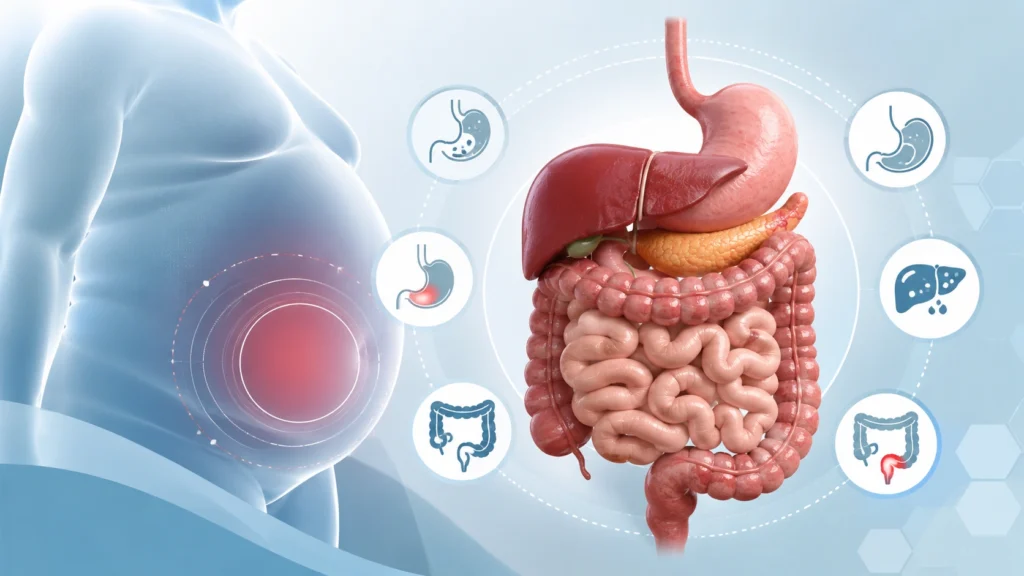
Obesity does not only affect body weight. It also affects how the digestive system works, how the liver processes fat, how the stomach empties, how pressure builds inside the abdomen, and how the intestines behave. Because of this, people who are overweight or obese often develop a group of digestive problems that are linked to excess weight. These are commonly called obesity-related GI disorders.
Many patients think of obesity only as a problem of appearance, fitness, or diabetes risk. But in reality, obesity can directly worsen acid reflux, increase abdominal pressure, trigger fatty liver disease, contribute to gallstones, cause bloating, slow bowel movements, worsen constipation, and make some gastrointestinal symptoms more difficult to manage. It can also make treatment less effective unless the underlying weight issue is addressed.
What are Obesity-Related GI disorders?
Obesity-related GI disorders are digestive or gastrointestinal problems that occur more commonly, more severely, or more frequently in people with excess body weight. These disorders may involve the esophagus, stomach, liver, gallbladder, intestines, pancreas, or surrounding abdominal organs. The extra weight itself can change pressure patterns, hormone signaling, fat metabolism, and inflammation in the body, all of which affect digestion.
The digestive system is not isolated from body weight. When a person carries excess abdominal fat, the pressure inside the abdomen rises. This can push stomach contents upward, worsen reflux, affect bowel movement patterns, and place more strain on the liver and gallbladder. In addition, obesity is associated with insulin resistance, inflammation, and altered gut microbiome function, which can worsen several digestive conditions.
Some obesity-related GI disorders are mild and manageable with diet changes. Others may lead to long-term complications if not treated. In many cases, the most effective treatment is not only symptom control but also weight reduction through a structured medical plan. That is why patients often need both digestive care and obesity management at the same time.
Why obesity affects the digestive system?
Obesity changes the digestive system in several important ways. It affects mechanical pressure, metabolism, inflammation, and the function of digestive organs. This is why obesity-related GI disorders are so common.
Main reasons include:
- Increased pressure inside the abdomen, which can push acid upward and worsen reflux.
- Fat accumulation around the liver, gallbladder, and intestines, which can affect organ function.
- Changes in hormone activity that affect hunger, satiety, digestion, and bowel movement.
- Chronic low-grade inflammation, which can worsen several gastrointestinal conditions.
- Slower or altered digestive motility in some patients.
- Increased risk of insulin resistance and fatty liver disease.
- Higher likelihood of gallstones and bile-related problems.
- Greater strain on the stomach and esophageal sphincter.
- Reduced physical activity, which can contribute to constipation and bloating.
The result is not just one disease but a pattern of digestive problems that often appear together. Some patients have reflux, fatty liver, and constipation at the same time, while others develop bloating, gallbladder disease, and abdominal discomfort together.
Common Obesity-Related GI Disorders
Obesity can contribute to several digestive conditions. Some of the most common are described below.
- GERD and acid reflux: GERD, or gastroesophageal reflux disease, is one of the most common obesity-related GI disorders. It happens when stomach acid repeatedly flows back into the food pipe, causing burning, discomfort, sour taste, regurgitation, cough, or throat irritation. Excess abdominal weight can increase pressure on the stomach and weaken the barrier that normally keeps acid from moving upward.
- Fatty liver disease: Non-alcoholic fatty liver disease, often shortened to NAFLD or MASLD in newer terminology, is very common in people with obesity. Fat builds up inside the liver cells and can lead to inflammation, liver enlargement, and in advanced cases, scarring or fibrosis. Many patients do not know they have fatty liver until it is detected on ultrasound or blood testing.
- Gallstones: Obesity increases the risk of gallstones, which are hardened deposits that form inside the gallbladder. These stones can cause pain in the right upper abdomen, nausea, vomiting, and digestive discomfort, especially after fatty meals. Sudden weight changes can also increase gallstone risk.
- Constipation: Many obese patients struggle with constipation because of reduced activity, low fiber intake, poor hydration, or digestive slowing. Constipation can cause bloating, discomfort, incomplete bowel movements, and abdominal pressure.
- Bloating and abdominal distension: Obesity can worsen bloating by slowing digestion, changing gut motility, and increasing abdominal pressure. Some patients also swallow more air, eat large meals, or consume more processed food, which can worsen the problem.
- Hemorrhoids and anal discomfort: Constipation, straining, and pressure in the abdomen can contribute to hemorrhoids. Obese patients may experience pain, itching, swelling, or bleeding during bowel movements.
- Functional dyspepsia: This is a condition where the upper digestive tract feels uncomfortable without a major structural cause. It may cause fullness, early satiety, upper abdominal discomfort, or nausea. Obesity and poor eating patterns can make it worse.
- Obesity-related liver and bile disorders: Fatty liver, gallbladder problems, and bile flow issues are all more common in obesity. These conditions may overlap and need careful evaluation if upper abdominal pain or abnormal liver tests are present.
Symptoms of Obesity-Related GI Disorders
The symptoms vary depending on which digestive organ is affected, but many patients notice more than one issue at the same time.
Common symptoms include:
- Heartburn or acid burning in the chest.
- Sour taste in the mouth.
- Regurgitation of food or acid.
- Upper abdominal fullness.
- Bloating after meals.
- Nausea.
- Constipation.
- Infrequent bowel movements.
- Straining during stools.
- Right upper abdominal pain.
- Excess gas.
- Feeling full quickly.
- Abdominal heaviness.
- Poor digestion after fatty meals.
- Throat irritation or chronic cough related to reflux.
- Fatigue in patients with fatty liver or metabolic issues.
Symptoms that suggest something more serious
- Vomiting repeatedly.
- Blood in stool or black stools.
- Severe abdominal pain.
- Jaundice or yellowing of the eyes.
- Sudden worsening of reflux.
- Difficulty swallowing.
- Unexplained weight loss.
- Fever with abdominal pain.
- Persistent nausea or loss of appetite.
- Swelling of the abdomen.
These symptoms should not be ignored because they may point to complications or another underlying disorder that needs treatment.
Risk Factors for Obesity-Related GI Disorders
Not every obese patient develops digestive disease, but some factors raise the risk.
Risk factors include:
- Central or abdominal obesity.
- Sedentary lifestyle.
- High intake of fried, processed, and high-fat food.
- Low fiber intake.
- Frequent overeating or large meals.
- Poor meal timing.
- Diabetes or insulin resistance.
- High cholesterol or triglycerides.
- Rapid weight gain.
- Rapid weight loss.
- Family history of gallstones or fatty liver.
- Smoking.
- Alcohol use.
- Sleep disturbance and irregular daily habits.
Obesity-related GI disorders are often part of a broader metabolic problem, not just a stomach issue. That is why the digestive system should be assessed along with body weight, sugar levels, liver health, and overall lifestyle.
How Doctors Diagnose These Conditions?
Diagnosis starts with a detailed history and physical examination. The doctor will ask about symptoms, meal patterns, weight history, bowel habits, medicines, and other health conditions.
Common diagnostic steps include:
- A review of digestive symptoms and their timing.
- Physical examination of the abdomen.
- Checking body weight, waist size, and obesity severity.
- Blood tests to assess liver function, sugar, cholesterol, and inflammation.
- Ultrasound to check for fatty liver or gallstones.
- Endoscopy if reflux or upper GI symptoms are severe or persistent.
- Stool tests if bowel symptoms are unusual or severe.
- Additional tests if abdominal pain suggests another diagnosis.
Tests commonly considered depending on symptoms
- Liver function tests.
- Blood sugar and HbA1c.
- Lipid profile.
- Abdominal ultrasound.
- Upper GI endoscopy.
- Stool examination.
- Imaging if gallbladder or liver disease is suspected.
What doctors try to understand
- Is the symptom caused by obesity itself?
- Is the patient dealing with reflux, fatty liver, gallstones, or constipation?
- Are there warning signs that need urgent care?
- Is weight management part of the treatment plan?
- Does the patient need gastroenterology, nutrition, or bariatric evaluation?
Treatment & Management
The treatment of obesity-related GI disorders usually works best when it is personalized. The goal is not only to ease symptoms but also to correct the underlying metabolic and weight-related cause.
1. Lifestyle modification
Lifestyle change is the base of treatment. Even modest weight reduction can improve reflux, liver health, bowel movement patterns, and abdominal pressure.
- Reduce excess calorie intake.
- Avoid overeating.
- Eat smaller meals.
- Increase fiber gradually.
- Drink enough water.
- Walk regularly or do suitable exercise.
- Avoid long periods of sitting.
- Improve sleep timing.
- Reduce late-night eating.
- Limit greasy, spicy, and processed foods if reflux is present.
2. Diet changes
Diet has a major effect on GI symptoms in obesity.
- Choose high-fiber foods like vegetables, fruits, whole grains, and pulses if tolerated.
- Reduce fried and high-fat meals.
- Avoid heavy meals late at night.
- Limit carbonated drinks if bloating is a problem.
- Control portion size.
- Keep meal timing consistent.
- Reduce sugary snacks and refined carbohydrates if fatty liver or insulin resistance is present.
3. Medical treatment for symptoms
Depending on the symptom, the doctor may prescribe treatment to relieve discomfort.
- Acid suppression medicine for reflux.
- Medicines to relieve constipation.
- Supportive treatment for bloating.
- Liver monitoring and metabolic control for fatty liver.
- Pain control and gallbladder evaluation if stones are present.
- Other symptom-specific medicines under supervision.
4. Treatment of specific conditions
Different obesity-related GI disorders need targeted care.
For GERD and reflux
- Weight reduction.
- Avoid late-night meals.
- Avoid trigger foods.
- Use acid-control medicines if needed.
- Elevate the head while sleeping if advised.
- Consider further evaluation if symptoms persist.
For fatty liver
- Weight loss under medical guidance.
- Better sugar and cholesterol control.
- Exercise.
- Nutrition support.
- Regular liver monitoring.
For gallstones
- Medical review if pain is recurrent.
- Ultrasound-based follow-up.
- Surgery may be needed if gallstones are causing repeated symptoms or complications.
For constipation
- Increase fiber gradually.
- Drink enough fluids.
- Increase physical activity.
- Review medicines that may slow bowel movement.
- Use stool softeners or laxatives only if advised.
For bloating
- Eat slowly.
- Avoid gas-producing triggers if they worsen symptoms.
- Reduce overeating.
- Check for constipation, reflux, or food intolerance.
- Manage weight and meal rhythm.
5. Weight loss treatment
This is often the most important long-term treatment. In many patients, improving obesity improves the digestive disorder itself.
- Nutrition counseling.
- Structured weight-loss programs.
- Medical weight management.
- Exercise planning.
- Behavioral support.
- Bariatric evaluation in selected patients.
Weight loss should be gradual and safe. Rapid weight loss can sometimes worsen gallstone risk, so it must be medically supervised.
6. Bariatric and metabolic surgery
For some patients with severe obesity and obesity-related GI or metabolic disease, surgery may be considered. This is not for everyone, but it can be highly effective in the right patient.
- Sleeve gastrectomy.
- Gastric bypass.
- Other metabolic procedures depending on suitability.
- Surgery may improve reflux in some cases and worsen it in others depending on the procedure, so selection matters.
- The decision should be made by a specialist team.
7. Endoscopic or advanced GI procedures
Some centers may offer advanced procedures for selected patients depending on the issue.
- Endoscopic evaluation for reflux or upper GI symptoms.
- Advanced liver assessment if needed.
- Gallbladder-related evaluation.
- Endoscopic or surgical support if complications exist.
What other treatments may be needed?
Because obesity affects several organ systems, treatment may involve more than one specialty.
Additional care may include:
- Gastroenterology consultation.
- Nutrition and diet planning.
- Bariatric surgery consultation.
- Endoscopy if reflux or upper GI symptoms are severe.
- Liver specialist review for fatty liver.
- General surgery review for gallstones.
- Diabetes and metabolic management.
- Physiotherapy or supervised exercise planning.
- Psychological support for long-term weight control.
Why multiple specialties may help: Obesity-related GI disorders are rarely isolated. A patient may need reflux treatment, fatty liver monitoring, weight-loss support, and gallbladder evaluation all at the same time. A coordinated plan works better than treating each symptom separately.
Diet Tips for Obesity-Related GI Disorders
Diet is not just about weight loss. It is also one of the best ways to reduce GI symptoms.
Helpful dietary pointers:
- Eat in smaller portions.
- Chew food slowly and properly.
- Avoid skipping meals if it leads to overeating later.
- Reduce oily, fried, and very spicy food if reflux is present.
- Include fiber-rich food, but increase it slowly to avoid bloating.
- Keep hydrated throughout the day.
- Avoid large late-night meals.
- Reduce sugar-heavy drinks and snacks.
- Add more home-cooked meals.
- Limit processed and packaged food.
Simple eating habits that help
- Stop eating when comfortably full.
- Maintain regular meal times.
- Avoid lying down immediately after meals.
- Choose balanced meals with protein, fiber, and healthy fats.
- Follow personalized diet advice if diabetes or liver disease is also present.
Possible Risks and Complications
If obesity-related GI disorders are not managed, the symptoms and underlying metabolic problems can worsen over time.
Possible complications include:
- Chronic reflux and esophageal irritation.
- Worsening fatty liver disease.
- Progression of liver inflammation or fibrosis.
- Recurrent gallbladder attacks.
- Severe constipation and hemorrhoids.
- Poor appetite and discomfort.
- Reduced quality of life.
- Sleep disturbance due to reflux or abdominal discomfort.
- Greater risk of diabetes-related digestive issues.
- Higher surgical or anesthetic risk in advanced obesity.
When should you see a doctor?
A doctor should be seen if digestive symptoms happen often or start affecting daily life.
Seek medical advice if you have:
- Frequent heartburn.
- Repeated bloating or abdominal heaviness.
- Ongoing constipation.
- Right upper abdominal pain.
- Nausea after meals.
- Yellowing of the eyes or skin.
- Blood in stool.
- Persistent reflux despite medicines.
- Unexplained abdominal pain.
- Recurrent vomiting.
- Symptoms of fatty liver on testing.
- Known obesity with digestive discomfort that keeps returning.
Why Choose Rama Hospital for Obesity-Related GI Disorders?
Patients with obesity-related GI disorders often need a complete evaluation rather than symptom-only treatment. A hospital setting helps identify whether the problem is reflux, fatty liver, gallstones, constipation, or another digestive disorder linked to obesity.
- More accurate diagnosis of digestive and metabolic causes.
- Access to gastroenterology and obesity management together.
- Testing for fatty liver, gallstones, and reflux complications.
- Diet and lifestyle guidance under medical supervision.
- Treatment planning based on the patient’s overall health.
- Follow-up for weight-related digestive issues.
- Support for long-term improvement rather than temporary relief.
Frequently Asked Questions (FAQs)
1. What are obesity-related GI disorders?
These are digestive problems that happen more often or become worse because of excess body weight. Common examples include acid reflux, fatty liver, gallstones, constipation, and bloating. Obesity affects digestion through pressure, inflammation, and metabolic changes.
2. Can obesity cause acid reflux?
Yes, obesity is one of the major risk factors for reflux and GERD. Extra abdominal pressure can push stomach acid upward into the food pipe, causing burning, regurgitation, and discomfort after meals or at night.
3. Is fatty liver common in obesity?
Yes, fatty liver is very common in obese and overweight patients. It often does not cause obvious symptoms in early stages, but it can become serious if not monitored and treated properly.
4. Can weight loss improve digestive problems?
Yes, even modest weight loss can improve reflux, constipation, bloating, and fatty liver in many patients. The key is to lose weight safely and gradually under proper medical guidance.
5. Are gallstones linked to obesity?
Yes, obesity increases gallstone risk. People may develop pain in the right upper abdomen, nausea, or digestive discomfort, especially after fatty meals. Sudden weight changes can also increase the risk.
6. Should I see a gastroenterologist for these symptoms?
Yes, if symptoms like reflux, constipation, bloating, or abdominal pain keep coming back, a gastroenterologist can help identify the cause. If obesity is part of the problem, treatment may also involve weight management and diet support.
7. Can obesity-related GI disorders be treated without surgery?
Yes, many patients improve with diet changes, exercise, medicines, and medical weight loss. Surgery is only considered for selected patients with severe obesity or other related medical problems.
Conclusion
Obesity-related GI disorders are a common but often underrecognized group of digestive problems that affect the stomach, liver, gallbladder, intestines, and overall digestion. They are not just symptoms of overeating. They are medical conditions influenced by abdominal pressure, fat metabolism, inflammation, food habits, and body weight.
The good news is that these disorders are often treatable. In many patients, the most effective plan includes symptom control, diet improvement, physical activity, and weight management. In more complex cases, specialist GI care, liver evaluation, gallbladder treatment, or bariatric support may be needed.
The key message is simple. If obesity and digestive symptoms are happening together, both should be addressed together. That is the best way to reduce symptoms, prevent complications, and improve long-term health.
Rama Hospital can provide comprehensive evaluation and treatment for obesity-related GI disorders, with care focused on the digestive system, metabolic health, and sustainable weight management.