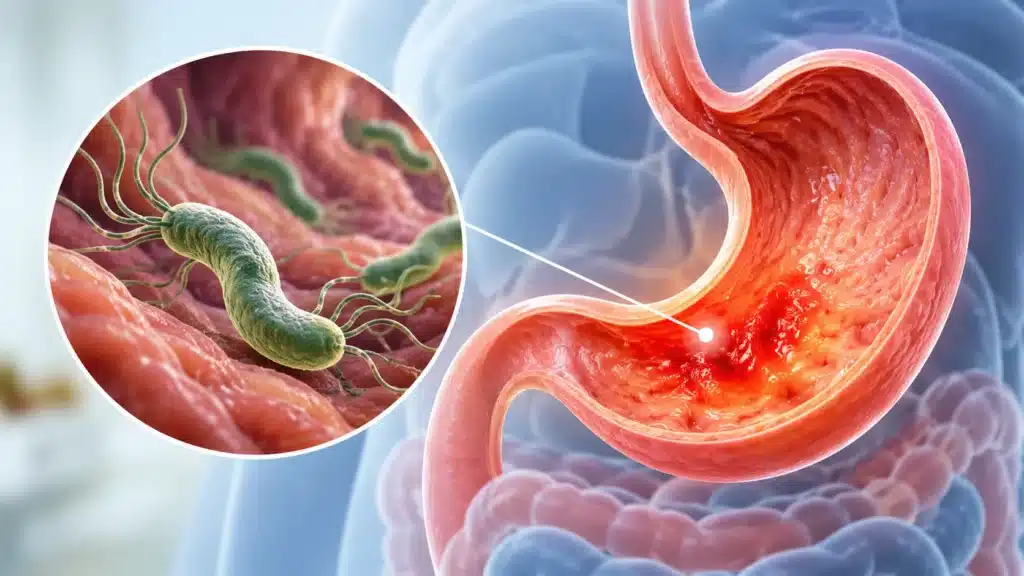
Helicobacter pylori, often called H. pylori, is a type of bacteria that infects the stomach lining. It is one of the most common bacterial infections in the world and can affect people of all ages. Many people carry this bacteria for years without knowing it because it may not cause any symptoms at all. In others, it can lead to gastritis, stomach ulcers, bloating, pain, nausea, and in some cases more serious digestive problems.
The tricky part about H. pylori is that it can stay in the stomach for a long time without being noticed. The bacteria can survive the acidic environment of the stomach by attaching to the stomach lining and producing substances that protect it from acid. Over time, this can cause inflammation and damage to the stomach wall. Some people may only have mild discomfort, while others may develop ulcers or even an increased risk of stomach cancer if the infection is left untreated for many years.
Helicobacter pylori is a spiral-shaped bacteria that lives in the stomach lining. It is one of the few bacteria that can survive in the acidic environment of the stomach. Once it enters the body, it attaches to the stomach wall and can cause inflammation over time.
The bacteria is usually acquired in childhood, often through contaminated food, water, or close contact with an infected person. It can remain in the stomach for years or even decades without causing noticeable problems. In some people, it never causes symptoms. In others, it leads to chronic gastritis, ulcers, or other digestive issues.
The name itself gives a clue. “Helico” refers to the spiral shape of the bacteria, and “pylori” refers to the pylorus, the lower part of the stomach that connects to the small intestine. The bacteria is often found in this area and can affect digestion and acid production.
H. pylori is one of the most widespread bacterial infections globally. It is estimated that a large percentage of the world’s population carries this bacteria at some point in life. In many developing countries, including India, the infection rate is higher due to factors such as crowded living conditions, unsafe water, and close contact in families.
H. pylori spreads mainly through oral-oral or fecal-oral routes. This means it can pass from one person to another through contaminated food, water, or close contact.
Family members often share food, utensils, and living spaces. If one person is infected, others in the household may be at risk. This is why testing and treatment of all affected family members may be considered in some cases.
The main cause of H. pylori infection is exposure to the bacteria. However, some factors increase the risk of getting infected or developing complications.
The response to H. pylori varies from person to person. Some people’s immune systems keep the bacteria under control without much damage. Others develop chronic inflammation that leads to gastritis or ulcers. Genetics, diet, smoking, alcohol use, and other stomach conditions can all play a role.
Many people with H. pylori have no symptoms at all. When symptoms do appear, they are often related to gastritis or ulcers caused by the bacteria.
One of the most important effects of H. pylori is its role in causing stomach and duodenal ulcers. The bacteria damages the protective lining of the stomach, allowing acid to irritate the tissue underneath.
Ulcers can cause pain, bleeding, and in rare cases perforation of the stomach wall. They can also lead to anemia if they bleed slowly over time. Treating H. pylori is often the key to healing ulcers and preventing them from coming back.
Long-term H. pylori infection is linked to an increased risk of stomach cancer in some people. The bacteria causes chronic inflammation that can lead to changes in the stomach lining over many years.
Treating H. pylori early can reduce the risk of developing ulcers and may lower the long-term risk of stomach cancer. This is especially important for people with a family history of stomach cancer or those with persistent symptoms.
Diagnosis is based on symptoms, medical history, and specific tests to detect the bacteria.
Since many people have no symptoms, testing is important when there are signs of gastritis, ulcers, or persistent digestive discomfort. Accurate testing ensures the right treatment is given.
Treatment aims to eliminate the bacteria, heal any damage to the stomach lining, and prevent complications.
The main treatment is a combination of antibiotics to kill the bacteria.
These medicines help reduce stomach acid and allow the stomach lining to heal.
In some cases, bismuth subsalicylate is added to the treatment regimen.
After treatment, a test is often done to confirm the bacteria is gone.
If ulcers or other complications are present, additional care may be needed.
Along with medical treatment, diet and lifestyle changes can support recovery.
Preventing H. pylori is possible with good hygiene and safe food practices.
If left untreated, H. pylori can lead to serious complications over time.
The bacteria causes ongoing inflammation that damages the stomach lining. Over years, this damage can lead to ulcers, bleeding, or changes in cells that may become cancerous in some people.
Medical evaluation is important if symptoms are persistent or severe.
Common signs include stomach pain, bloating, nausea, and indigestion. A breath test, stool test, or endoscopy can confirm the infection. Many people have no symptoms at all.
Yes, it can spread through contaminated food, water, or close contact. Good hygiene and safe food practices help reduce the risk of spreading it to others.
Yes, most infections can be cured with a combination of antibiotics and acid-reducing medicines. Treatment usually lasts 10 to 14 days, and follow-up testing confirms the bacteria is gone.
Long-term untreated H. pylori can increase the risk of stomach cancer in some people. Early treatment reduces this risk significantly. Not everyone with H. pylori will develop cancer.
Home care can help with symptoms, but antibiotics are needed to eliminate the bacteria. Self-treatment without proper testing and medical advice is not recommended.
Most treatment courses last 10 to 14 days. Follow-up testing is done about four weeks after finishing treatment to confirm the infection is cleared.
If one family member is infected, others may be at risk due to shared food and living space. Testing may be considered, especially if others have symptoms.
Helicobacter pylori is a common but serious stomach infection that can lead to gastritis, ulcers, and in some cases stomach cancer if left untreated. Many people carry the bacteria without knowing it, which is why awareness and testing are important.
The key to managing H. pylori is early diagnosis, effective antibiotic treatment, and follow-up to confirm the bacteria is gone. For patients with persistent stomach pain, bloating, or indigestion, a medical evaluation can make a major difference. With the right care, most people recover fully and avoid long-term complications.
Rama Hospital can help evaluate H. pylori symptoms, provide accurate testing, and offer effective treatment plans that support complete recovery and long-term digestive health.


H. pylori (Helicobacter pylori) is a type of bacteria that attacks the lining of your stomach and duodenum (the first part of your small intestine).
No rows found.