
Finding out your child has a heart condition is one of the hardest things a parent can face. But here’s what you need to know first: congenital heart defects are the most common birth defects in the world, and most children with them go on to live full, healthy lives.
What is a congenital heart defect?
A congenital heart defect is a structural problem with the heart that is present from birth. The word “congenital” simply means “present at birth.”
- The heart’s walls, valves, or blood vessels may not form correctly during pregnancy
- These congenital heart abnormalities can affect how blood flows through the heart and to the rest of the body
- Some congenital cardiac defects are minor and need no treatment
- Others are complex and require surgery in the first weeks of life
A congenital heart condition doesn’t mean the heart has stopped working, it means it’s working differently. Early detection makes a significant difference in outcomes.
How common are congenital heart defects?
The numbers sound alarming. But medical progress in this field has been remarkable, especially in specialized centers offering pediatric cardiac surgery in Noida and other metro cities.
Congenital heart defects are far more common than most parents realize.
- Approximately 8 to 10 out of every 1,000 babies are born with a heart defect at birth
- In India, an estimated 1.8 to 2 lakh children are born with congenital heart disease every year
- Congenital heart defects in children account for the largest share of infant deaths caused by birth defects
- With advances in pediatric congenital heart disease care, over 85% of children with this now survive into adulthood
Types of congenital heart defects
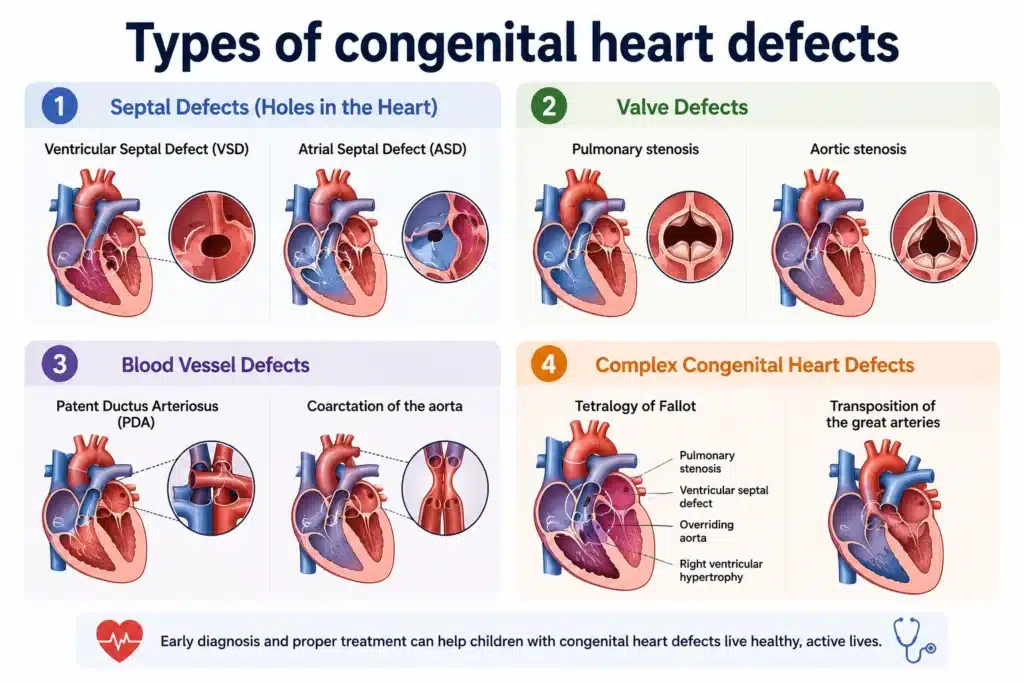
Not all defects look the same. That’s why accurate diagnosis matters as much as treatment.
There are over 40 known types of congenital heart defects. Here are the most common:
Septal Defects (Holes in the Heart)
- Ventricular Septal Defect (VSD): hole between the lower chambers.
- Atrial Septal Defect (ASD): hole between the upper chambers.
- Among the most common congenital cardiac defects seen in children.
Valve Defects
- Pulmonary stenosis: narrowing of the valve controlling blood flow to the lungs.
- Aortic stenosis: narrowing of the valve that controls blood leaving the heart.
Blood Vessel Defects
- Patent Ductus Arteriosus (PDA): a vessel that should close at birth stays open.
- Coarctation of the aorta: narrowing of the main artery carrying blood from the heart.
Complex Defects
- Tetralogy of Fallot: a combination of four separate congenital heart abnormalities.
- Transposition of the great arteries: the two main arteries leaving the heart are reversed.
- These require urgent intervention at the best pediatric cardiology hospital available.
Symptoms parents should watch for
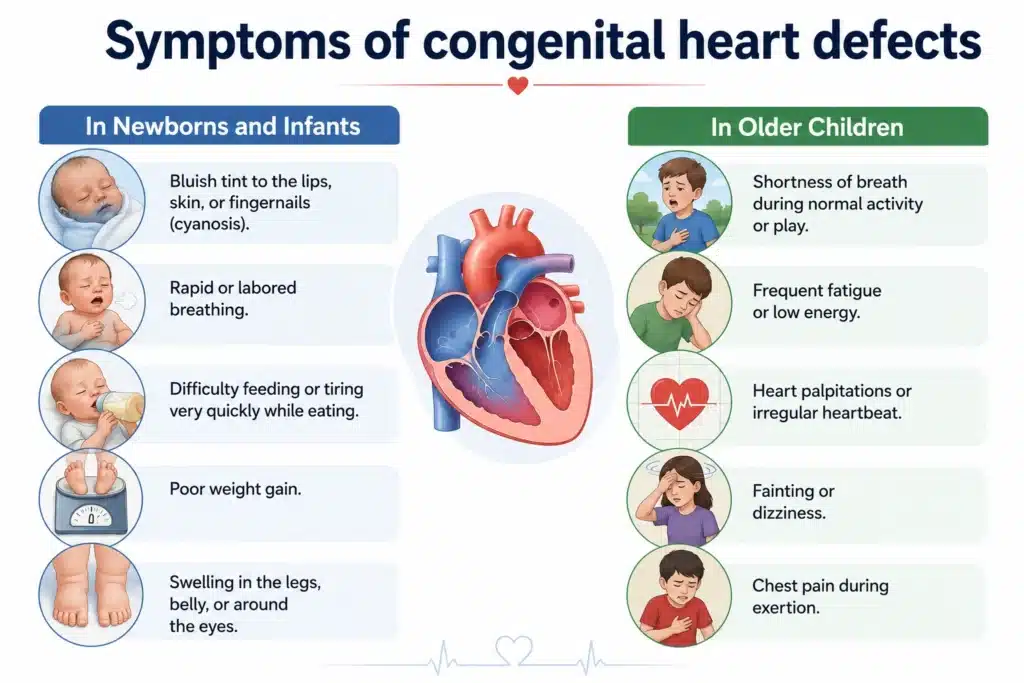
If your child shows any of these signs of congenital heart defect symptoms, don’t wait. Speak to a children’s heart specialist in Noida or your city immediately.
Many defects are picked up before birth or shortly after. But some go undetected for months or even years. Watch for these signs:
In Newborns and Infants
- Bluish tint to the lips, skin, or fingernails (cyanosis).
- Rapid or labored breathing.
- Difficulty feeding or tiring very quickly while eating.
- Poor weight gain.
- Swelling in the legs, belly, or around the eyes.
In Older Children
- Shortness of breath during normal activity or play.
- Frequent fatigue or low energy.
- Heart palpitations or irregular heartbeat.
- Fainting or dizziness.
- Chest pain during exertion.
Causes and risk factors of congenital heart defect
The exact cause of most defects is unknown. But several factors are known to increase the risk.
Knowing the risk factors helps. But many babies born with a congenital heart defect have no identifiable cause at all.
Genetic Factors
- Family history of congenital heart disease raises the risk.
- Chromosomal conditions like Down syndrome often come with congenital cardiac defects.
- Gene mutations passed from parents can contribute to congenital heart abnormalities.
During Pregnancy
- Infections such as rubella in the first trimester.
- Poorly controlled diabetes in the mother.
- Certain medications taken during early pregnancy.
- Alcohol or drug use during pregnancy.
- Exposure to environmental toxins.
Other Risk Factors
- Obesity in the mother before pregnancy.
- Advanced maternal age.
- IVF pregnancies (slightly higher risk).
How congenital heart defects are diagnosed?
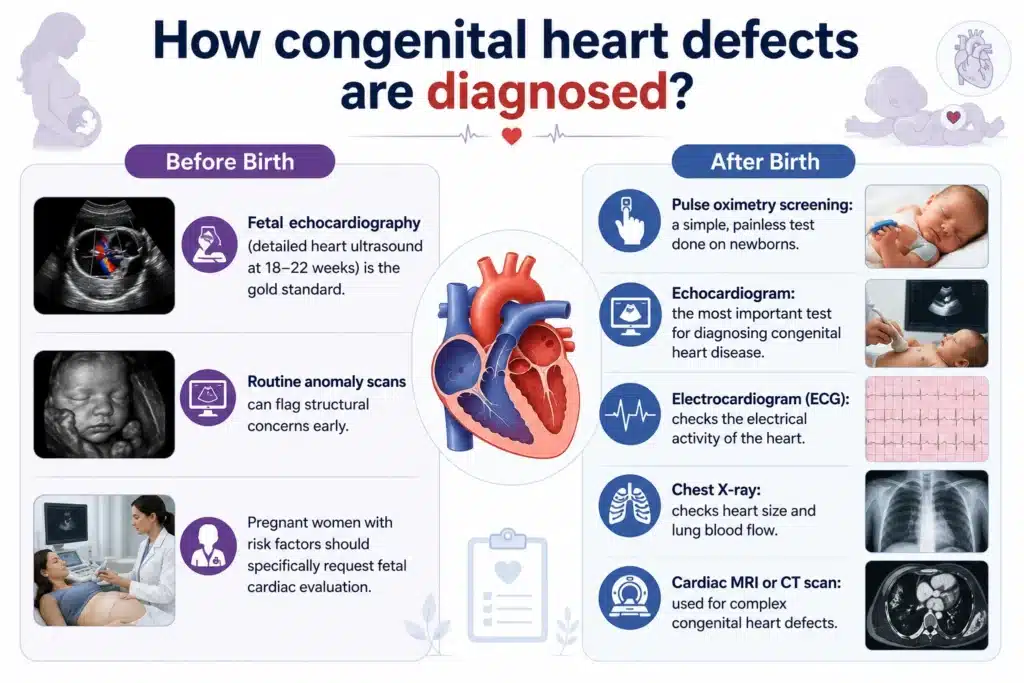
If a defect is suspected, early referral to a pediatric cardiologist in Noida or a specialist center is critical.
Congenital heart defects can be detected at various stages, before birth, at birth, or even in adulthood.
Before Birth
- Fetal echocardiography (detailed heart ultrasound at 18–22 weeks) is the gold standard.
- Routine anomaly scans can flag structural concerns early.
- Pregnant women with risk factors should specifically request fetal cardiac evaluation.
After Birth
- Pulse oximetry screening: a simple, painless test done on newborns.
- Echocardiogram: the most important test for diagnosing congenital heart disease.
- Electrocardiogram (ECG): checks the electrical activity of the heart.
- Chest X-ray: checks heart size and lung blood flow.
- Cardiac MRI or CT scan: used for complex congenital heart defects.
Treatment options for congenital heart defect
Treatment depends entirely on the type and severity of the defect. Not every child needs surgery.
- Small defects may close naturally over time.
- Regular specialist check-ups are important.
- Medicines help control symptoms and support heart function.
- Medications do not cure the heart defect itself.
- Catheter-based procedures are minimally invasive.
- A thin tube is used to treat certain heart defects.
- These procedures do not require open-heart surgery.
- Surgery is needed for more complex heart defects.
- Cardiac surgery repairs structural problems in the heart.
- Pediatric heart surgery has become highly advanced and effective.
- Heart transplantation is considered only in very severe cases.
- A transplant may be needed when the heart cannot be repaired.
The best hospital for children care will offer a full range of options and a multidisciplinary team, cardiologists, surgeons, intensivists, and rehabilitation specialists working together.
Can children live normal lives?
One thing to remember: a congenital heart defect is not a life sentence. It’s a condition that, with the right care, can be managed well.
Yes. The majority of them do.
- Most children with mild to moderate defects grow up with little to no limitations.
- Many participate in sports, complete higher education, have careers, and start families.
- Children with complex congenital heart disease need lifelong monitoring but can still live meaningful, active lives.
- With treatment at the best cardiology hospital, outcomes have improved dramatically over the past two decades.
When should parents consult a pediatric cardiologist?
Early evaluation at a congenital heart defect treatment in Noida center means earlier intervention, and better outcomes.
Don’t wait for symptoms to become severe. Consult a pediatric cardiologist in Noida if:
- Your child was born with a known congenital heart defect.
- A routine scan flagged a possible heart defect at birth.
- Your child shows any defect symptoms mentioned above.
- There is a family history of congenital heart disease.
- Your newborn failed a pulse oximetry test.
- Your child faints, tires unusually fast, or has bluish skin.
Frequently Asked Question (FAQs)
Can congenital heart defects be detected before birth?
Yes. Fetal echocardiography, performed between 18 and 22 weeks of pregnancy, can detect most structural congenital heart defects before birth. It is especially recommended for mothers with risk factors, such as a family history of heart defects, diabetes, or abnormal findings on routine pregnancy scans. Early diagnosis helps doctors plan appropriate care, monitor the baby’s condition, and ensure timely treatment immediately after delivery if needed.
Are congenital heart defects genetic?
Some congenital heart defects are linked to inherited genetic conditions, chromosomal disorders, or specific gene mutations. However, most congenital heart defects occur without any family history and develop due to a combination of genetic and environmental factors during pregnancy. Even if there is no known history of heart defects in the family, a baby can still be born with one. If there is a family history or a previous child with a congenital heart defect, genetic counselling and prenatal screening may help assess the risk in future pregnancies.
Can children play sports with congenital heart disease?
Many children with mild congenital heart defects can participate in regular physical activity and enjoy a healthy, active childhood. Children with more complex congenital cardiac defects may need specific activity guidelines from their children’s heart specialist in Noida. The level of activity depends on the type and severity of the heart defect, as well as the child’s overall health. Regular follow-up appointments help ensure your child stays active safely while supporting healthy growth and development.
What is the survival rate for congenital heart defects?
With modern treatment, over 85% of children with congenital heart defects survive into adulthood. Survival rates for complex cases have improved significantly with specialized pediatric cardiac surgery. Early diagnosis, timely intervention, and regular follow-up care play a crucial role in improving long-term outcomes. Many children who receive the right treatment at the right time go on to live active, healthy, and fulfilling lives with minimal limitations.
Do all congenital heart defects require surgery?
No. Many minor congenital heart defects close on their own as the child grows or can be managed effectively with regular monitoring and medication. Surgery is recommended only when the defect significantly affects the heart’s function, blood flow, or overall growth and development. The treatment plan depends on the type and severity of the defect, and many children with congenital heart defects go on to live healthy, active lives with timely care and follow-up.
How often should children with heart defects be monitored?
This depends on the type of congenital heart defect. Minor defects may need annual reviews. Complex congenital heart conditions require more frequent follow-ups, sometimes every few months.
Conclusion
A congenital heart defect diagnosis is frightening. But it doesn’t define your child’s future.
With the right diagnosis, the right specialist, and the right treatment plan, most children with congenital heart defects lead healthy, fulfilling lives. The key is not to delay. Choose the best hospital in Noida with dedicated pediatric congenital heart disease expertise.
Don’t wait. Book a consultation with our expert pediatric cardiologist in Noida today. We offer advanced diagnostics, compassionate care, and complete congenital heart defect treatment in Noida, all under one roof.